
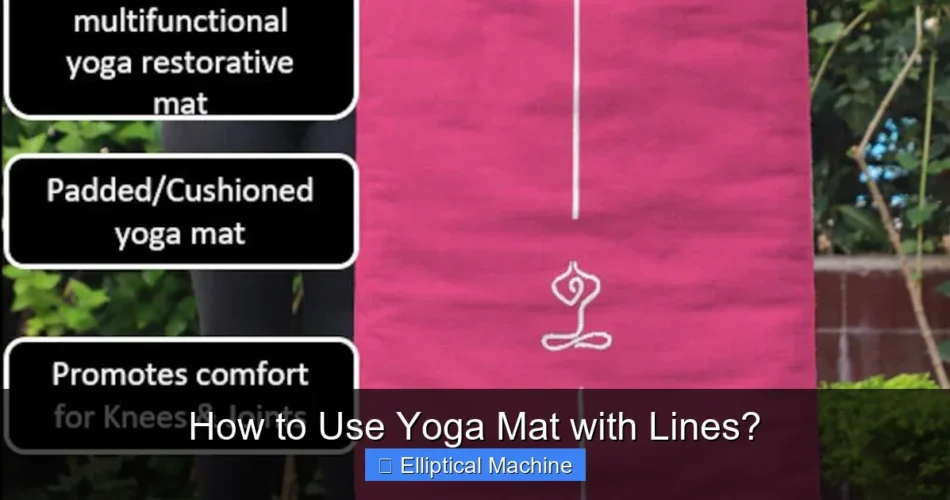
How to Use Yoga Mat with Lines? This practical guide simplifies the process of leveraging your mat’s visual cues to deepen your yoga practice and improve alignment. Utilizing these marked yoga mats can significantly enhance precision, stability, and understanding of various poses, providing immediate feedback for correct body positioning.
This method offers a systematic approach to perfecting your form, transforming your mat from a simple surface into a powerful tool for self-correction. It helps practitioners of all levels achieve better symmetry and balance, making the most of every movement.
Quick Answers to Common Questions
What’s the main idea behind having lines on a yoga mat?
These helpful lines on your yoga mat are primarily designed to guide your alignment, ensuring your hands and feet are properly positioned for balance and stability in various poses. They’re like a built-in visual aid for improving your form!
How can I use the lines for proper hand and foot placement?
Often, you’ll use the central line to keep your body centered or the longer outer lines to ensure your hands or feet are parallel and shoulder or hip-width apart. Learning how to use yoga mat with lines for these markers makes it easier to achieve symmetrical and safe positioning.
📑 Table of Contents
- Understanding the Anatomy of Your Lined Yoga Mat
- Setting Up for Success: Basic Principles of How to Use Yoga Mat with Lines?
- Mastering Foundational Poses with Line Guidance
- Enhancing Balance and Symmetry with Your Lined Mat
- Advanced Techniques and Customizing Your Practice with Lined Mats
- Practical Tips for Optimal Use and Care of Your Lined Mat
Understanding the Anatomy of Your Lined Yoga Mat
Lined yoga mats are specifically designed with various markings to assist practitioners in achieving precise body alignment. Before you can effectively use them, it’s crucial to understand what each line signifies and how it’s intended to be utilized.
The Center Line
Running lengthwise down the middle of the mat, the center line is perhaps the most fundamental alignment guide. It helps establish your body’s mid-point, crucial for symmetrical poses. Whether standing, sitting, or lying down, aligning your spine or the middle of your body with this line ensures an even distribution of weight and promotes balance.
The End Lines and Transverse Lines
These are typically shorter lines running across the width of the mat, often found at the top and bottom edges, or sometimes at quarter and three-quarter points. They act as markers for hand and foot placement, ensuring you maintain consistent distances and angles. For instance, in poses like Downward-Facing Dog, these lines help you gauge the proper distance between your hands and feet.
The Angle Lines or 45-Degree Lines
Some advanced mats feature diagonal lines, often at a 45-degree angle, emanating from the center. These are incredibly useful for poses that require specific foot or hand angles, such as Warrior II or Triangle Pose. They guide you to rotate your feet or hands to the correct degree, optimizing hip and knee alignment and preventing strain.
The Grid or Dot System
More intricate mats might incorporate a grid pattern or a series of dots. A grid can provide even more granular feedback for hand, foot, and hip placement across a wider range of poses, especially for advanced practitioners working on complex transitions. A dot system might indicate specific points for your heels, toes, or even your gaze, depending on the pose.
Why These Lines Matter
The primary purpose of these lines is to offer immediate, visual feedback on your body’s position. Without them, it can be challenging to discern whether your feet are parallel, your hips are squared, or your hands are equidistant. These visual cues serve as external references, helping you cultivate an internal sense of alignment over time. They are not rigid rules but helpful guides to explore optimal positioning.
Setting Up for Success: Basic Principles of How to Use Yoga Mat with Lines?
To maximize the benefits of your lined mat, adopt a mindful and deliberate approach to your practice. The lines are there to serve you, not to dictate your every move rigidly. Embrace them as tools for exploration and refinement.
Finding Your Center
Begin every practice by orienting yourself to the mat’s center line. Whether you start in Mountain Pose (Tadasana) or Child’s Pose, ensure your body’s midline aligns with this central guide. This establishes a foundational sense of symmetry and balance from the outset, which is crucial for all subsequent movements. Use this alignment to gauge your posture and stability.
Establishing a Baseline
For standing poses, observe where your heels and toes fall relative to the transverse lines. For example, in Tadasana, ensure your feet are parallel and hip-width apart, using the lines to verify the distance. For seated poses, align your sit bones evenly on either side of the center line. This initial baseline helps you track consistency and identify imbalances throughout your practice.
Listening to Your Body: Lines as Guides, Not Rules
While the lines provide excellent guidance, remember that every body is unique. What constitutes perfect alignment for one person might feel strained or incorrect for another. Use the lines as a starting point, then adjust based on how your body feels. If a suggested alignment causes discomfort, modify it. The goal is healthful alignment, not rigid adherence to lines on a mat. The lines are a framework to help you understand what balanced feels like, allowing you to eventually internalize that feeling.
Mastering Foundational Poses with Line Guidance
Integrating your mat’s lines into foundational yoga poses can dramatically improve your understanding of proper form and deepen the benefits of each posture.
Downward-Facing Dog (Adho Mukha Svanasana)
This pose is fundamental for building strength and flexibility. Use the transverse lines to ensure your hands are shoulder-width apart and your feet are hip-width apart. The lines help you maintain consistent spacing, which is crucial for a stable foundation. Aim for your index fingers to be parallel or slightly angled outwards, using the front edge of the mat or a transverse line as a guide. The lines can also help you notice if one hand or foot is drifting forward or backward, allowing for real-time correction.
Tadasana (Mountain Pose) and Samasthiti
These standing poses are the blueprints for all other standing postures. Stand with your feet together or hip-width apart, ensuring your heels are aligned with a transverse line and your big toes are either touching or parallel. Use the center line to feel your spine lengthen evenly upwards, balancing your weight through both feet. This simple alignment check sets the stage for stability in more complex poses.
Warrior I, II, and III (Virabhadrasana I, II, III)
Warrior poses are excellent for strength and focus, and the angle lines are particularly helpful here.
- Warrior I: Stand with one foot forward, heel aligned with the center line. Step the back foot back, angling it out 45-60 degrees. The angle lines can help you achieve this precise foot angle, ensuring your hips square towards the front of the mat.
- Warrior II: From Warrior I, open your hips to the side. Align your front heel with the center line, and your back arch with the center line (or heel-to-heel alignment). The 45-degree line can guide the angle of your back foot, ensuring it’s perpendicular to your front foot for optimal hip and knee alignment.
- Warrior III: As you lift into Warrior III, focus on keeping your standing leg and extended leg aligned with the center line. The lines help you maintain a straight line from your head to your extended heel, crucial for balance and stability.
Triangle Pose (Trikonasana)
In Triangle Pose, the alignment of your feet is critical. Start in Warrior II stance. Pivot your front foot to point forward and your back foot to a 45-degree angle (guided by the mat’s lines). Extend your front arm forward, then reach down to your shin, ankle, or the floor. Use the center line to ensure your front heel and back arch are aligned, and the transverse lines to keep your feet at an optimal distance. The lines help you create a long, straight line from your front heel to the top of your head.
Enhancing Balance and Symmetry with Your Lined Mat
The structured guidance of a lined mat is invaluable for improving balance and developing a symmetrical practice, especially in poses that challenge stability.
Balancing Poses (Tree Pose, Eagle Pose)
For Tree Pose (Vrksasana), stand with your standing foot firmly planted on one side of the center line. As you lift your other foot to place it on your inner thigh or calf, use the center line as a reference point for your hips. Try to keep your hips evenly centered over the standing foot, preventing any tilting. In Eagle Pose (Garudasana), the center line helps you stack your joints more effectively, aligning your crossed limbs with greater precision, enhancing the stability of the pose.
Seated Poses and Twists
In seated poses like Staff Pose (Dandasana) or Easy Pose (Sukhasana), sit with your sit bones equidistant from the center line. This ensures a neutral pelvic tilt and an upright spine. When performing seated twists, the center line helps you gauge the rotation of your torso relative to your hips, ensuring a symmetrical twist that avoids over-twisting one side or compromising spinal health. For example, in Ardha Matsyendrasana, ensure your sitting bones are equally grounded and your spine is centered before initiating the twist.
Inversions and Arm Balances
While often more advanced, a lined mat provides a crucial reference for inversions like Headstand (Salamba Sirsasana) and Handstand (Adho Mukha Vrksasana), and arm balances such as Crow Pose (Bakasana). In these poses, a stable and symmetrical base is paramount. Use the lines to ensure your hands, elbows, or head are perfectly aligned and spaced, creating a strong foundation. For example, in Forearm Stand, ensure your elbows are shoulder-width apart and your forearms are parallel to the side edges of the mat. The lines offer a constant visual check against drifting or collapsing, building confidence and reducing the risk of injury.
Advanced Techniques and Customizing Your Practice with Lined Mats
Beyond basic alignment, lined mats offer opportunities for advanced practitioners to refine their practice and personalize their approach.
Using Lines for Progression
The lines can serve as a measurable way to track your progress. For instance, in a deep lunge or split, you can observe how much further your foot can reach along a transverse line over time. In a handstand, you might aim to keep your hands within a specific marked area. This objective feedback can be incredibly motivating and help you understand your body’s capabilities and limits more intimately.
Adapting Lines for Your Body Type
While lines provide standard guidance, they are not one-size-fits-all. Taller individuals might need to place their hands and feet slightly wider or further apart in some poses than indicated by typical lines. Conversely, shorter individuals might need to bring their stance in. Experiment with the lines, noting what feels most stable and comfortable for your unique proportions. The lines are a suggestion, and your bodily awareness is the ultimate guide. For example, in Downward Dog, if your hamstrings are tight, you might need a shorter stance initially, even if the lines suggest a wider one.
Integrating Props with Line Cues
Props like blocks, straps, and bolsters can be integrated seamlessly with your lined mat. For example, placing blocks parallel to a transverse line can help ensure symmetry in arm balances. Using a strap to bind hands and feet in a specific width can be cross-referenced with your mat’s lines to verify consistency. This combined approach maximizes both the benefits of the props and the mat’s alignment aids.
When to Trust Your Intuition Over the Lines
As you advance, your internal body awareness, or proprioception, will grow. There will be times when what feels right in your body might slightly deviate from a strict interpretation of the mat lines. This is a sign of progress! Learn to trust your intuition, especially in more fluid or dynamic sequences. The lines have served their purpose by guiding you to a point where your internal compass is stronger. Use the lines as a tool for initial setup, then let your body flow with intelligent movement, confident in your foundational understanding.
Practical Tips for Optimal Use and Care of Your Lined Mat
To ensure your lined yoga mat serves you effectively for years, proper care and attention are essential. Maintaining the integrity of the lines and the mat’s surface contributes significantly to your practice.
Keeping Your Lines Clear
The visibility of your mat’s lines is paramount to their utility. Avoid practicing on very dirty surfaces that could obscure the markings. If your lines begin to fade, it might be a sign of wear, but often it’s just a buildup of sweat and oils. Regular, gentle cleaning helps keep them crisp and clear.
Cleaning and Maintenance
Most yoga mats, including those with lines, benefit from routine cleaning. After each practice, a quick wipe down with a damp cloth or a yoga mat-specific cleaner can remove sweat and dirt. For a deeper clean, consult your mat manufacturer’s instructions, but generally, a mild soap and water solution works well. Avoid harsh chemicals or abrasive brushes that could damage the mat material or fade the printed lines. Allow the mat to air dry completely before rolling it up to prevent mildew and preserve the line markings.
When to Upgrade or Replace
Even with the best care, yoga mats have a lifespan. Signs that it might be time for a replacement include:
- Fading Lines: If the alignment lines are no longer clearly visible, their primary purpose is diminished.
- Reduced Grip: If you find yourself slipping frequently, the mat’s traction is compromised, which can be dangerous.
- Thinning or Tears: Worn-down areas or actual tears in the mat reduce its cushioning and durability.
- Persistent Odor: Despite cleaning, an unshakeable odor might indicate bacterial buildup or material degradation.
Investing in a new mat when these signs appear ensures a safe, effective, and hygienic practice environment.
Yoga Mat Line Utility Table
The following table illustrates how specific lines on a yoga mat can be used to aid in the alignment of common yoga poses:
| Yoga Pose | Primary Line(s) Utilized | Alignment Benefit | Example Usage |
|---|---|---|---|
| Downward-Facing Dog | Transverse lines, Center line | Ensures consistent hand/foot distance and spinal alignment. | Align hands on one transverse line, feet on another; ensure spine follows center line. |
| Warrior II | Center line, Angle lines (45-degree) | Guides heel-to-arch alignment and correct foot angle. | Front heel on center line, back arch on center line; back foot along 45-degree angle. |
| Tadasana (Mountain Pose) | Transverse lines, Center line | Establishes parallel and hip-width foot placement, spinal centering. | Heels aligned on a transverse line; feet equidistant from center line. |
| Triangle Pose | Center line, Transverse lines, Angle lines | Facilitates proper foot placement and hip opening. | Front heel on center line, back foot angled along 45-degree line; feet wide across transverse lines. |
| Tree Pose | Center line | Aids in balancing and centering the standing leg and hips. | Standing foot centered on one side of the center line; focus on hip alignment relative to the line. |
Mastering how to use yoga mat with lines effectively transforms your practice, offering tangible improvements in alignment, stability, and body awareness. These visual aids simplify complex postural adjustments, making yoga more accessible and beneficial for practitioners at every stage. By understanding and consistently applying the guidance of your mat’s markings, you build a strong foundation, deepen your poses, and cultivate a more intuitive connection with your body. Embrace this practical tool to refine your journey on the mat, moving with greater precision and confidence in every posture.
Frequently Asked Questions
What is the purpose of the lines on my yoga mat?
The lines on your yoga mat are designed as a body alignment system. They provide visual cues and reference points to help you position your hands, feet, and body parts correctly in various yoga poses.
How do I use the lines on a yoga mat with lines to improve my alignment?
To use the lines effectively, align specific body parts like your heels, toes, or hands with the marked lines. For example, the central line can guide your spine, while perpendicular lines help ensure your feet are equidistant and parallel.
Are all yoga mats with lines designed with the same alignment system?
No, while many follow similar principles, the specific patterns and markings can vary between brands. It’s always a good idea to check the manufacturer’s guide or website for specific instructions on your particular mat’s design.
Can a yoga mat with lines benefit beginners and experienced practitioners alike?
Absolutely! Beginners find them incredibly helpful for understanding proper form and building muscle memory. Experienced practitioners can use them to refine their alignment, deepen poses, and maintain consistency in their practice.
How do the lines on my yoga mat help with body symmetry and balance?
The lines provide clear visual feedback, allowing you to instantly see if your body is centered and symmetrical in a pose. This visual guidance is crucial for developing better balance and ensuring even weight distribution across both sides of your body.
What’s the best way to clean and maintain my yoga mat with lines?
To keep your yoga mat with lines in good condition, wipe it down with a damp cloth and mild soap or a specialized mat cleaner after each use. Allow it to air dry completely before rolling it up to prevent bacteria growth and maintain the clarity of the alignment markings.
When you purchase a product through Amazon links on EllipticalKing.com, we may earn a small commission at no extra cost to you. This helps support the site and keep our content free. As an Amazon Associate, We earn from qualifying purchases