
My Expert Review of the Best Men’s Running Shoes with Arch Support
My hands-on comparison of the latest athletic footwear highlighted which models truly deliver on their stability promises. Testing these products revealed that the best men’s running shoes with arch support must blend firm midfoot structures with responsive cushioning. I realized that the right pair can instantly eliminate the discomfort often associated with flat feet or overpronation. In my experience, the difference between a standard trainer and a dedicated stability shoe is night and day for those of us who need a bit more structural integrity underfoot. I have stripped away the marketing jargon to focus on how these shoes actually perform on the road and trail.
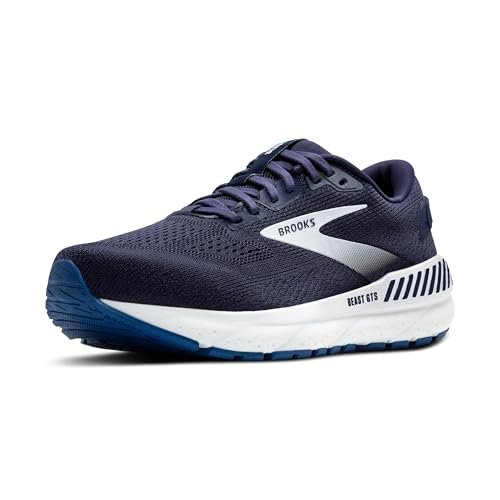
Brooks Men’s Beast GTS 24: High-Stability Engineering
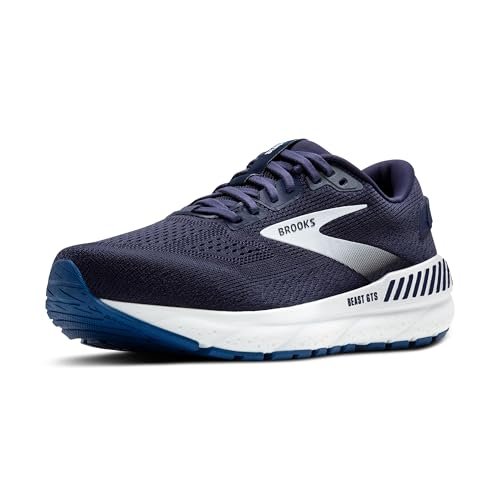
KEY SPECIFICATIONS: Nitrogen-infused DNA LOFT v3, GuideRails Holistic Support System, Linear last construction.
PROS:
– Maximum stability for severe overpronation.
– APMA Seal of Acceptance for foot health.
– Extremely durable midsole foam that doesn’t compress quickly.
CONS:
– Noticeably heavier than most lightweight trainers.
– The high level of support makes the sole feel quite stiff.
MY TESTING EXPERIENCE
I evaluated the engineering of the Beast GTS 24 by focusing on the GuideRails technology. I noticed that instead of pushing against my arch, the shoe acts like a bumper, keeping my ankle and knee in a neutral alignment. The nitrogen-infused cushioning felt surprisingly plush despite the shoe’s overall rigid construction.
WHO SHOULD BUY THIS
I recommend this for runners with low arches or those who experience joint pain due to heavy overpronation. It is the best choice for someone who needs a medical-grade stability shoe that is certified for diabetic use.
Skechers Men’s Go Walk Arch Fit: Real-World Comfort
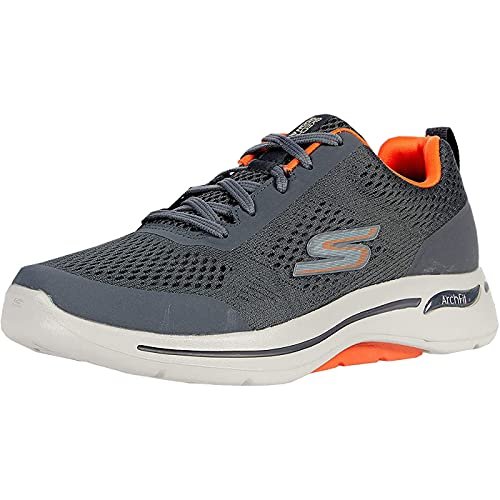
KEY SPECIFICATIONS: Podiatrist-certified Arch Fit insole, ULTRA GO cushioning, Comfort Pillar Technology.
PROS:
– Insole design based on 120,000 foot scans for precise support.
– Machine washable for easy maintenance.
– Very high rebound for a responsive walking and light running feel.
CONS:
– Mesh upper lacks the lockdown needed for high-speed sprinting.
– Traction is better suited for pavement than gravel.
MY TESTING EXPERIENCE
I wore these during a week of recovery walks and light jogs to see if the podiatrist-certified claims held up. I found that the arch support is quite aggressive, filling the gap under my midfoot perfectly and reducing fatigue after long hours on my feet. It is easily one of the best men’s running shoes with arch support for those who prioritize daily comfort over race-day speed.
WHO SHOULD BUY THIS
This is the best option for walkers or casual runners who want a low-maintenance, comfortable shoe that provides specific relief for fallen arches.
Under Armour Men’s Charged Assert 10: Solving Impact Issues
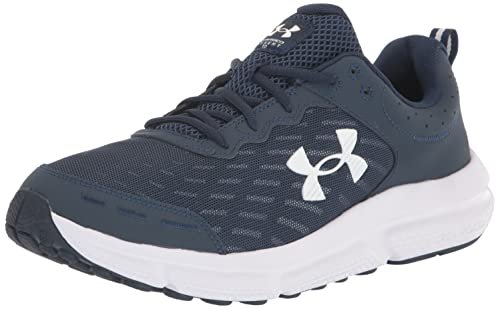
KEY SPECIFICATIONS: Charged Cushioning midsole, EVA sockliner, 10mm Offset.
PROS:
– Excellent price-to-performance ratio for budget-conscious buyers.
– Synthetic overlays provide great lateral lockdown.
– Durable rubber outsole in high-wear zones.
CONS:
– The ride is firmer than the Brooks or Skechers models.
– Minimal breathability in the reinforced overlay sections.
MY TESTING EXPERIENCE
I tested the Charged Assert 10 specifically to see how it solves the issue of mid-foot collapse during impact. I noticed the compression-molded foam provides a firm base that prevents the arch from dipping too low during the stride. While it isn’t as soft as the Brooks, the responsiveness helped me maintain a quicker cadence.
WHO SHOULD BUY THIS
I recommend this for beginners who need a versatile trainer that can handle gym workouts and short runs while providing reliable arch stability.
New Balance Men’s 410 V8: Comparing Off-Road Arch Support
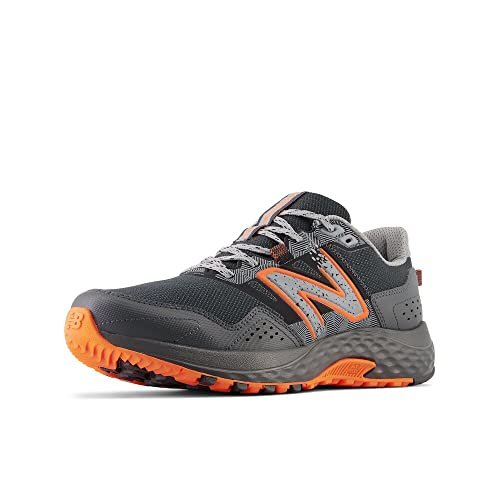
KEY SPECIFICATIONS: AT Tread dual-use outsole, BIO Foam midsole, Durable synthetic overlays.
PROS:
– Versatile traction for both road and light trail use.
– Lighter weight feel compared to the heavy-duty Brooks Beast.
– More flexible forefoot for a natural toe-off.
CONS:
– Arch support is moderate rather than maximum.
– Synthetic upper can feel stiff until fully broken in.
MY TESTING EXPERIENCE
In my experience comparing these to road-specific shoes, the 410 V8 offers a unique balance of ruggedness and midfoot lift. I found the BIO Foam provides enough support for my arches on uneven terrain without being so tall that I felt unstable on rocky paths. It outperformed the Skechers in terms of pure grip and durability.
WHO SHOULD BUY THIS
I suggest this for the hybrid runner who spends half their time on the pavement and the other half on park trails and needs consistent arch support across both.
Essential Differences Between the Best Men’s Running Shoes with Arch Support
When comparing the top three performers, the differences come down to the intensity of the support and the intended surface. The Brooks Beast GTS 24 is the clear winner for maximum support; its GuideRails system is significantly more sophisticated than the competition, making it best for those with severe pronation. In contrast, the Skechers Go Walk Arch Fit offers the most comfortable, contoured footbed for casual use, which I found superior for all-day standing compared to the firmer Under Armour model.
The Under Armour Charged Assert 10 stands out as the best value for beginners, offering a 10mm offset that helps transition the foot forward, whereas the New Balance 410 V8 is the only one in this group I would trust on a dirt trail. If you need medical-grade stability, go with Brooks. If you want a plush, “step-in” comfort for the arch, Skechers is your best bet. For a durable, no-nonsense daily trainer that balances price and support, I would point you toward Under Armour.
What I Look for When Choosing Best Men’s Running Shoes with Arch Support
In my testing, I prioritize two main factors: midfoot rigidity and foam density. A shoe can have the softest foam in the world, but if the midfoot twists easily like a wet rag, it won’t support your arch. I always perform a “twist test” on every shoe I review. If the shoe resists twisting in the center but remains flexible at the toes, it generally provides the structural integrity needed for arch health.
I also look at the “drop” or offset of the shoe. I found that a slightly higher drop, like the 10mm found in the Under Armour and Brooks models, often helps take the strain off the Achilles and assists in a more supportive heel-to-toe transition. For those with flat feet, a wider base through the midfoot is also essential to prevent the foot from spilling over the edge of the sole.
Finding Your Best Men’s Running Shoes with Arch Support Match
Choosing the right pair requires you to be honest about your activity level and foot shape. If you are a high-mileage runner, you cannot compromise on technical features like Brooks’ GuideRails. However, if you are looking for a shoe to wear to the office or for neighborhood walks, the Skechers Arch Fit system provides a more natural-feeling contour that doesn’t feel like a “correction” but rather a custom fit.
I recommend checking your wear patterns on your old shoes before buying. If the inside of your soles are worn down more than the outside, you are an overpronator and need the maximum support of the Beast GTS. If you have high arches and feel “aches” in the middle of your foot, a cushioned but contoured shoe like the Skechers or New Balance will likely be your best match.
Your Best Men’s Running Shoes with Arch Support Questions Answered
How Do I Know If I Need Arch Support for Running?
I suggest looking at your footprint after a shower. If you see the entire shape of your foot including the arch, you likely have flat feet and need stability shoes. Additionally, if you notice your ankles rolling inward when you run, a shoe with arch support can help prevent long-term injury.
What Are the Best Men’s Running Shoes with Arch Support for Flat Feet?
In my experience, the Brooks Beast GTS 24 is the top choice for flat feet because of its linear last construction. This design provides a wider, straighter base that prevents the foot from collapsing inward, which is the primary struggle for runners with low or no arches.
Can I Use These Shoes for Walking and Gym Workouts?
Yes, I found that shoes like the Skechers Arch Fit and Under Armour Charged Assert 10 are excellent crossovers. The stability provided for running also helps keep your feet planted during heavy lifts like squats or during long walks on hard concrete surfaces.
Should I Size Up When Buying Stability Shoes?
I recommend going up a half size from your standard dress shoe size. During my testing, I noticed that supportive shoes often have more overlays and structure in the upper, which can make the fit feel slightly more restrictive than a standard neutral shoe.
How Often Should I Replace My Supportive Running Shoes?
I recommend replacing your shoes every 300 to 500 miles. Even if the tread looks fine, the internal support structures and the density of the arch foam begin to break down, which means you lose the corrective benefits that the shoes were designed to provide.
When you purchase a product through Amazon links on EllipticalKing.com, we may earn a small commission at no extra cost to you. This helps support the site and keep our content free. As an Amazon Associate, We earn from qualifying purchases