
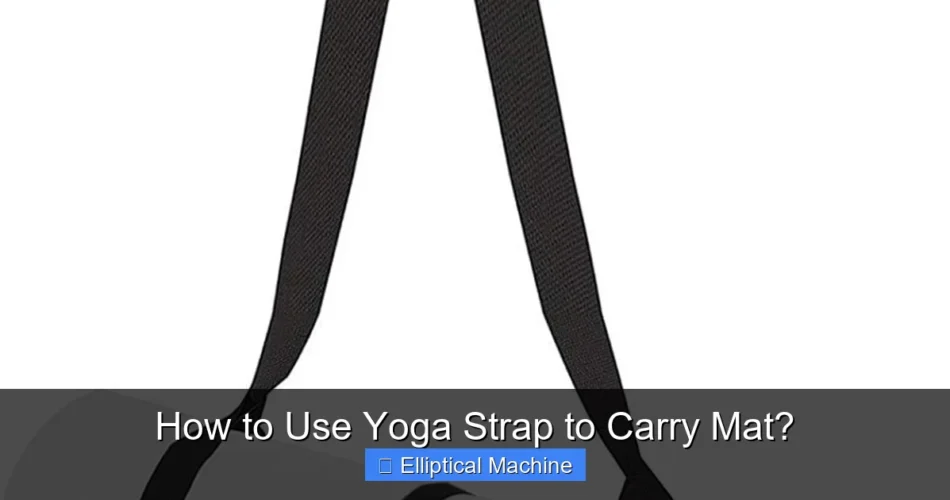
How to Use Yoga Strap to Carry Mat? This simple technique transforms a bulky yoga mat into an effortlessly portable accessory, making your journey to and from practice significantly easier. Mastering this approach not only enhances convenience but also ensures your mat is securely bundled and protected.
This method leverages the versatility of a standard yoga strap, designed for both carrying and stretching. Understanding the process will free up your hands and streamline your yoga routine, allowing for a more relaxed experience.
Quick Answers to Common Questions
How do I correctly use my yoga strap to carry my mat?
It’s super simple! Just thread one end of your yoga strap through each rolled end of your mat, forming two secure loops, and then pull the strap tight to hug your mat snugly.
Will my mat be secure using just a strap, or will it slip out?
When properly looped and tightened, your yoga mat will be very secure. The design of most yoga straps creates a firm hold, so you can confidently use your yoga strap to carry your mat without worry.
Can I adjust the length of the strap for comfortable carrying?
Absolutely! Most yoga straps designed to carry mats feature an adjustable buckle or D-ring system. This allows you to easily customize the length for a comfortable, hands-free carry that suits your height and preference.
📑 Table of Contents
Understanding Your Yoga Mat and Strap
Before diving into the carrying techniques, it’s beneficial to understand the tools at hand. Yoga mats come in various materials, thicknesses, and weights, all of which influence how easily they can be rolled and carried. Similarly, yoga straps, while seemingly simple, have different lengths, widths, and buckle types that can affect their utility for carrying.
Types of Yoga Mats
- Standard Mats: Typically 4-5mm thick, they roll up compactly and are lightweight, making them ideal for carrying with a strap.
- Travel Mats: Thinner and often foldable, these are the easiest to transport and sometimes don’t even require a strap, though one can offer extra security.
- Thick/Cushioned Mats: Ranging from 6-10mm, these provide extra comfort but are bulkier when rolled. A sturdy strap is essential for managing their size and weight.
- Eco-Friendly Mats: Often made from natural rubber or jute, these can be heavier and less pliable, necessitating a strong and adjustable strap for comfortable transport.
Features of a Good Yoga Strap for Carrying
- Material: Cotton is common, offering a soft yet strong hold. Polyester blends provide more durability and resistance to stretching.
- Length: Standard straps are usually 6-10 feet long. Longer straps offer more versatility for wrapping thicker mats or for use in various carrying styles.
- Buckle Type: D-ring buckles are popular for their simplicity and adjustability. Some straps feature quick-release buckles or no buckles at all, relying on simple loops.
Step-by-Step Guide: How to Use Yoga Strap to Carry Mat?
This section outlines the most common and effective method for securing your yoga mat with a strap, ensuring it’s ready for transport. This basic technique is universally applicable to most standard yoga mats and straps.
Step 1: Roll Your Mat Tightly
The foundation of a secure carry is a well-rolled mat. Lay your mat flat, then starting from one end, roll it as tightly and evenly as possible. A tight roll prevents the mat from unraveling and makes it easier to secure. Ensure both ends are even to avoid a lopsided bundle.
Step 2: Prepare Your Yoga Strap
Take your yoga strap and identify the buckle (if it has one, typically D-rings). Thread one end of the strap through both D-rings, then thread it back through only one D-ring, creating a secure loop that can be tightened or loosened. If your strap has a different buckle or no buckle, you’ll simply need to ensure you can form two adjustable loops.
Step 3: Create the First Loop Around Your Mat
Place your rolled mat on the floor. Take the prepared strap and create a loop large enough to slip over one end of your mat. Position this loop approximately 3-4 inches from the end of the mat. Pull the strap through the buckle to tighten the loop around the mat, making it snug but not overly constricted. The mat should feel secure and not easily slide out.
Step 4: Create the Second Loop
Extend the remaining length of the strap along the mat to the opposite end. Create a second loop, identical to the first, and position it 3-4 inches from the other end of the mat. Again, tighten this loop firmly around the mat. You now have two secure loops holding your mat in place.
Step 5: Adjust for Carrying
The excess strap between the two loops now serves as your handle. You can adjust the length of this handle by pulling the strap through the buckles until you achieve a comfortable carrying length. For shoulder carrying, you’ll want a longer loop. For hand carrying, a shorter loop is sufficient. This adjustment is crucial for ergonomic transport.
Alternative Carrying Methods and Strap Configurations
While the two-loop method is standard, there are other effective ways to utilize your yoga strap to carry mat, especially depending on the strap type, mat size, or personal preference.
Single Loop Carry (for lighter mats)
For thinner or travel mats, a single, longer loop might suffice. After rolling your mat, wrap the strap around the center of the mat, creating a snug loop. The remaining strap length can then be used as a shoulder sling. This is quick and efficient but offers less stability for bulkier mats.
Over-the-Shoulder Sling Configuration
Instead of creating two distinct loops for bundling, some straps are designed specifically as an over-the-shoulder sling. These often have larger, fixed loops or a single wide strap with adjustable ends. To use this approach, you typically slide the rolled mat into the loops at each end of the strap, then hoist it onto your shoulder. This offers a hands-free option right from the start.
Using Straps Without Buckles
If your yoga strap lacks D-rings or other buckles, you can still effectively secure your mat. Simply tie a knot (like a square knot or a simple overhand knot) to create the loops. While less adjustable on the fly, this method is very secure once tied properly. Ensure the knots are tight but can be undone without too much fuss after practice.
Benefits of Using a Yoga Strap for Portability
Beyond the simple act of transporting your mat, adopting this method offers several practical advantages that enhance your yoga practice experience.
Enhanced Convenience and Hands-Free Transport
The primary benefit is the sheer convenience. A yoga strap transforms your mat from an awkward, unmanageable cylinder into a neat, hands-free package. Slinging your mat over your shoulder allows you to carry other essentials – your water bottle, keys, phone, or even a gym bag – without juggling multiple items. This makes commutes, especially on public transport or while cycling, much more manageable.
Mat Protection and Organization
Securing your mat with a strap helps keep it tightly rolled and prevents it from unraveling or getting dirty during transport. It also acts as a compact storage solution at home or in your car, ensuring your mat stays tidy and doesn’t take up unnecessary space. This organization helps prolong the life of your mat by protecting its edges and surface.
Versatility Beyond Carrying
The same strap you use to carry your mat can often be incorporated into your yoga practice itself. Yoga straps are excellent props for extending reach in stretches, deepening poses, and improving flexibility. This dual functionality means you only need to carry one item that serves two important purposes, further simplifying your yoga kit.
Choosing the Right Yoga Strap for Carrying
Selecting the ideal yoga strap goes beyond just looking at colors. Consider these factors to ensure your strap meets your carrying and practice needs.
Material and Durability
- Cotton: Soft, natural, and absorbent. Good for carrying and stretching, but can show dirt easily and might not be as durable as synthetic options over time.
- Polyester/Polypropylene: More durable, resistant to stretching, and often easier to clean. Excellent for heavy-duty carrying and for those who practice frequently outdoors.
- Hemp/Jute: Eco-friendly options, often very strong and durable, but can be a bit stiffer initially.
Length and Adjustability
A standard strap length of 8 feet is a good all-rounder for most mats and body types. If you have a particularly thick mat or prefer a very long over-the-shoulder carry, consider a 10-foot strap. Look for straps with D-rings or similar adjustable buckles for maximum flexibility in tightening the loops and adjusting the handle length. The ability to easily adjust the strap is key for comfortable transport.
Buckle Type and Ease of Use
- D-Ring: Simple, secure, and very common. Easy to thread and adjust.
- Quick-Release/Plastic Buckle: Fast to open and close, but some find them less secure for very heavy mats or prefer the traditional feel of D-rings.
- No Buckle (Loop-style): Relies on tying knots or pre-set loops. Simple, but less adaptable for different mat sizes or carrying preferences.
Here’s a quick comparison of common strap types:
| Strap Type | Material (Common) | Common Length (ft) | Primary Carrying Benefit | Considerations |
|---|---|---|---|---|
| Standard D-Ring Strap | Cotton, Polyester | 6-10 | Versatile, secure two-loop carry | Requires manual adjustment for loops |
| Fixed Loop Carrier | Cotton, Nylon | N/A (Loop size matters) | Quick over-the-shoulder sling | Less adjustable for different mat thicknesses |
| Quick-Release Buckle Strap | Polyester, Nylon | 6-8 | Fast attachment and detachment | Buckle durability can vary |
| Heavy-Duty Strap | Polyester, Canvas | 8-10 | Supports heavier, thicker mats | Can be bulkier, less flexible for stretches |
Tips for Secure and Comfortable Carrying
Once you’ve mastered the basic technique of how to use yoga strap to carry mat, these additional tips will help ensure your mat is always transported securely and comfortably.
Ensure Even Weight Distribution
When rolling your mat, try to keep the roll as even as possible. A lopsided roll can make the mat uncomfortable to carry and prone to slipping. Distribute the weight evenly along the strap as you adjust it for your shoulder.
Adjust Strap Length for Your Body
Experiment with different strap lengths. For most, a length that allows the mat to rest comfortably against the side of your body, without swinging too much or hitting your legs, is ideal. If carrying on your back like a backpack, adjust for a higher position that doesn’t put strain on your lower back.
Protect Your Mat in Inclement Weather
While a strap secures your mat, it doesn’t offer weather protection. If you frequently walk to your studio in unpredictable weather, consider an additional mat bag or a waterproof cover to protect your mat from rain or excessive humidity, even when secured by a strap.
Regularly Check Strap Condition
Over time, straps can fray or buckles can weaken. Periodically inspect your yoga strap for any signs of wear and tear, especially if you carry a heavy mat. A damaged strap can lead to your mat dropping unexpectedly, potentially causing damage to the mat or injury to yourself.
Practice Makes Perfect
The first few times you try to secure your mat, it might feel a bit awkward. With a little practice, however, the process becomes second nature. You’ll quickly find the most efficient way to roll your mat and adjust your strap, making the preparation for your yoga practice seamless and stress-free.
Embracing the use of a yoga strap to carry your mat is a small change that yields significant benefits in convenience, organization, and the overall enjoyment of your yoga journey. By following these guidelines and tips, you can transform your mat into a portable companion, ready for any adventure. Happy practicing!
Frequently Asked Questions
How do I attach my yoga mat to the strap?
Most yoga straps designed for carrying have adjustable loops or quick-release buckles. Simply lay your mat flat, roll it up tightly, then slide one loop over each end of the rolled mat. Pull the loops snugly to secure your mat firmly in place.
What’s the easiest way to use a yoga strap as a carrier?
After securely attaching your rolled yoga mat with the strap’s loops, adjust the main strap length. Sling the entire assembly over your shoulder or across your body, like a messenger bag. This hands-free method makes transporting your mat effortless and convenient.
Can any yoga strap be used to carry a mat?
While many standard yoga straps are versatile enough, straps specifically designed for carrying a mat often feature wider webbing for comfort and more robust, easily adjustable buckles. Ensure your chosen yoga strap has secure, adjustable loops that can snugly fit around your rolled mat to prevent it from slipping.
How do I adjust the yoga strap for comfortable carrying?
Once your yoga mat is secured, use the strap’s buckle or slider to find an optimal length. You want the mat to rest comfortably at your side, hip, or lower back, preventing it from dragging or swinging excessively. Experiment with the length until it feels natural and balanced for your height.
Is it better to roll my yoga mat tightly when using a strap?
Yes, it is highly recommended to roll your yoga mat as tightly and evenly as possible before securing it with the strap. A tightly rolled mat will be much more stable within the strap’s loops, preventing it from becoming lopsided or potentially slipping out during transit. This also makes the mat more compact and easier to manage.
Can a yoga strap also be used for stretching during practice?
Absolutely! Most yoga straps are multi-functional, serving not only as a convenient carrier for your yoga mat but also as an invaluable prop during your practice. You can use the same strap to deepen stretches, assist in difficult poses, or improve flexibility, making it a truly versatile accessory.
When you purchase a product through Amazon links on EllipticalKing.com, we may earn a small commission at no extra cost to you. This helps support the site and keep our content free. As an Amazon Associate, We earn from qualifying purchases