
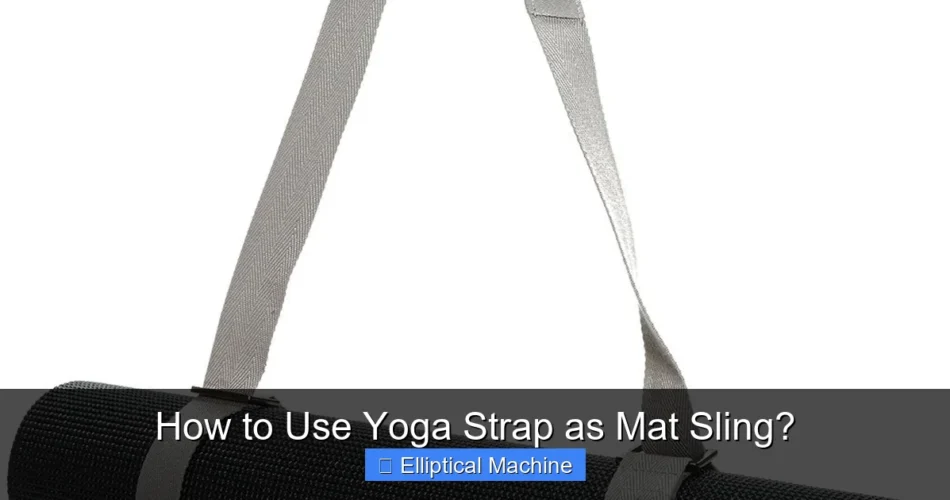
How to Use Yoga Strap as Mat Sling? This method offers a simple, efficient, and cost-effective way to transport your yoga mat to and from class. By repurposing a standard yoga strap, you can create a secure and comfortable sling for effortless portability. This technique is not only practical but also ensures your mat stays neatly rolled during transit.
The practice of converting your versatile yoga strap into a functional mat carrier is straightforward, requiring just a few quick adjustments. It’s an ideal solution for practitioners seeking convenience without investing in a dedicated mat bag.
Quick Answers to Common Questions
How easy is it to convert my yoga strap into a mat sling?
It’s surprisingly simple! You can quickly learn to use your existing yoga strap as a mat sling with just a few easy steps, making your mat travel-ready in no time.
Will my mat stay secure when I use a yoga strap as a mat sling?
Absolutely! When you correctly loop and tighten your yoga strap as a mat sling, it holds your mat snugly and securely, preventing any unrolling or slipping as you walk.
Can any yoga strap be used for this purpose, or do I need a special one?
Good news – most standard yoga straps work perfectly as a mat sling! Especially those with adjustable buckles or D-rings are ideal for creating a comfortable and secure carry for your mat.
📑 Table of Contents
- Understanding Your Yoga Strap and Mat Sling Needs
- The Basic Method: How to Use Yoga Strap as Mat Sling (Step-by-Step)
- Advanced Techniques and Variations for Secure Transport
- Choosing the Right Strap for the Job
- Benefits of Using a Yoga Strap as a Mat Sling
- Tips for Maintaining Your Yoga Mat Sling
- Slinging Methods & Their Benefits
- Conclusion
Understanding Your Yoga Strap and Mat Sling Needs
Before diving into the how-to, it’s beneficial to understand why a yoga strap makes an excellent mat sling and what qualities define a good carrying solution. Most yogis already own a strap for stretching and alignment, making it a readily available tool for this secondary purpose.
What Makes a Good Mat Sling?
A good mat sling should prioritize several key factors: security, comfort, and ease of use. It needs to hold your mat firmly in place so it doesn’t unroll or slip during transport. Comfort is crucial, especially if you have a longer commute, so a strap that sits comfortably on your shoulder is preferred. Finally, the process of attaching and detaching your mat should be quick and intuitive, allowing for a smooth transition before and after your practice.
Types of Yoga Straps
Yoga straps typically come in various lengths and materials, most commonly cotton or polyester webbing, and often feature either a D-ring buckle or a plastic buckle for adjustment. These features are precisely what make them adaptable as mat slings. A longer strap (8-10 feet) offers more versatility for different mat sizes and carrying styles, while a shorter one might be more compact but less flexible. The D-ring buckle is particularly effective for creating a secure, adjustable loop system.
The Basic Method: How to Use Yoga Strap as Mat Sling (Step-by-Step)
This section will walk you through the most common and effective way to transform your yoga strap into a reliable mat sling. Follow these steps for secure and convenient mat transport.
Step 1: Lay Out Your Mat
Begin by rolling your yoga mat tightly and evenly. A well-rolled mat is easier to secure and provides a more balanced carry. Ensure both ends are even to prevent it from slipping out of the sling.
Step 2: Position the Strap
Take your yoga strap and locate its D-ring or buckle end. You will create two loops around your mat. Start by placing the strap on the ground or a flat surface. Lay your rolled mat across the strap, roughly a quarter of the way in from one end of the mat. The D-ring/buckle should be closer to one end of the mat.
Step 3: Secure the Ends
Now, thread one end of the strap around one end of your rolled mat, passing it through both D-rings (or the buckle) to create a snug loop. Pull it tight enough so that it cinches around the mat but doesn’t deform it. Repeat this process with the other end of the strap around the opposite end of your mat. You should now have two secure loops holding your mat. For D-rings, thread the strap through both rings, then back through only one, pulling firmly to lock it. For buckles, simply feed the strap through and tighten.
Step 4: Adjust and Carry
With both ends of the mat securely looped, you’ll have a section of the strap running between the two loops. This middle section is what you’ll use as your shoulder strap. Adjust the length of this strap by pulling the slack through the D-rings or buckle until it rests comfortably on your shoulder when carrying. Ensure the mat hangs evenly and doesn’t rub uncomfortably against your side. This basic method provides a stable and straightforward carrying solution.
Advanced Techniques and Variations for Secure Transport
While the basic method is highly effective, exploring a few variations can enhance comfort, security, or suit different preferences. These approaches demonstrate the versatility of your yoga strap beyond its primary use.
The Double-Loop Method
For extra security, especially with heavier or thicker mats, the double-loop method is excellent. Instead of just wrapping the strap once around each end, you might wrap it twice, creating a more robust grip. This variation involves slightly more strap length and time but significantly reduces the chance of slippage during active movement. Ensure your strap is long enough (preferably 10 feet) to accommodate the extra wraps while leaving sufficient length for the shoulder strap.
The Backpack Style
If you prefer to keep your hands free or have a longer walk, the backpack style is a fantastic alternative. After securing the mat with the basic two loops, adjust the central strap to be quite long. Instead of slinging it over one shoulder, you can wear it diagonally across your body, like a messenger bag, or even create two shoulder loops for a more traditional backpack feel. This requires a bit more trial and error to get the length right, but it distributes the weight more evenly and frees up your hands.
Quick-Release Adjustments
To make the process of attaching and detaching your mat even faster, practice quick-release adjustments. For D-ring straps, learning to loosen the strap with a single pull is key. For plastic buckles, familiarizing yourself with the mechanism ensures speedy transitions. The goal is to make the entire process so fluid that it takes mere seconds to secure or release your mat, enhancing the convenience of this technique.
Choosing the Right Strap for the Job
Not all yoga straps are created equal when it comes to doubling as a mat sling. Selecting the right one can significantly impact your carrying experience.
Strap Length Considerations
As mentioned, strap length is paramount. For most standard mats (24 inches wide), an 8-foot strap is generally sufficient for the basic two-loop method. However, if you have a thicker or wider mat, or wish to experiment with advanced carrying styles like the backpack method, a 10-foot strap will provide much more flexibility and ensure you have enough slack for the shoulder strap. Shorter straps (6 feet) are usually too restrictive for effective mat slinging.
Material Matters
Yoga straps are commonly made from cotton or polyester. Cotton straps offer a soft, natural feel and good grip, which can be comfortable against your skin when used as a shoulder strap. Polyester straps, while sometimes slicker, are often more durable, resistant to stretching, and easier to clean, making them a good choice for frequent use or outdoor environments. Both materials are generally strong enough to support the weight of a yoga mat.
Buckle vs. D-Ring Systems
D-ring straps are often preferred for mat slings due to their simple yet secure locking mechanism. The friction created when the strap is threaded through two D-rings holds the loops firmly in place, making it less likely for your mat to loosen. Plastic buckles, while convenient for quick release, might sometimes slip if not designed for high friction, especially with heavier mats. Experiment with what you have, but D-rings generally offer superior security for this application.
Benefits of Using a Yoga Strap as a Mat Sling
Beyond the simple act of carrying your mat, repurposing your yoga strap offers several distinct advantages that enhance your overall yoga experience. One significant benefit of this method is its inherent multi-functionality.
Convenience and Portability
The primary benefit is undoubtedly enhanced convenience. Instead of juggling a rolled mat, you free up your hands for other essentials like your water bottle, phone, or keys. A properly adjusted sling distributes the mat’s weight, making it feel lighter and easier to transport, especially through crowded spaces or on public transport. This improved portability encourages more consistent practice, as the barrier to getting your mat to class is significantly reduced.
Multi-Purpose Functionality
Perhaps the most appealing aspect is the dual utility. Your yoga strap is no longer just a prop for poses; it’s also your mat carrier. This means one less item to purchase and store. Arriving at class, you simply un-sling your mat, and your strap is immediately ready for stretching, deepening poses, or assisting with alignment, demonstrating how to use yoga strap as mat sling efficiently and effectively.
Cost-Effectiveness
For those mindful of their budget, using an existing yoga strap as a mat sling is a highly cost-effective solution. Dedicated mat bags can range from affordable to quite expensive, depending on features and brand. By utilizing a tool you already own, you save money that can be invested elsewhere, perhaps in a new class pass or a comfortable pair of yoga leggings.
Tips for Maintaining Your Yoga Mat Sling
To ensure your repurposed yoga strap remains effective and lasts a long time, a little maintenance goes a long way. Proper care extends the life of both your strap and your mat.
Regular Cleaning
Just like your yoga mat, your strap can accumulate sweat, dirt, and oils. Depending on the material, most yoga straps can be hand-washed with mild soap and water, or machine-washed on a gentle cycle in a laundry bag. Always air dry your strap completely to prevent mildew and maintain its integrity. A clean strap not only looks better but also feels more pleasant against your skin.
Inspect for Wear and Tear
Periodically inspect your strap for any signs of wear and tear, especially around the D-rings or buckles, and the main webbing. Fraying, stretched sections, or damage to the hardware could compromise its ability to securely hold your mat. Replacing a worn strap is a small investment that ensures the safety of your mat during transport and reliability during your practice.
Proper Storage
When not in use, store your yoga strap in a clean, dry place. Avoid leaving it rolled up tightly with your mat for extended periods, as this can create permanent creases or weaken the material. Laying it flat or hanging it up can help maintain its shape and prolong its lifespan. Keeping your strap well-maintained ensures it’s always ready, whether for a challenging stretch or for carrying your mat to your next yoga session.
Slinging Methods & Their Benefits
| Method | Key Benefit | Ideal For | Strap Length Recommendation |
|---|---|---|---|
| Basic Two-Loop | Simple & Quick Setup | Everyday use, standard mats | 8 feet |
| Double-Loop | Enhanced Security, No Slippage | Thicker/heavier mats, active commutes | 10 feet |
| Backpack Style | Hands-Free, Even Weight Distribution | Longer walks, carrying other items | 10 feet |
| Quick-Release | Rapid Attachment/Detachment | Frequent studio visits, efficiency | Any suitable length (8-10 ft) |
Conclusion
Transforming your standard yoga strap into a functional mat sling is a testament to mindful utility and practical innovation. This simple yet effective technique not only streamlines your journey to and from your practice but also reinforces the versatility of your existing yoga gear. By mastering the easy steps for securing your mat and exploring variations for enhanced comfort, you unlock a convenient, cost-effective, and hands-free way to carry your yoga essential.
Embracing this approach means less fuss, more focus on your practice, and a smarter use of the tools you already possess. So, the next time you head out for a session, remember that your trusty yoga strap is more than just a prop; it’s your go-to solution for effortless mat transport.
Frequently Asked Questions
How do I attach my yoga mat to a yoga strap to create a sling?
First, lay your mat flat and place the yoga strap across it about 6-12 inches from one end. Create a loop with one end of the strap around the mat, feeding it back through the buckle to secure it tightly. Repeat this process at the other end of the mat with the remaining strap length, ensuring both loops hold the mat firmly.
Is using a yoga strap as a mat sling secure for carrying my mat?
Yes, when properly secured, a yoga strap makes a very reliable mat sling. Ensure both loops around the mat are tightened snugly against the mat’s rolled edges to prevent slipping during transport. This method keeps your mat compact and stable while on the go.
What length of yoga strap is ideal for converting it into a mat sling?
A standard yoga strap, typically 6 to 8 feet (1.8 to 2.4 meters) long, is ideal for creating a comfortable mat sling. This length allows you to create secure loops around both ends of your mat while leaving enough slack for an adjustable shoulder strap. Shorter straps might not provide enough material for adequate loop and carry length.
Can I adjust the carrying length of my DIY yoga strap mat sling?
Absolutely, the beauty of using a yoga strap as a mat sling is its adjustability. After securing the mat in the two end loops, you can easily slide the buckle along the remaining strap to shorten or lengthen the carrying portion. This allows you to customize whether you prefer to carry your mat over your shoulder or across your body for maximum comfort.
When you purchase a product through Amazon links on EllipticalKing.com, we may earn a small commission at no extra cost to you. This helps support the site and keep our content free. As an Amazon Associate, We earn from qualifying purchases