
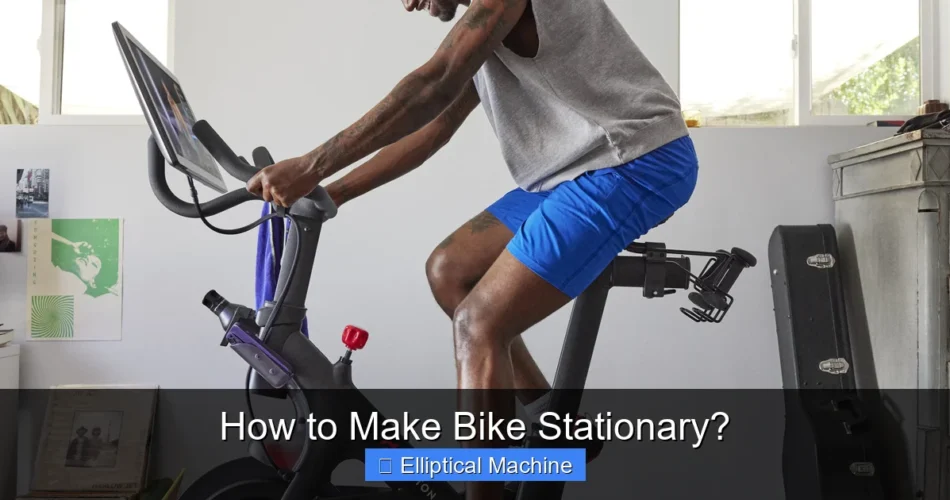
How to Make Bike Stationary? involves transforming your regular bicycle into an indoor cycling setup using various specialized equipment like trainers or rollers. This allows you to continue your training, stay active, or simply enjoy a ride regardless of weather conditions or time constraints. The versatility of this approach means nearly any road, mountain, or hybrid bike can be adapted for stationary use, providing a flexible and convenient solution for year-round cycling.
The process of converting your outdoor bike for indoor use is simpler than many imagine, offering a cost-effective alternative to dedicated exercise bikes. With the right equipment and a little setup, you can create an effective training environment right in your home, enhancing your fitness journey with consistent cycling sessions.
Quick Answers to Common Questions
What’s the simplest way to make my bike stationary for indoor riding?
The easiest method to make your bike stationary is by using a bike trainer. These clever devices securely clamp onto your bike’s rear wheel, lifting it off the ground and providing resistance for an awesome indoor workout!
Do I need special equipment to make my bike stationary, or can I just prop it up?
While you might be tempted to prop it up, dedicated equipment is much safer and more effective! A bike trainer or set of rollers is designed specifically to make your bike stationary and secure, preventing accidents and offering a proper riding experience.
Can I use any type of bike to make it stationary?
Great question! Most road bikes and mountain bikes are generally compatible with standard bike trainers. Just be sure to check the trainer’s specifications to ensure it fits your bike’s wheel size and axle type before you prepare to make your bike stationary.
📑 Table of Contents
- Understanding Your Options: Trainers vs. Rollers
- Setting Up a Wheel-On Trainer
- Embracing the Direct-Drive Trainer
- Mastering Bike Rollers for Indoor Cycling
- Essential Accessories and Enhancements for Stationary Cycling
- Troubleshooting and Maintenance for Your Indoor Setup
- Comparison of Stationary Bike Methods
Understanding Your Options: Trainers vs. Rollers
Before you embark on creating your indoor cycling rig, it’s crucial to understand the two primary categories of equipment available: bike trainers and bike rollers. Each offers a distinct experience and set of benefits, catering to different rider preferences and training goals.
Bike Trainers: Stability and Resistance
Bike trainers are the most popular choice for making a bike stationary. They securely hold your bicycle in place while allowing the rear wheel (or drivetrain) to provide resistance. There are generally two types of trainers:
- Wheel-On Trainers: These attach to the rear axle of your bike, with the rear wheel pressing against a roller that provides resistance. They are typically more affordable and straightforward to set up, making them a great entry point for indoor cycling. Resistance can be magnetic, fluid, or air-based, offering varying levels of ride feel and noise.
- Direct-Drive Trainers: These trainers require you to remove your bike’s rear wheel and mount the bike directly onto the trainer’s cassette. This offers a more realistic road feel, significantly quieter operation, and precise power measurement, as there’s no tire-to-roller slippage. Direct-drive units are often “smart” trainers, meaning they can connect to apps like Zwift to automatically adjust resistance based on virtual terrain.
Bike Rollers: Developing Balance and Smooth Pedaling
Bike rollers consist of three cylindrical drums linked by a belt, upon which you ride your bicycle. Unlike trainers, rollers don’t hold your bike in place; you must actively balance as you pedal. This technique significantly improves:
- Bike Handling Skills: Riding on rollers demands constant micro-adjustments to maintain balance, translating to better control on the road.
- Pedaling Efficiency: To stay upright and smooth, riders naturally develop a more consistent and fluid pedal stroke, eliminating “dead spots.”
- Core Strength: The need for continuous balance engages core muscles, contributing to overall stability.
While rollers present a steeper learning curve, they offer a unique and highly beneficial training experience once mastered. Some modern rollers include resistance units or “smart” capabilities for interactive training.
Setting Up a Wheel-On Trainer
Converting your bike for stationary use with a wheel-on trainer is a common and accessible method. Here’s how to do it effectively.
What You’ll Need
- Wheel-on Trainer: Choose between magnetic (fixed resistance, often louder), fluid (smoother, quieter, progressive resistance), or smart (connects to apps, automatic resistance).
- Skewer: Most trainers come with a specific quick-release skewer designed to fit the trainer’s cups. You may need an adapter for thru-axle bikes.
- Trainer Tire (Optional but Recommended): A special tire designed for trainers is more durable, quieter, and dissipates heat better than a regular road tire, preventing premature wear.
- Front Wheel Block/Riser: To level your bike and prevent the front wheel from dropping.
Step-by-Step Installation
- Replace Skewer: If your bike has a quick-release skewer, replace it with the one provided by your trainer. Ensure it’s properly tightened. For thru-axle bikes, follow the trainer manufacturer’s instructions for using the correct adapter.
- Mount the Bike: Open the clamping mechanism on the trainer. Carefully lift your bike and align the ends of the skewer with the trainer’s clamping cups. Close the clamps securely. Ensure the bike is stable and upright.
- Engage Resistance Roller: Adjust the tension knob so the resistance roller makes firm contact with your rear tire. You want enough pressure to prevent slippage, typically achieved when the tire is slightly depressed against the roller. Start with a quarter to half turn past initial contact.
- Install Front Wheel Block: Place the front wheel block under your front wheel to level the bike and keep the handlebars straight.
- Check Stability: Before riding, give your bike a gentle shake to confirm it’s securely mounted and stable.
Calibration and First Ride Tips
Many smart wheel-on trainers require calibration (often called a “spin-down”) via a companion app to ensure accurate power readings. Follow the app’s instructions. For your first ride, start in an easy gear and gradually increase speed. Pay attention to any tire slippage and adjust tension if necessary. Ensure adequate ventilation and have a water bottle handy, as indoor cycling can get warm quickly.
Embracing the Direct-Drive Trainer
For a more immersive and refined indoor cycling experience, the direct-drive trainer is an excellent choice for making your bike stationary. This setup eliminates the rear wheel entirely from the equation.
Advantages of Direct-Drive
- Realistic Ride Feel: Often equipped with heavier flywheels, direct-drive trainers provide a smooth, road-like feel.
- Quiet Operation: Without a tire rubbing against a roller, these trainers are significantly quieter, making them ideal for shared living spaces.
- Accuracy and Consistency: Power measurement is typically more accurate and consistent, as there’s no tire pressure variable or slippage.
- Reduced Tire Wear: No need for a trainer tire, as your bike’s actual tire isn’t involved in generating resistance.
- Smart Features: Most direct-drive trainers are smart trainers, offering interactive resistance changes controlled by virtual training platforms.
Installation Guidance
- Prepare the Trainer: If not already installed, mount the correct cassette for your bike’s drivetrain onto the trainer’s freehub body. You might need a cassette tool and a chain whip.
- Remove Rear Wheel: Shift your bike into the smallest cog. Open your quick-release skewer or loosen your thru-axle. Remove your rear wheel.
- Mount the Bike: Carefully lift your bike and align the dropouts with the trainer’s skewer or thru-axle. Ensure the chain sits properly on the trainer’s cassette. Secure the quick-release or tighten the thru-axle.
- Front Wheel Block: As with wheel-on trainers, a front wheel block is recommended to level your bike and provide stability.
- Connect and Calibrate: For smart direct-drive trainers, connect it to your preferred training app (e.g., Zwift, TrainerRoad) via ANT+ or Bluetooth. Perform any required calibration or spin-down procedure as instructed by the app.
Maintenance Considerations
While direct-drive trainers require less maintenance than wheel-on types (no tire wear to worry about), keep the cassette clean and lubricated. Periodically check the trainer’s firmware for updates, especially if it’s a smart unit, to ensure optimal performance and compatibility with training software.
Mastering Bike Rollers for Indoor Cycling
For those seeking to improve their cycling dynamics and balance, rollers offer a unique way to make bike stationary and enhance your skills.
Components of a Roller Setup
- The Frame: This holds the three drums in place.
- The Drums: Typically three aluminum or plastic cylinders. The front wheel rests on one, and the rear wheel rests on two, connected by a belt.
- Belt: Connects the front and middle drums, ensuring they spin in unison with the rear wheel.
- Adjustability: Most rollers allow you to adjust the front drum’s position to match your bike’s wheelbase.
- Resistance Unit (Optional): Some rollers come with an integrated or add-on resistance unit, often magnetic, to provide a more challenging workout.
Learning to Ride on Rollers
Riding on rollers requires practice and patience. Here’s a basic approach:
- Setup Near Support: Position your rollers near a sturdy wall or doorway that you can easily grab for support.
- Adjust Wheelbase: Ensure the front roller is correctly positioned for your bike’s wheelbase, so your front axle sits roughly over the center of the front roller.
- Start Easy: Clip into one pedal, grab your support, and start pedaling in an easy gear. Aim for a high cadence (around 80-90 RPM) to maintain momentum, which helps with stability.
- Look Forward: Avoid looking at your front wheel. Focus your gaze about 10-15 feet ahead, just like you would outdoors.
- Smooth Pedaling: Concentrate on a smooth, consistent pedal stroke. Any jerkiness will be amplified on rollers.
- Gradual Release: Slowly release your grip on the support as you gain confidence. Start with one hand, then both for short periods.
- Exiting: When you need to stop, grab your support, gradually slow down, and unclip.
Most riders become proficient within a few sessions. This practice significantly enhances bike control and pedaling efficiency.
Enhancing Your Roller Experience
Consider adding a fan for cooling, a towel to catch sweat, and an entertainment setup (TV, tablet) for engagement. Some advanced rollers include motion platforms or smart features that integrate with virtual training apps, adding resistance and data tracking to this unique stationary bike experience.
Essential Accessories and Enhancements for Stationary Cycling
Regardless of whether you choose a trainer or rollers, several accessories can significantly improve your comfort, performance, and overall enjoyment of this method.
Elevating the Front Wheel
For wheel-on and direct-drive trainers, a front wheel block is crucial. It levels your bike, preventing a downhill bias and ensuring a natural riding position. Some blocks offer multiple height settings, allowing you to simulate climbing. For rollers, specialized front fork stands exist that convert them into a fixed trainer, removing the balance challenge but preserving the smooth ride.
Keeping Cool and Comfortable
- Fan: An absolute necessity for indoor cycling. Without airflow, you’ll overheat quickly. A powerful floor fan or a dedicated smart fan (that adjusts speed based on heart rate or power) makes a huge difference.
- Towel: Keep a towel handy to wipe away sweat and protect your bike and flooring from corrosive perspiration.
- Sweat Guard/Net: A fabric net that stretches from your handlebars to your seat post can prevent sweat from dripping onto your frame, cables, and components, protecting them from rust and corrosion.
- Mat: A training mat placed under your bike and trainer/rollers protects your floor from sweat and vibration, and can slightly dampen noise.
Integrating Smart Technology
Many modern trainers are “smart” and connect wirelessly via ANT+ or Bluetooth to various devices and software:
- Cycling Apps: Platforms like Zwift, TrainerRoad, Sufferfest, and Rouvy offer virtual worlds, structured workouts, and training plans that make indoor cycling engaging and effective.
- Heart Rate Monitor: Essential for tracking effort and training within specific zones.
- Cadence Sensor: If your trainer doesn’t measure cadence, a separate sensor can help you monitor and improve your pedaling efficiency.
- Power Meter (if not built-in): While many smart trainers provide power data, an on-bike power meter offers consistent data across indoor and outdoor rides.
This integration of technology transforms making a bike stationary from a monotonous task into an interactive and data-driven training experience.
Troubleshooting and Maintenance for Your Indoor Setup
Even with a well-established stationary bike setup, occasional issues can arise. Regular maintenance and knowing how to troubleshoot common problems will ensure a smooth and long-lasting indoor training experience.
Common Issues and Solutions
- Tire Slippage (Wheel-On Trainers):
- Solution: Increase the tension of the roller against the tire. Ensure your tire pressure is at the manufacturer’s recommended PSI. Consider using a dedicated trainer tire for better grip and durability.
- Excessive Noise:
- Solution (Wheel-On): Ensure the trainer is on a level surface. A trainer mat can absorb vibrations. Check tire pressure and roller tension. If using a standard tire, a trainer tire can significantly reduce noise.
- Solution (Direct-Drive): Direct-drive trainers are generally quiet, but check for loose components or vibrations. Ensure your bike’s drivetrain is clean and well-lubricated.
- Solution (Rollers): Ensure the belt is properly tensioned. Lubricate any squeaky bearings if applicable.
- Connectivity Issues (Smart Trainers):
- Solution: Check that ANT+ or Bluetooth is enabled on your device (computer, tablet, phone). Ensure the trainer’s firmware is up to date. Try disconnecting and reconnecting the trainer in the app. Reduce interference from other wireless devices.
- Unstable Bike:
- Solution: Double-check that your bike is securely clamped in the trainer or that the thru-axle/quick-release is properly tightened. Ensure the trainer itself is on a stable, flat surface. For rollers, proper balance technique and looking ahead are key.
Prolonging Equipment Lifespan
Consistent care will maximize the life of your indoor training equipment:
- Cleanliness: Wipe down your bike and trainer/rollers after each session to remove sweat and dust. Sweat is corrosive and can damage components over time.
- Drivetrain Maintenance: Keep your chain, cassette, and chainrings clean and lubricated. This is particularly important for direct-drive trainers as the cassette is integral to the unit.
- Check Fasteners: Periodically check all bolts and clamps on your trainer or rollers to ensure they are secure.
- Software Updates: For smart trainers, regularly check for firmware updates to ensure optimal performance, bug fixes, and compatibility with training platforms.
- Storage: When not in use, store your equipment in a dry, temperate environment to prevent rust or material degradation.
By understanding the various methods and embracing the necessary accessories and maintenance, you can successfully make your bike stationary and unlock a world of consistent, effective indoor training, regardless of the weather or time constraints.
Comparison of Stationary Bike Methods
| Feature | Wheel-On Trainer | Direct-Drive Trainer | Bike Rollers |
|---|---|---|---|
| Bike Compatibility | Most road, MTB (adapters for thru-axle) | Most road, MTB (requires correct cassette/adapters) | Most road, MTB (ensure proper wheelbase fit) |
| Setup Complexity | Easy | Medium (cassette installation, rear wheel removal) | Easy (but learning to ride takes practice) |
| Ride Feel | Good, can be less realistic due to tire | Excellent, highly realistic | Good for skill development, requires active balance |
| Noise Level | Moderate to Loud (depends on tire/type) | Very Quiet | Moderate (tire noise, drum spin) |
| Tire Wear | High (trainer tire recommended) | None (rear wheel removed) | Low (but tire might pick up dust/debris) |
| Cost Range | Entry-level to Mid-range | Mid-range to High-end | Entry-level to Mid-range |
| Skill Focus | Fitness, structured workouts | Fitness, structured workouts, racing | Balance, pedaling efficiency, core strength |
| Smart Features | Available in higher-end models | Commonly integrated | Limited, some modern options exist |
Converting your outdoor bicycle into a stationary training machine offers immense flexibility and value. Whether you opt for the simplicity of a wheel-on trainer, the immersive experience of a direct-drive unit, or the skill-building challenge of rollers, there’s a solution to fit your needs. By selecting the right equipment and committing to regular use, you can maintain peak fitness, improve your cycling prowess, and enjoy the sport year-round, all from the comfort of your home. Embrace the journey of indoor cycling and discover the many benefits of this versatile training approach.
Frequently Asked Questions
What is the simplest method to make my bike stationary for indoor use?
A bike trainer is generally the simplest and most common method. You simply attach your bike’s rear wheel to the trainer, which provides resistance and stability, allowing you to cycle indoors.
What essential equipment do I need to make my bike stationary at home?
To make your bike stationary, you’ll primarily need a bike trainer (either wheel-on or direct-drive) or a set of cycling rollers. A front wheel block is also highly recommended for trainers to level your bike and improve stability.
What are the different types of setups to make a bike stationary, and how do they differ?
The main types are wheel-on trainers, direct-drive trainers, and rollers. Wheel-on trainers are affordable and attach to your rear wheel, while direct-drive trainers replace your rear wheel for a more realistic feel and often better data. Rollers allow you to balance yourself, improving bike handling skills.
Can I use any type of bicycle to make it stationary for indoor cycling?
Most road and mountain bikes can be adapted for stationary use with the right equipment. However, some bikes, especially those with unique thru-axle designs or very wide tires, might require specific adapters for trainers or rollers to be compatible.
How do I ensure my stationary bike setup is safe and stable during use?
Always ensure your bike is securely mounted to the trainer or rollers according to the manufacturer’s instructions. Use a front wheel block with trainers for proper leveling and consider a mat underneath to catch sweat and provide extra grip, preventing slipping.
When you purchase a product through Amazon links on EllipticalKing.com, we may earn a small commission at no extra cost to you. This helps support the site and keep our content free. As an Amazon Associate, We earn from qualifying purchases