
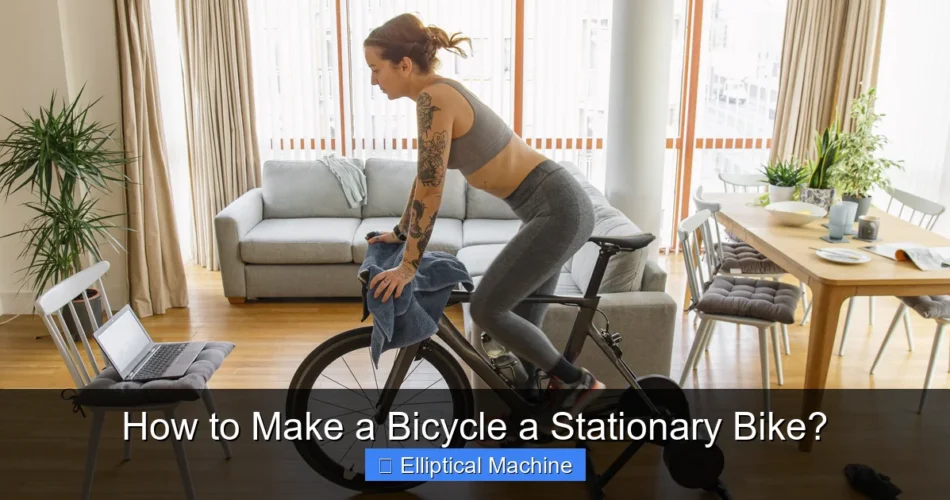
How to Make a Bicycle a Stationary Bike is a straightforward process that allows you to transform your regular outdoor bicycle into an indoor exercise machine, perfect for maintaining fitness regardless of weather or time constraints. This method offers a cost-effective and convenient way to continue cycling workouts from the comfort of your home, utilizing equipment you already own.
Quick Answers to Common Questions
What’s the key piece of equipment I need to make my bicycle a stationary bike?
To transform your regular bicycle into a stationary one, the absolute must-have is a good quality bike trainer. This clever device holds your rear wheel steady, allowing you to pedal in place!
Is converting my bike to a stationary one difficult or super expensive?
Great news—it’s typically neither! Making a bicycle a stationary bike is surprisingly straightforward and often much more budget-friendly than investing in a dedicated indoor bike.
Will using a bike trainer damage my existing bicycle?
Absolutely not, as long as you use it correctly! Bike trainers are designed to be safe for your frame and components, so you can pedal away worry-free when you make your bicycle a stationary bike.
📑 Table of Contents
- Why Convert Your Bicycle into a Stationary Bike?
- Essential Equipment for Your Stationary Setup
- Step-by-Step Guide: How to Make a Bicycle a Stationary Bike with a Trainer
- Optimizing Your Indoor Cycling Workout
- Maintaining Your Setup and Troubleshooting Common Issues
- The Long-Term Advantages of This Conversion Approach
Why Convert Your Bicycle into a Stationary Bike?
The allure of indoor cycling has surged, especially with advancements in smart training technology and the increasing desire for convenient home workouts. Converting your existing bicycle into a stationary one offers a practical solution that bypasses the need to purchase a dedicated stationary bike, which can often be a significant investment. This approach leverages your familiarity with your own bike’s fit and feel, making the transition to indoor training seamless and comfortable.
The Benefits of Indoor Cycling
- Weather Independence: No more cancelled rides due to rain, snow, extreme heat, or cold.
- Safety: Eliminate the risks associated with road cycling, such as traffic, potholes, and unexpected obstacles.
- Convenience: Exercise anytime, day or night, without leaving your home. Ideal for busy schedules.
- Structured Training: Easily follow specific training plans, monitor metrics, and integrate with virtual cycling platforms like Zwift or TrainerRoad.
- Cost-Effective: Significantly cheaper than buying a standalone stationary bike, especially if you already own a good quality bicycle.
Cost-Effectiveness and Convenience
One of the primary drivers behind adopting this method is its economic advantage. While high-end smart trainers can be an investment, they are typically less expensive than a premium stationary bike with comparable features. Furthermore, the convenience of rolling your bike onto a trainer or rollers within minutes means less procrastination and more consistent workouts. The familiarity with your own bike also means you won’t need to adjust to a new saddle, handlebar position, or pedal system, preserving your optimal riding posture and efficiency.
Essential Equipment for Your Stationary Setup
To embark on this indoor cycling journey, you’ll need specific equipment to secure your bicycle and provide resistance. The choice often comes down to two main categories: bicycle trainers or rollers, each offering a distinct experience.
Bicycle Trainers: An Overview
Bicycle trainers are devices that clamp onto your bike, lifting the rear wheel off the ground and providing resistance. They come in several types:
- Wheel-On Trainers: These are the most common and often the most affordable. Your bike’s rear wheel rests on a roller, which is connected to a resistance unit (magnetic, fluid, or air). They are easy to set up but can cause tire wear and may be a bit noisy.
- Direct-Drive Trainers: These replace your bike’s rear wheel entirely, attaching directly to your bike’s drivetrain. They offer a more realistic road feel, are generally quieter, and provide more accurate power readings. They require you to remove your rear wheel and might need a cassette that matches your bike’s gearing.
- Smart Trainers: Both wheel-on and direct-drive trainers can be “smart.” This means they connect wirelessly to apps (via ANT+ or Bluetooth) to automatically adjust resistance based on virtual routes or structured workouts. They offer an immersive and interactive training experience.
Understanding Bicycle Rollers
Rollers are a different beast altogether. They consist of three cylindrical drums over which you balance and ride your bike. Unlike trainers, rollers don’t clamp your bike; you must actively balance, much like riding on the road. This makes them excellent for improving bike handling skills, core strength, and pedaling efficiency. However, they have a steeper learning curve and typically offer less resistance than trainers, or require separate units for resistance.
Accessories for an Enhanced Experience
Beyond the core conversion equipment, several accessories can significantly improve your comfort and training effectiveness:
- Front Wheel Block: Essential for wheel-on trainers to level the bike and provide stability.
- Trainer Mat: Protects your floor from sweat and dampens noise and vibrations.
- Sweat Guard/Net: Prevents corrosive sweat from dripping onto your bike’s frame and components.
- Fan: Crucial for keeping cool during intense workouts, as there’s no natural airflow indoors.
- Tablet/Phone Mount: For easy viewing of training apps, entertainment, or virtual routes.
- Power Meter (if not using a smart trainer): To accurately measure your output and track progress.
Comparison of Stationary Bike Conversion Options
Choosing the right equipment depends on your budget, space, and training goals. Here’s a brief comparison:
| Feature | Wheel-On Trainer | Direct-Drive Trainer | Bicycle Rollers |
|---|---|---|---|
| Cost Range | Low to Mid | Mid to High | Low to Mid |
| Setup Difficulty | Easy | Moderate (rear wheel removal) | Easy (learning to balance) |
| Noise Level | Moderate to Loud | Low to Moderate | Low (but tire noise can occur) |
| Road Feel | Decent | Very Realistic | Very Realistic (with balancing) |
| Tire Wear | Significant (specific trainer tire recommended) | None | Minimal |
| Balancing Required | No | No | Yes (improves bike handling) |
| Resistance Range | Good | Excellent | Limited (unless specialized) |
Step-by-Step Guide: How to Make a Bicycle a Stationary Bike with a Trainer
Once you’ve chosen your preferred method, the setup process is relatively simple. This section focuses on using a bicycle trainer, which is the most common approach for transforming your bike for indoor use.
Preparing Your Bicycle for Indoor Use
- Clean Your Bike: A clean bike is a happy bike. Wipe down the frame and drivetrain to prevent dirt transfer indoors.
- Check Your Tires: If using a wheel-on trainer, consider using a dedicated trainer tire. These are more durable, quieter, and dissipate heat better than standard road tires. Ensure your tire is properly inflated.
- Adjust Gearing: Make sure your gears are functioning smoothly. You’ll be shifting gears to change resistance on some trainers.
Installing a Wheel-On Trainer
- Position the Trainer: Place your trainer on a stable, flat surface, ideally on a trainer mat.
- Secure the Rear Axle: Most trainers come with a quick-release skewer specifically designed for trainer use. Replace your bike’s skewer with the trainer’s skewer. This ensures a secure fit and prevents damage to your bike’s original skewer.
- Mount the Bike: Open the clamping mechanism on the trainer. Carefully lift your bike and align the skewer ends with the trainer’s quick-release cups. Close the clamps firmly.
- Engage the Roller: Spin the bolt or lever on the trainer that brings the resistance roller into contact with your rear tire. Tighten it until the roller is snug against the tire, typically requiring 2-3 turns after initial contact. The tire should not slip when you pedal.
- Add Front Wheel Block: Place the front wheel block under your front wheel to level the bike and prevent it from turning excessively.
Setting Up a Direct-Drive Trainer
- Install Cassette: If your direct-drive trainer doesn’t come with one, install a cassette that matches your bike’s gearing.
- Remove Rear Wheel: Use your quick-release or thru-axle to remove your bike’s rear wheel.
- Mount the Bike: Carefully lift your bike and align its dropouts with the trainer’s axle. Engage the quick-release or thru-axle mechanism to secure the bike firmly.
- Connect Power (if smart trainer): Plug in your smart direct-drive trainer to a power outlet.
Mastering Rollers: A Different Approach
Using rollers requires practice. Start in a doorway or near a wall for support. Maintain a steady cadence and look forward, not down at your wheels. It can take several sessions to become comfortable balancing. Once mastered, this approach significantly enhances your bike handling skills.
Optimizing Your Indoor Cycling Workout
Once your bicycle is successfully converted, the next step is to optimize your training environment and technique for effective and enjoyable workouts.
Adjusting Resistance and Gearing
For non-smart trainers, resistance is often adjusted manually on the trainer unit or by shifting your bike’s gears. Smart trainers, however, can automatically vary resistance to simulate terrain changes in virtual worlds or follow programmed workouts. Experiment with different gear combinations and resistance settings to find challenging yet sustainable levels for your training goals. A higher cadence (pedal revolutions per minute) often feels more natural and is beneficial for endurance.
Ergonomics and Comfort
Your bike’s fit outdoors should translate well indoors. However, slight adjustments might be beneficial:
- Saddle Comfort: Longer indoor sessions can sometimes highlight saddle discomfort. Ensure your saddle is level and at the correct height.
- Handlebar Position: Your handlebars should be at a comfortable height, allowing for varied hand positions to prevent numbness.
- Cooling: A strong fan is non-negotiable. Without natural wind, you’ll overheat quickly, leading to decreased performance and discomfort.
- Hydration: Keep water or an electrolyte drink readily accessible.
Integrating Smart Features
If you’ve opted for a smart trainer, connect it to your preferred training app (e.g., Zwift, Peloton, TrainerRoad, Sufferfest). These apps offer:
- Virtual Worlds: Ride alongside others in digital environments.
- Structured Workouts: Follow professional training plans tailored to your fitness level.
- Data Tracking: Monitor power, cadence, heart rate, and distance to track progress and performance.
These integrations elevate the practice of converting your bike into a stationary model, making it engaging and goal-oriented.
Maintaining Your Setup and Troubleshooting Common Issues
Proper maintenance ensures the longevity of both your bicycle and your stationary setup. Knowing how to make a bicycle a stationary bike involves understanding its care.
Routine Maintenance for Longevity
- Cleanliness: Regularly wipe down your bike and trainer to remove sweat, which is corrosive. Pay special attention to the drivetrain.
- Tire Pressure: If using a wheel-on trainer, maintain optimal tire pressure to reduce slippage and tire wear.
- Trainer Calibration: Calibrate your smart trainer periodically (as per manufacturer instructions) for accurate power readings.
- Drivetrain Lubrication: Keep your chain clean and lubricated, especially with increased indoor use.
Addressing Common Problems
- Noise: Excess noise often comes from tire-on-roller friction (ensure proper tire pressure and use a trainer tire), chain squeaking (lubricate!), or trainer itself (check for loose parts). A trainer mat can also help dampen sound.
- Slipping Tire: Increase the tension of the roller against the tire. Ensure your trainer tire isn’t worn out.
- Unstable Bike: Double-check that your bike is securely clamped to the trainer. Ensure the floor is level and your front wheel block is in place.
- Inaccurate Power Readings: Calibrate your smart trainer regularly. Ensure firmware is up to date.
The Long-Term Advantages of This Conversion Approach
Adopting this method for indoor cycling offers numerous long-term benefits that extend beyond just convenience. The practice of turning your outdoor bike into an indoor training tool can significantly impact your overall fitness, cycling performance, and even your relationship with your sport.
Fitness and Performance Gains
Consistent indoor training, facilitated by this conversion approach, allows for highly structured workouts that target specific physiological adaptations. Without external factors like traffic or weather, you can maintain precise power outputs or heart rate zones, leading to improved endurance, strength, and sprint capabilities. Many professional cyclists rely heavily on stationary bike training for targeted development, demonstrating the efficacy of this setup.
Environmental and Safety Considerations
Beyond personal fitness, this technique contributes to safer cycling habits. It provides an alternative for high-intensity intervals or night rides that might be risky on public roads. It also minimizes your carbon footprint by reducing the need for travel to gyms or specific outdoor locations for your workouts. The overall approach enhances your ability to train effectively and safely throughout the year.
Ultimately, whether you choose a wheel-on trainer, direct-drive unit, or rollers, the ability to transform your existing bike into a stationary one provides a flexible, efficient, and enjoyable way to pursue your cycling and fitness goals from the comfort of your home.
Frequently Asked Questions
What are the primary methods to turn my bicycle into a stationary bike?
The most common methods involve using a bike trainer, which clamps onto your rear wheel, or a set of rollers that your bike balances on. You can also explore DIY stands, but these often require more fabrication and careful design to be safe and effective for transforming your bicycle into a stationary bike.
Are bicycle trainers effective for making a bicycle a stationary bike?
Yes, bicycle trainers are highly effective and are the most popular solution for converting a regular bicycle into a stationary bike. They provide adjustable resistance and stability, allowing you to cycle indoors while maintaining the feel and components of your own bike.
What equipment do I need to make a stationary bike out of my bicycle?
For most setups, you will primarily need a bicycle trainer (either wheel-on or direct drive), which typically comes with a quick-release skewer for secure attachment. You might also want a front wheel block to level your bike and a mat to protect your floor and absorb sweat.
Can any type of bicycle be made into a stationary bike?
Most road bikes and mountain bikes with standard wheel sizes (700c, 26″, 27.5″, 29″) can easily be adapted for stationary use with a trainer. Some fat bikes, thru-axle bikes, or bikes with unique frame geometries might require specific adapters or specialized trainers to become a stationary bike.
What are the benefits of using my existing bicycle as a stationary bike?
Converting your bicycle allows you to train indoors during bad weather, maintain fitness year-round, and warm up before outdoor rides. It also saves space compared to owning a dedicated stationary bike and ensures you’re training on the bicycle you’re already familiar with.
How can I ensure my stationary bike setup is stable and safe?
Always ensure your bicycle trainer is placed on a flat, stable surface and that your bike is correctly secured according to the manufacturer’s instructions. A front wheel block helps prevent the front wheel from turning, adding stability and mimicking a level ride for your stationary bike setup.
When you purchase a product through Amazon links on EllipticalKing.com, we may earn a small commission at no extra cost to you. This helps support the site and keep our content free. As an Amazon Associate, We earn from qualifying purchases