
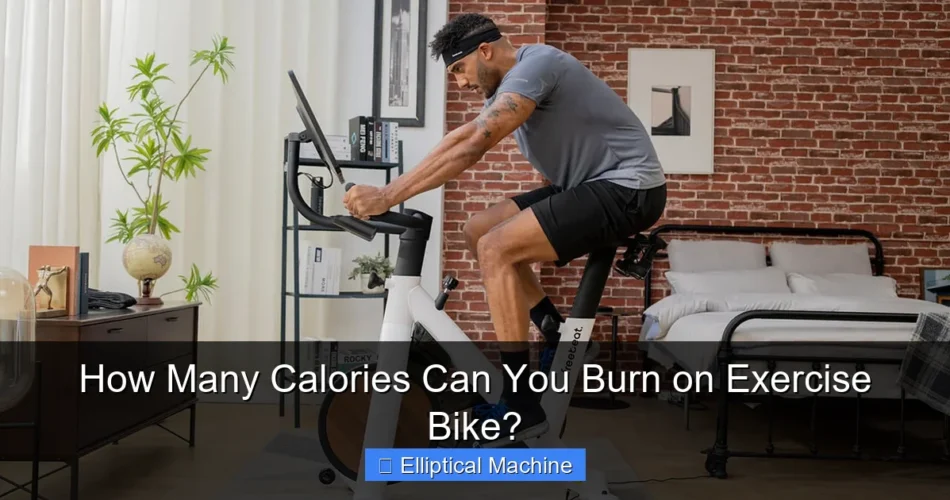
How Many Calories Can You Burn on an Exercise Bike? The exact number varies significantly based on individual factors and workout intensity, but it’s a highly effective cardiovascular exercise for calorie expenditure. This method offers a fantastic way to improve fitness and contribute to weight management goals.
Understanding the variables that influence calorie burn on an exercise bike can empower you to optimize your workouts and achieve your fitness objectives more efficiently. This approach allows for personalized training plans and measurable progress.
Quick Answers to Common Questions
What factors determine how many calories you can burn on an exercise bike?
Several factors influence how many calories you can burn on an exercise bike, including your body weight, the intensity and duration of your workout, and the resistance level you set. Heavier individuals generally burn more calories, and increasing intensity or duration significantly boosts your total expenditure.
How can I maximize my calorie burn during an exercise bike session?
To really boost how many calories you can burn on an exercise bike, try incorporating high-intensity interval training (HIIT) with bursts of intense effort followed by short recovery periods. Also, increasing your workout duration, maintaining a higher resistance, and varying your speed will all contribute to burning more calories.
Is an exercise bike a good option for burning calories for weight loss?
Absolutely! An exercise bike is an excellent cardio tool and highly effective for burning calories, which is fundamental for weight loss and improving cardiovascular health. Consistent workouts and pushing your limits will help you maximize how many calories you can burn on an exercise bike.
📑 Table of Contents
- Factors Influencing How Many Calories Can You Burn on an Exercise Bike
- Estimating Calorie Burn: METs and Formulas
- Practical Examples: How Many Calories Can You Burn on an Exercise Bike in Real Workouts
- Data Table: Estimated Calories You Can Burn on Exercise Bike
- Maximizing Your Calorie Burn on the Bike
- Beyond Calories: The Broader Benefits of Exercise Bike Workouts
Factors Influencing How Many Calories Can You Burn on an Exercise Bike
Several crucial elements determine the caloric output of your cycling session. Understanding these will help you gauge your efforts and plan more effectively to maximize your energy expenditure.
Body Weight and Composition
Your body weight is one of the most significant factors. Heavier individuals typically burn more calories than lighter individuals performing the same activity for the same duration and intensity. This is because it requires more energy to move a larger mass. Muscle mass also plays a role; individuals with more muscle tend to have a higher basal metabolic rate and may burn slightly more calories during exercise.
Exercise Intensity and Resistance
The harder you work, the more calories you burn. Intensity can be measured by your heart rate, perceived exertion, or the resistance level on the bike. Pushing a higher resistance or maintaining a faster pace (cadence) demands more energy from your body, leading to a greater calorie burn. High-intensity interval training (HIIT) is particularly effective for this, as it alternates between short bursts of maximum effort and recovery periods.
Duration of Workout
Simply put, the longer you exercise, the more calories you will burn, assuming intensity remains constant. A 60-minute session will naturally burn more calories than a 30-minute session at the same effort level. Consistency over time, even with shorter workouts, contributes significantly to overall calorie expenditure.
Fitness Level
Your current fitness level also plays a role. Beginners might find even moderate efforts challenging, leading to a higher initial calorie burn relative to their effort. As fitness improves, the body becomes more efficient, and you might need to increase intensity or duration to achieve the same caloric output, or to continue progressing.
Bike Type and Efficiency
While often subtle, the type of exercise bike can slightly influence calorie burn. Upright bikes, recumbent bikes, and spin bikes each engage muscles slightly differently. Spin bikes, often used in instructor-led classes, encourage high intensity and full-body engagement, potentially leading to higher calorie expenditure for a given perceived effort compared to a more relaxed recumbent bike ride.
Estimating Calorie Burn: METs and Formulas
Most exercise bikes provide an estimate of calories burned, but these are often generalized. For a more informed estimate, understanding Metabolic Equivalents (METs) can be helpful.
Understanding METs (Metabolic Equivalents)
A MET is a unit used to estimate the metabolic cost of physical activity. One MET is the energy expended while sitting quietly (approximately 1 calorie per kilogram of body weight per hour). Various activities have different MET values:
- Light cycling (under 10 mph): ~4 METs
- Moderate cycling (10-12 mph): ~6.8 METs
- Vigorous cycling (12-14 mph): ~8 METs
- Very vigorous cycling (over 16 mph): ~12 METs
The General Calorie Burn Formula
You can estimate calories burned using this formula:
Calories Burned = METs x Body Weight (kg) x Duration (hours)
For example, a 70 kg person cycling moderately (6.8 METs) for 0.5 hours (30 minutes) would burn approximately: 6.8 x 70 kg x 0.5 hours = 238 calories.
Limitations of Estimates
It’s important to remember that these are estimates. Individual metabolic rates, core body temperature, and even hydration levels can slightly alter actual calorie expenditure. The most accurate measurements usually come from laboratory settings or sophisticated wearables with advanced algorithms and heart rate monitoring.
Practical Examples: How Many Calories Can You Burn on an Exercise Bike in Real Workouts
Let’s look at some practical scenarios to illustrate the range of calorie burn you can expect. These examples are based on an average individual weighing approximately 150 lbs (68 kg).
Light Intensity Cycling (e.g., leisurely pace, low resistance)
- Duration: 30 minutes
- Approximate Speed: 5-9 mph
- Effort Level: You can easily hold a conversation.
- Estimated Calories Burned: 100-150 calories.
- This level is great for warm-ups, cool-downs, or active recovery.
Moderate Intensity Cycling (e.g., steady pace, moderate resistance)
- Duration: 30 minutes
- Approximate Speed: 10-12 mph
- Effort Level: You can talk, but it’s somewhat difficult; you are sweating.
- Estimated Calories Burned: 200-300 calories.
- This is excellent for building cardiovascular fitness and consistent calorie expenditure.
Vigorous Intensity Cycling (e.g., fast pace, high resistance, or inclines)
- Duration: 30 minutes
- Approximate Speed: 12-16 mph (or high resistance equivalent)
- Effort Level: You can only speak a few words at a time; you are breathing hard and sweating profusely.
- Estimated Calories Burned: 300-450+ calories.
- This challenging level significantly boosts calorie burn and enhances endurance.
Remember, extending these durations will proportionally increase the calorie burn. For instance, a 60-minute vigorous session could easily burn 600-900+ calories for a 150 lb individual.
Data Table: Estimated Calories You Can Burn on Exercise Bike
This table provides a general guide for calorie expenditure based on body weight, intensity, and duration. Actual numbers may vary.
| Body Weight (lbs) | Body Weight (kg) | 30 Mins Light (MET 4) | 30 Mins Moderate (MET 6.8) | 30 Mins Vigorous (MET 8) | 60 Mins Vigorous (MET 8) |
|---|---|---|---|---|---|
| 120 | 54 | 108 | 184 | 216 | 432 |
| 150 | 68 | 136 | 231 | 272 | 544 |
| 180 | 82 | 164 | 279 | 328 | 656 |
| 200 | 91 | 182 | 309 | 364 | 728 |
| 220 | 100 | 200 | 340 | 400 | 800 |
Maximizing Your Calorie Burn on the Bike
To get the most out of your exercise bike workouts and achieve a higher calorie burn, consider implementing these strategies:
Incorporating HIIT (High-Intensity Interval Training)
HIIT involves alternating between short bursts of maximum effort and brief recovery periods. For example, 30 seconds of all-out pedaling followed by 60-90 seconds of moderate pedaling, repeated for 20-30 minutes. This method is incredibly effective for calorie burn during the workout and also triggers an “afterburn effect” (EPOC – Excess Post-exercise Oxygen Consumption), meaning your body continues to burn calories at an elevated rate even after you’ve stopped exercising.
Varying Resistance and Cadence
Don’t stick to the same settings. Routinely changing the resistance and your pedaling speed (cadence) challenges your muscles in different ways and keeps your body from adapting too quickly. Incorporate periods of high resistance at a slower cadence (simulating hills) and lower resistance at a faster cadence (sprinting on flat ground).
Maintaining Proper Form
Good posture is key. Sit upright with a slight forward lean, engage your core, and keep your shoulders relaxed. Ensure your bike is adjusted correctly (seat height, handlebar position) to prevent injury and optimize muscle engagement, allowing you to sustain higher intensities for longer.
Progressive Overload
To continue burning more calories and improving fitness, you need to progressively challenge yourself. This could mean increasing the duration of your workouts, upping the intensity or resistance, or reducing rest periods in your HIIT sessions. Your body adapts over time, so consistent progression is essential.
Fueling and Recovery
While not directly related to the calories burned during the workout itself, proper nutrition and adequate recovery are vital for performance and overall metabolic health. Eating a balanced diet provides the energy needed for intense workouts, and sufficient rest allows your muscles to repair and grow, contributing to a healthier metabolism.
Beyond Calories: The Broader Benefits of Exercise Bike Workouts
While calorie burn is a significant motivator for many, the exercise bike offers a wealth of additional health benefits that contribute to overall well-being.
Cardiovascular Health
Regular cycling strengthens your heart and lungs, improving blood circulation and reducing the risk of heart disease, high blood pressure, and stroke. It’s an excellent way to boost your stamina and endurance.
Muscle Toning
While primarily a cardio exercise, cycling effectively tones and strengthens the muscles in your lower body, including your quadriceps, hamstrings, glutes, and calves. Engaging your core also provides stabilization throughout the ride.
Low-Impact Exercise
Unlike running or jumping, cycling is a low-impact activity, meaning it puts minimal stress on your joints. This makes it an ideal option for individuals with joint pain, recovering from injuries, or those looking for a gentle yet effective workout.
Mental Well-being
Exercise, including cycling, is a powerful stress reliever. It can boost mood, reduce symptoms of anxiety and depression, and improve sleep quality. The rhythmic motion and focus on your workout can be meditative and provide a valuable mental break.
In conclusion, an exercise bike is a remarkably versatile and effective tool for burning calories, improving cardiovascular health, and enhancing overall fitness. By understanding the factors that influence calorie expenditure and applying smart training strategies like varying intensity and incorporating HIIT, you can significantly increase the calories you burn and achieve your health and fitness goals. Whether your aim is weight loss, endurance building, or simply maintaining an active lifestyle, the humble exercise bike proves to be a powerful ally.
Frequently Asked Questions
How many calories can you burn on an exercise bike in a typical workout?
The number of calories burned varies significantly, but a moderate 30-minute session on an exercise bike can burn anywhere from 200 to 400 calories for an average person. This range depends heavily on individual factors like weight, intensity, and fitness level.
What factors influence the total calories burned on an exercise bike?
Several factors impact your calorie expenditure, including your body weight, the intensity and duration of your ride, and the resistance level used. Generally, heavier individuals and those cycling at higher intensities for longer periods will burn more calories.
How can I maximize my calorie burn during an exercise bike session?
To maximize calorie burn on your exercise bike, focus on increasing both the intensity and duration of your workouts. Incorporating high-intensity interval training (HIIT) with periods of maximal effort followed by short recovery can be particularly effective.
Is an exercise bike effective for weight loss through calorie burning?
Yes, an exercise bike is a highly effective tool for weight loss because it allows you to burn a substantial number of calories with relatively low impact on your joints. Consistent calorie burning through cycling, combined with a balanced diet, creates the necessary calorie deficit for losing weight.
Does the type of exercise bike affect calorie expenditure?
While all exercise bikes can burn calories, there can be slight differences. Upright bikes, recumbent bikes, and spin bikes generally offer similar calorie burn if the intensity is comparable, but spin bikes often encourage more vigorous, standing efforts that might slightly increase expenditure. Air bikes, which engage both arms and legs, can potentially burn more calories due to full-body engagement.
How long do I need to ride an exercise bike to burn a significant number of calories?
To burn a significant number of calories, aim for at least 30 to 60 minutes of moderate to high-intensity riding on your exercise bike. Consistency over time is more crucial than a single long session, as regular workouts accumulate calorie burn and contribute to fitness goals.
When you purchase a product through Amazon links on EllipticalKing.com, we may earn a small commission at no extra cost to you. This helps support the site and keep our content free. As an Amazon Associate, We earn from qualifying purchases