
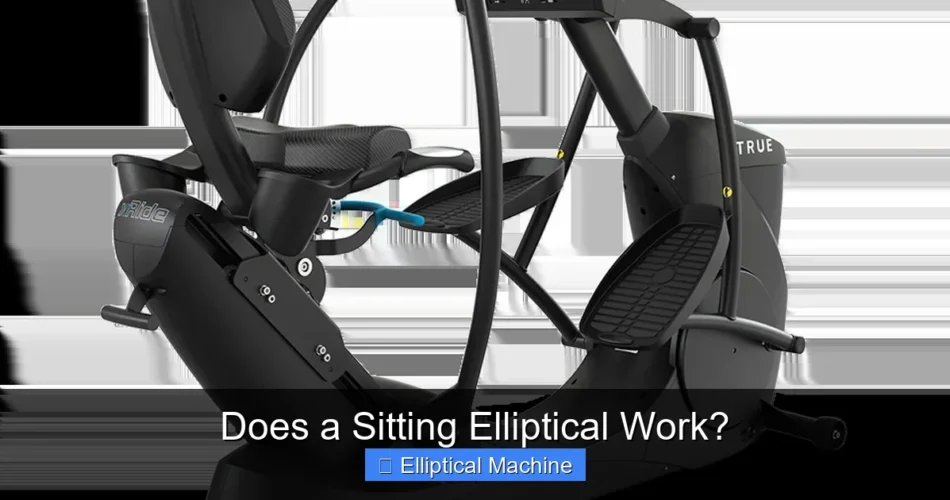
Does a Sitting Elliptical Work? Yes, a sitting elliptical absolutely works, providing a valuable, low-impact exercise option particularly for individuals seeking convenient, accessible, or joint-friendly cardiovascular activity. This method offers a unique approach to fitness, allowing users to engage their lower body muscles and elevate their heart rate while seated.
This technique is not a direct replacement for high-intensity, full-body workouts, but it effectively contributes to daily activity goals, improves circulation, and supports overall well-being, especially for those with limited mobility or desk-bound jobs.
Quick Answers to Common Questions
Does a sitting elliptical actually provide a good workout?
Yes, a sitting elliptical can absolutely provide a good low-impact workout, especially for improving circulation and maintaining activity while seated. While it won’t replace a high-intensity gym session, it’s fantastic for consistent movement and calorie burn throughout your day.
Can I lose weight or burn many calories using a sitting elliptical?
A sitting elliptical contributes to calorie expenditure, which is vital for weight loss when combined with a healthy diet. Consistent use of your seated elliptical can significantly add to your daily calorie burn and overall activity level.
What are the main benefits of using a seated elliptical machine?
The biggest perks of a seated elliptical include improved circulation, increased daily activity without joint strain, and boosted productivity by moving while you work. It’s a fantastic way to combat sedentary lifestyles and keep your body moving.
📑 Table of Contents
- Understanding the Sitting Elliptical: What It Is and How It Differs
- The Benefits of a Seated Elliptical Workout
- Does a Sitting Elliptical Work for Weight Loss? Setting Realistic Expectations
- Maximizing Your Seated Elliptical Experience
- Potential Limitations and Considerations
- Comparative Data: Sitting vs. Standing Elliptical
- Conclusion
Understanding the Sitting Elliptical: What It Is and How It Differs
A sitting elliptical, often called an under-desk elliptical or mini elliptical, is a compact exercise machine designed for use while seated. Unlike traditional ellipticals that require standing and engage the upper body through moving handles, these devices focus primarily on lower body movement.
Core Mechanism and Design
The fundamental mechanism of a sitting elliptical mimics the elliptical motion of its larger counterparts, but in a significantly scaled-down and horizontal plane. Users place their feet on pedals and move them in an elliptical path, engaging the leg muscles. Most models include adjustable resistance levels, allowing users to control the intensity of their workout. They are typically lightweight, portable, and quiet, making them ideal for office environments or home use without disturbing others.
Key Differences from Traditional Ellipticals and Treadmills
The distinctions are significant:
- Seated vs. Standing: The most obvious difference is the user’s position. This fundamental shift impacts muscle engagement and calorie expenditure.
- Portability and Size: Sitting ellipticals are compact, fitting under a desk or in small spaces, whereas traditional machines are large, stationary pieces of gym equipment.
- Impact Level: Both types of ellipticals are low-impact compared to treadmills, but the seated version further reduces impact on the knees and hips due to the lack of body weight support.
- Muscle Engagement: A traditional elliptical provides a full-body workout, engaging the arms, core, and lower body. The seated elliptical focuses almost exclusively on the lower body.
- Intensity Potential: While effective, the maximum intensity achievable on a seated elliptical is generally lower than on a standing machine, which allows for higher resistance and a greater range of motion.
The Benefits of a Seated Elliptical Workout
Despite its compact size and seated operation, a seated elliptical workout offers a range of compelling benefits, making it a valuable tool for many individuals.
Accessibility and Inclusivity
One of the primary advantages of this approach is its remarkable accessibility. It caters to a diverse group of users, including:
- Individuals with Limited Mobility: Those recovering from injuries, with chronic joint pain, or who find standing exercise challenging can still achieve cardiovascular benefits.
- Elderly Individuals: Provides a safe and stable way to maintain activity levels without the risk of falls associated with standing exercises.
- People with Sedentary Lifestyles: Enables office workers or those with desk jobs to incorporate movement throughout their day without leaving their workspace.
Calorie Expenditure and Cardiovascular Health
While not as intense as running, consistent use of an under-desk elliptical certainly burns calories and elevates heart rate. The exact calorie burn depends on factors like resistance, speed, duration, and individual metabolism. Regular use can:
- Contribute to daily energy expenditure, supporting weight management.
- Improve cardiovascular endurance by strengthening the heart and lungs.
- Help maintain healthy blood pressure and cholesterol levels.
Muscle Engagement and Toning
A sitting elliptical primarily targets the major muscles of the lower body:
- Quadriceps: Engaged during the forward pushing motion.
- Hamstrings: Activated during the pulling back motion.
- Glutes: Work to power the leg movement.
- Calves: Involved in stabilizing the foot and assisting with the pedal rotation.
Consistent use can lead to improved muscle endurance and toning in these areas.
Convenience and Integration into Daily Life
The unmatched convenience of the seated elliptical is a major draw. Users can:
- Exercise while working at a desk, watching TV, or reading.
- Break up long periods of sitting, reducing the risks associated with prolonged sedentary behavior.
- Achieve fitness goals without requiring dedicated time slots or trips to the gym.
Low-Impact Exercise
Like traditional ellipticals, the motion is fluid and continuous, placing minimal stress on joints. This makes it an excellent choice for individuals with:
- Arthritis or joint pain in the knees, hips, or ankles.
- Recovery from certain surgeries or injuries.
- A need for gentle rehabilitation exercises.
Does a Sitting Elliptical Work for Weight Loss? Setting Realistic Expectations
When considering “Does a Sitting Elliptical Work?” specifically for weight loss, it’s crucial to set realistic expectations. While it can certainly contribute, it’s not a standalone miracle solution.
Calorie Burn vs. Intensity
For significant weight loss, a calorie deficit is necessary – burning more calories than you consume. A seated elliptical does burn calories, but generally at a lower rate than more intense activities like running, cycling, or even a standing elliptical. For example, a 150-pound person might burn approximately 150-250 calories per hour on a moderate setting, whereas high-intensity exercise could burn significantly more. To maximize calorie burn with this approach, you need to:
- Increase resistance to challenge your muscles.
- Maintain a higher speed and consistent cadence.
- Extend the duration of your workouts.
The Role of Consistency and Diet
Any exercise contributes to weight loss only when combined with consistent effort and a balanced, calorie-controlled diet. Using a sitting elliptical for 30 minutes once a week, without dietary changes, is unlikely to yield dramatic results. However, incorporating 1-2 hours of seated elliptical use daily, alongside mindful eating, can make a measurable difference by adding to your total daily energy expenditure.
Complementary Exercise
For optimal weight loss and overall fitness, it’s best to integrate the sitting elliptical into a broader fitness regimen. This might include:
- Strength training to build muscle, which boosts metabolism.
- Higher-intensity cardiovascular activities a few times a week.
- Flexibility and balance exercises.
Used as a complement, the seated elliptical is an excellent tool to boost activity levels and support a holistic weight loss journey.
Maximizing Your Seated Elliptical Experience
To truly harness the potential of your sitting elliptical, a few strategic considerations can enhance its effectiveness and your overall experience.
Proper Setup and Ergonomics
Correct positioning is key to comfort and effectiveness:
- Chair Height: Ensure your chair allows your knees to bend at a comfortable angle (around 90 degrees) when your feet are on the pedals.
- Distance from Desk: Position the machine so your knees don’t hit the underside of your desk or your elbows aren’t cramped.
- Foot Placement: Keep your entire foot on the pedal, driving through the heel and ball of your foot.
- Posture: Maintain an upright posture, engaging your core slightly to avoid slouching, even though your legs are doing the primary work.
Varying Intensity and Resistance
Don’t just set it and forget it. To keep your muscles challenged and elevate your heart rate, regularly adjust the resistance. Incorporate interval training by alternating periods of high resistance/speed with lower resistance/speed. This makes your workout more dynamic and effective for burning calories and building endurance.
Incorporating Upper Body and Core
While the machine targets the lower body, you can add an upper body and core component:
- Desk Push-ups/Dips: Take short breaks to do quick desk push-ups or chair dips.
- Light Hand Weights: Use small dumbbells for bicep curls, tricep extensions, or shoulder presses while pedaling.
- Core Engagement: Actively pull your belly button towards your spine while you pedal to engage your abdominal muscles.
Tracking Progress and Goals
Many sitting ellipticals come with basic tracking capabilities (time, distance, calories). Use these to set goals and monitor your progress. Aim to increase duration, resistance, or speed over time. Celebrate small victories, like reaching a certain “distance” or increasing your daily active minutes.
Potential Limitations and Considerations
While beneficial, the sitting elliptical is not without its limitations. Understanding these helps in forming realistic expectations and integrating it appropriately into a fitness regimen.
Lower Intensity Compared to Standing Options
By its very design, a seated elliptical cannot match the intensity or calorie burn of a standing elliptical, a treadmill, or outdoor running. The reduced range of motion and lack of full body weight bearing mean it’s harder to achieve maximum heart rate or significant muscle hypertrophy. It excels as a supplementary tool or for specific needs, rather than a primary high-intensity workout machine.
Limited Full-Body Engagement
As discussed, the primary focus is on the lower body. Unlike a traditional elliptical that includes moving handlebars for upper body engagement, or swimming which works the entire body, this machine offers minimal benefit to the arms, shoulders, or core unless additional exercises are integrated. Users seeking a comprehensive full-body workout will need to complement this practice with other activities.
Risk of Sedentary Lifestyle Habits (if not used correctly)
There’s a subtle risk that relying solely on a sitting elliptical might inadvertently reinforce sedentary habits if users believe it fully negates long periods of sitting. While it’s excellent for breaking up inactivity, it doesn’t replace the benefits of standing, walking, or more dynamic movement throughout the day. It should be seen as an enhancement to daily movement, not a complete substitute for leaving your chair.
Investment and Quality Differences
The market for sitting ellipticals has expanded significantly, leading to a wide range of quality and price points. Cheaper models might lack durability, smooth operation, or consistent resistance, which can hinder the effectiveness and enjoyment of the workout. Investing in a reputable brand with good reviews is often advisable to ensure a satisfactory experience and longevity of the device.
Comparative Data: Sitting vs. Standing Elliptical
To further illustrate “Does a Sitting Elliptical Work?”, here’s a simplified comparison of key attributes between sitting and standing elliptical machines:
| Feature | Sitting Elliptical | Standing Elliptical (Traditional) |
|---|---|---|
| Primary User Position | Seated | Standing |
| Main Muscle Groups Engaged | Quads, Hamstrings, Glutes, Calves (lower body only) | Quads, Hamstrings, Glutes, Calves, Core, Shoulders, Arms (full body) |
| Calorie Burn Potential (per hour, moderate intensity) | ~150-250 kcal | ~300-600 kcal |
| Impact on Joints | Very Low | Low |
| Portability | High (compact, often lightweight) | Low (large, heavy, stationary) |
| Convenience / Multitasking | Excellent (e.g., under desk, watching TV) | Limited (requires dedicated workout time) |
| Intensity Range | Low to Moderate | Moderate to High |
| Ideal For | Accessibility, rehabilitation, increasing NEAT, breaking up sitting, supplementary cardio | Full-body cardio, calorie burning, overall fitness, higher intensity training |
Conclusion
In summary, the answer to “Does a Sitting Elliptical Work?” is a resounding yes, though its “work” differs from that of a traditional elliptical or other high-intensity exercises. This versatile machine serves as an incredibly effective tool for increasing daily activity, boosting circulation, and supporting cardiovascular health with minimal impact on joints. It shines as an accessible option for individuals with limited mobility, those recovering from injuries, or anyone seeking to integrate more movement into a sedentary lifestyle.
While it may not replace high-intensity, full-body workouts for avid fitness enthusiasts, this practice is invaluable for consistent calorie expenditure, lower body muscle engagement, and maintaining overall well-being. By setting realistic expectations and utilizing it as a complementary fitness tool, a sitting elliptical can significantly contribute to a more active and healthier lifestyle.
Frequently Asked Questions
Does a sitting elliptical provide an effective workout?
Yes, a sitting elliptical can offer a beneficial low-impact workout, particularly for cardiovascular fitness and lower body muscle engagement. It allows you to maintain activity while seated, making it an excellent option for those with mobility concerns or desk-bound jobs.
What muscles does a sitting elliptical primarily work?
A sitting elliptical primarily targets your glutes, hamstrings, quadriceps, and calf muscles, similar to a traditional elliptical but with less emphasis on core and upper body due to the seated position. It engages these major lower body muscle groups through a smooth, circular motion.
Can I achieve weight loss or improve cardiovascular health with a sitting elliptical?
Absolutely, using a sitting elliptical regularly can contribute to calorie expenditure and improve your cardiovascular endurance. Consistent use, combined with a balanced diet, is key to achieving weight loss goals and strengthening your heart and lungs.
Is a sitting elliptical a good option for office use or individuals with limited mobility?
Yes, the compact and seated design makes a sitting elliptical an excellent choice for incorporating movement into your workday without leaving your desk. It’s also highly beneficial for individuals with limited standing mobility or those recovering from injuries, providing a gentle yet effective exercise option.
When you purchase a product through Amazon links on EllipticalKing.com, we may earn a small commission at no extra cost to you. This helps support the site and keep our content free. As an Amazon Associate, We earn from qualifying purchases