
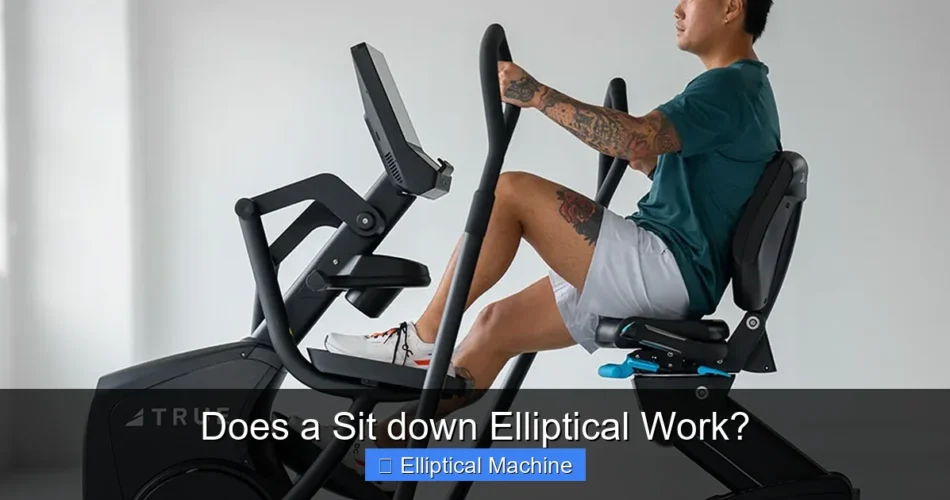
Does a Sit down Elliptical Work? Yes, absolutely, this fitness equipment offers an effective and often overlooked cardiovascular and lower-body workout. While differing from its standing counterpart, this method provides significant benefits, particularly for specific user groups, making it a valuable addition to many fitness routines.
This approach to elliptical training allows individuals to engage in low-impact exercise from a comfortable, seated position. The practice targets key muscle groups while minimizing stress on joints, making it an excellent option for a diverse range of users seeking accessible yet challenging workouts.
Quick Answers to Common Questions
Does a sit down elliptical really work for cardio?
Yes, a sit down elliptical absolutely works for getting a great cardiovascular workout! By engaging your legs and often your arms, it effectively raises your heart rate to burn calories and improve endurance.
Can a sit down elliptical help me lose weight?
Absolutely! Like any consistent cardio exercise, regularly using a sit down elliptical can significantly contribute to weight loss by burning calories. Pair it with a healthy diet for optimal results!
What muscles does a sit down elliptical target?
A sit down elliptical primarily targets your quads, hamstrings, glutes, and calves, much like a traditional elliptical. Many models also include arm handles to engage your biceps, triceps, and shoulders for an even more comprehensive workout.
📑 Table of Contents
- Understanding the Sit-Down Elliptical (Does a Sit down Elliptical Work?)
- The Benefits of This Low-Impact Approach
- Maximizing Your Workout on a Seated Elliptical (Does a Sit down Elliptical Work?)
- Calorie Burn and Weight Management
- Who Can Benefit Most from This Exercise Method?
- Potential Limitations and Considerations
Understanding the Sit-Down Elliptical (Does a Sit down Elliptical Work?)
To fully appreciate the efficacy of a sit-down elliptical, it’s essential to understand its design and how it differs from traditional machines. Often referred to as a recumbent elliptical or seated elliptical, this apparatus combines elements of a recumbent bike with the elliptical motion, creating a unique exercise experience.
What is a Sit-Down Elliptical?
A sit-down elliptical features a comfortable seat, usually with a backrest, similar to a recumbent bicycle. Instead of pedaling in a circular motion like a bike, users push and pull foot pedals along an elliptical path, mimicking the natural stride pattern of a traditional elliptical. Many models also include moving handlebars, allowing for optional upper body engagement, though the primary focus remains on the lower body.
The core principle behind this machine is to provide a smooth, continuous motion that reduces impact on the knees, hips, and ankles. This makes it a popular choice for rehabilitation, seniors, and anyone needing a gentler form of exercise.
Key Differences from Traditional Ellipticals and Bikes
- Seated Position: The most obvious difference is the seated posture. Unlike standing ellipticals, which engage core and stabilizing muscles more intensely due to maintaining balance, the seated version offloads this responsibility to the seat, allowing for greater focus on leg muscles and cardiovascular work.
- Impact Level: Both seated and standing ellipticals are low-impact, but the seated version often feels even gentler due to the support of the seat. Recumbent bikes offer similar joint benefits but typically provide a more isolated leg workout without the elliptical motion’s varied muscle engagement.
- Muscle Engagement: While traditional ellipticals offer a more holistic full-body workout (especially with moving handles), the seated elliptical primarily targets the quadriceps, hamstrings, glutes, and calves. Some models with movable handlebars can engage the biceps, triceps, shoulders, and back, but the intensity is generally lower than on a standing machine.
- Comfort and Accessibility: The seated design significantly enhances comfort and accessibility. It’s easier to get on and off, and the supportive seat makes longer workouts more comfortable, especially for individuals with balance issues or back pain.
The Benefits of This Low-Impact Approach
The sit-down elliptical offers a compelling array of benefits that cater to a wide audience, proving its effectiveness as a fitness tool.
Cardiovascular Health
One of the primary advantages of this fitness machine is its ability to deliver an excellent cardiovascular workout. By maintaining a consistent pace and appropriate resistance, users can elevate their heart rate into target zones, strengthening the heart and lungs. Regular sessions can improve endurance, reduce blood pressure, and contribute to overall heart health, just like a traditional elliptical or stationary bike. The continuous, rhythmic motion makes it easy to sustain an aerobic pace.
Joint-Friendly Exercise
For many, the appeal of a seated elliptical lies in its minimal impact on joints. The smooth, gliding motion prevents the jarring forces associated with activities like running or jumping. This makes it an ideal option for:
- Individuals recovering from injuries, particularly to the knees or ankles.
- Older adults seeking to maintain mobility and fitness without risk.
- People with chronic joint conditions like arthritis.
- Anyone looking for a gentler alternative to high-impact cardio.
The design supports the body weight, further lessening the load on the lower extremities.
Muscle Engagement
While often perceived as a “passive” exercise, the sit-down elliptical effectively engages several major muscle groups in the lower body. The pushing motion primarily activates the quadriceps and glutes, while the pulling motion works the hamstrings and calves. If the machine includes moving handlebars, the upper body (biceps, triceps, shoulders, back) also gets involved, promoting a more comprehensive, though still primarily lower-body, workout. Adjusting resistance levels can significantly increase the intensity and muscle activation.
Accessibility and Rehabilitation
The accessible design of the sit-down elliptical makes it invaluable for rehabilitation and for individuals with limited mobility. Its seated position reduces the need for balance and stability, making it safe for those who might struggle with standing exercises. Physical therapists often recommend this equipment for patients recovering from surgery or injury to regain strength and range of motion without putting undue stress on healing tissues. It provides a controlled environment to rebuild fitness.
Maximizing Your Workout on a Seated Elliptical (Does a Sit down Elliptical Work?)
To truly harness the potential of this exercise method, it’s crucial to adopt proper techniques and integrate effective training strategies. Understanding how to optimize your sessions will ensure you reap the full spectrum of benefits a sit-down elliptical can offer.
Proper Form and Posture
Even in a seated position, proper form is paramount to prevent strain and maximize muscle engagement.
- Seat Adjustment: Ensure the seat is adjusted so your knees have a slight bend at the furthest point of the pedal stroke. Your feet should be flat on the pedals.
- Back Support: Sit upright with your back firmly against the backrest. Avoid slouching, as this can lead to back pain and reduce core engagement.
- Engage Core: Lightly engage your abdominal muscles throughout the workout to stabilize your torso.
- Handlebar Grip: If using moving handlebars, grip them firmly but not too tightly. Allow your arms to move naturally with the elliptical motion, pushing and pulling to engage the upper body.
- Foot Placement: Keep your entire foot in contact with the pedal throughout the stride, driving through the heels and balls of your feet.
Incorporating Resistance and Interval Training
Varying your workout intensity is key to challenging your body and avoiding plateaus.
- Resistance Training: Gradually increase the resistance level to make your muscles work harder. This will boost calorie burn and muscle strengthening. Start with a manageable resistance and increase it as your fitness improves.
- Interval Training: Implement High-Intensity Interval Training (HIIT) by alternating between periods of high intensity (higher resistance and/or faster pace) and periods of lower intensity (reduced resistance or slower pace). For example, 2 minutes high intensity followed by 3 minutes low intensity, repeated several times. This method is highly effective for improving cardiovascular fitness and burning calories.
- Duration: Aim for at least 30 minutes of moderate-intensity exercise most days of the week, or shorter, more intense interval sessions if preferred.
Tracking Progress
Monitoring your progress can provide motivation and help you adjust your training plan. Utilize the machine’s console to track:
- Time: Increase your workout duration over time.
- Distance: Set distance goals and try to beat them.
- Calories Burned: Track this as a general indicator of effort.
- Heart Rate: Most machines have heart rate monitors. Stay within your target heart rate zone for optimal cardiovascular benefits.
- Resistance Levels: Note the resistance levels you use for different parts of your workout.
Keeping a workout log can also be beneficial for visualizing your improvements.
Calorie Burn and Weight Management
A common question regarding any exercise equipment is its effectiveness for calorie expenditure and weight loss. The seated elliptical can indeed be a powerful tool in a weight management strategy.
Factors Affecting Calorie Expenditure
The number of calories burned on a sit-down elliptical depends on several factors:
- Body Weight: Heavier individuals generally burn more calories.
- Intensity: The higher the resistance and speed, the more calories you’ll burn. High-intensity interval training (HIIT) can significantly boost post-exercise calorie burn.
- Duration: Longer workouts naturally lead to greater calorie expenditure.
- Muscle Engagement: Engaging the upper body with moving handlebars will increase calorie burn compared to just using the lower body.
- Metabolism: Individual metabolic rates play a role in how efficiently calories are burned.
While often slightly less than a standing elliptical (due to reduced core/stability engagement), it can still be highly effective, especially when intensity is properly managed.
Sample Workout Intensity Table
Here’s a general guide for estimated calorie burn per 30 minutes on a sit-down elliptical for a 150-pound individual. Actual numbers will vary.
| Intensity Level | Resistance Setting (Approx.) | Approx. RPM/Pace | Estimated Calorie Burn (30 min) |
|---|---|---|---|
| Low (Warm-up/Cool-down) | 1-3 | 30-40 RPM | 80-120 calories |
| Moderate (Steady State) | 4-7 | 40-50 RPM | 180-250 calories |
| High (Intervals/Sustained) | 8-12 | 50-60+ RPM | 280-380+ calories |
Note: These are approximations. Consult your machine’s display and a fitness professional for personalized guidance.
Integrating into a Weight Loss Plan
For weight loss, consistency is more important than extreme intensity for short bursts. Regular sessions on a seated elliptical, combined with a balanced diet, can create the necessary calorie deficit. The low-impact nature means you can work out more frequently without excessive strain, aiding long-term adherence to your fitness plan. Incorporating strength training alongside your elliptical workouts will also help build muscle, further boosting your metabolism.
Who Can Benefit Most from This Exercise Method?
The versatility and design of the sit-down elliptical make it particularly suitable for several specific demographics and fitness goals.
Beginners and Seniors
For those new to exercise, or seniors looking to maintain an active lifestyle, the seated elliptical offers a safe and approachable starting point. The low impact reduces the risk of injury, and the supportive seat provides stability, building confidence for consistent workouts. It’s an excellent way to gently introduce cardiovascular fitness and improve endurance without feeling overwhelmed.
Individuals with Mobility Issues or Injuries
People recovering from orthopedic surgery (knee, hip, ankle), dealing with chronic pain, or those with balance and stability issues will find the seated elliptical invaluable. It allows for controlled, non-weight-bearing movement that promotes blood flow, strengthens surrounding muscles, and maintains flexibility, all crucial aspects of rehabilitation. The secure seated position minimizes the risk of falls or further injury.
Those Seeking a Supplemental Workout
Even seasoned athletes or regular gym-goers can benefit from incorporating the seated elliptical into their routine. It’s a great option for active recovery days, providing blood flow and light movement without stressing muscles that might be sore from more intense workouts. It can also serve as an effective cross-training tool to target specific leg muscles from a different angle or when outdoor conditions aren’t favorable for other activities.
Potential Limitations and Considerations
While highly effective, it’s also important to acknowledge that the sit-down elliptical has certain limitations compared to other fitness equipment.
Full Body Engagement Comparison
Compared to a standing elliptical with moving handlebars, a sit-down version generally offers less intense upper body and core engagement. Because the seat provides stability, the core muscles aren’t working as hard to maintain balance. If a full-body, standing workout is your primary goal, a traditional elliptical or other equipment like rowing machines might be more suitable. However, for lower body and cardiovascular benefits, it remains excellent.
Space and Cost Factors
Sit-down ellipticals, particularly robust models, can be larger and heavier than some compact stationary bikes. This might be a consideration for individuals with limited home gym space. While prices vary widely, quality machines represent an investment. It’s important to research models that fit both your budget and your living space.
Staying Motivated
As with any home exercise equipment, maintaining motivation can be a challenge. The seated position, while comfortable, might feel less dynamic to some users. To counter this, incorporate variety into your routine: listen to music, watch TV, follow guided workouts, or challenge yourself with interval training. Setting clear goals and tracking progress can also significantly boost adherence to this practice.
In conclusion, the answer to “Does a Sit down Elliptical Work?” is a resounding yes. This versatile machine offers a highly effective, low-impact solution for improving cardiovascular health, strengthening lower body muscles, and supporting rehabilitation. Its unique design provides accessibility and comfort, making it an excellent choice for a broad spectrum of users, from beginners and seniors to those managing injuries or seeking a supplemental training method. By focusing on proper form, incorporating varied intensity, and staying consistent, anyone can achieve significant fitness gains and enjoy the many benefits this unique exercise approach provides.
Frequently Asked Questions
Does a sit down elliptical work for weight loss?
Yes, a sit down elliptical can absolutely contribute to weight loss. Like any cardiovascular exercise, it helps burn calories, which is essential for creating the calorie deficit needed to lose weight. Consistency and intensity are key, along with a balanced diet.
What are the main benefits of using a sit down elliptical?
Sit down ellipticals offer a low-impact cardiovascular workout that is gentle on joints, making them ideal for individuals with knee or hip issues. They provide a comfortable, seated exercise experience while still engaging multiple muscle groups. This makes fitness accessible to a wider range of users.
Is a sit down elliptical effective for cardiovascular health?
Absolutely, a sit down elliptical is highly effective for improving cardiovascular health. It elevates your heart rate and strengthens your heart and lungs, contributing to better endurance and overall circulatory function. Regular use can significantly reduce the risk of heart disease.
How does a sit down elliptical compare to a traditional standing elliptical?
While both provide an elliptical motion, the key difference is the seated position of the sit down elliptical, which reduces weight-bearing impact. A traditional elliptical might engage slightly more core and stabilizing muscles due to standing. However, the seated version offers similar cardio benefits with less joint stress.
Who might benefit most from using a sit down elliptical machine?
Individuals recovering from injuries, seniors, those with balance issues, or anyone seeking a less strenuous, low-impact workout will find a sit down elliptical machine particularly beneficial. Its comfortable design also makes it a great option for extended exercise sessions.
Can you get a full-body workout on a sit down elliptical?
Yes, many sit down ellipticals include moving handlebars that allow you to engage your upper body, including your arms, shoulders, and back. When combined with the leg and glute work, this can provide a surprisingly comprehensive full-body workout. Ensure you use the moving handles actively to maximize upper body engagement.
When you purchase a product through Amazon links on EllipticalKing.com, we may earn a small commission at no extra cost to you. This helps support the site and keep our content free. As an Amazon Associate, We earn from qualifying purchases