
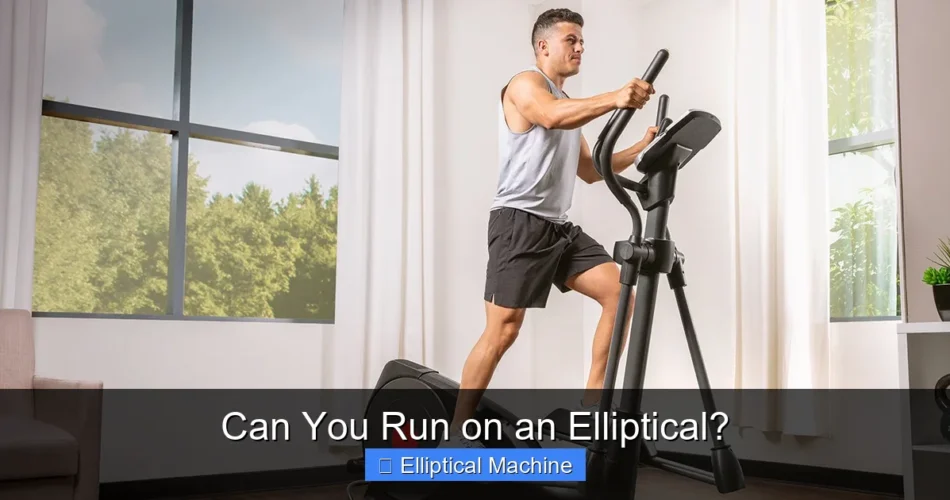
Can you run on an elliptical? Yes, you absolutely can, though it’s important to understand that the experience differs significantly from traditional outdoor running. While you won’t literally lift off the ground, an elliptical machine is designed to simulate the motions of running, walking, and stair climbing in a low-impact environment. This method provides an excellent cardiovascular workout that engages a wide range of muscle groups without the harsh impact on your joints.
The practice of utilizing an elliptical machine to mimic a running stride offers a unique blend of benefits, making it a valuable tool for both seasoned athletes and fitness novices. It’s a versatile form of exercise that can be tailored to various fitness goals, from gentle rehabilitation to intense cross-training.
Quick Answers to Common Questions
Can you truly “run” on an elliptical?
While an elliptical mimics a running motion, it’s more accurately described as a low-impact glide. Your feet never lift off the pedals, which is the key difference from the high-impact push-off of traditional running.
Can I still get an intense workout if I can’t “run on an elliptical” traditionally?
Absolutely! Ellipticals provide a fantastic full-body cardiovascular workout, engaging your arms, legs, and core. By adjusting resistance and incline, you can make it as challenging as running on varied terrain, ensuring you still burn plenty of calories.
Is using an elliptical better for my joints than outdoor running?
Yes, definitely! One of the biggest benefits of an elliptical is its low-impact nature. It puts significantly less stress on your knees, hips, and ankles compared to the repetitive pounding of traditional running, making it ideal for joint health.
📑 Table of Contents
The Mechanics of “Running” on an Elliptical
Understanding how an elliptical machine works helps clarify what “running” on it entails. Unlike a treadmill where you physically propel yourself forward, the elliptical involves a gliding, circular motion. Your feet remain in contact with the pedals throughout the exercise, eliminating the impact that comes with each stride during traditional running.
Simulating the Stride
When you use an elliptical, your body moves through a natural running-like motion. The pedals follow an elliptical path (hence the name), guiding your feet in a smooth, fluid movement that mimics the heel-to-toe transition of a run. Many machines also feature moving handlebars, allowing for concurrent upper-body engagement, which further replicates the full-body action of running, especially when pumping your arms.
The length of the stride is a crucial factor in how closely the elliptical mimics running. Machines with adjustable stride lengths can be particularly effective, allowing users to choose a shorter, walking-like stride or a longer, running-like stride. Increasing the resistance and speed on the machine will intensify this simulation, requiring more effort and engaging muscles similar to how they would work during a vigorous run.
Low-Impact Nature
One of the primary advantages of this technique is its low-impact nature. Because your feet never leave the pedals, there’s no jarring force transmitted through your joints. This makes elliptical running an ideal choice for:
- Individuals recovering from injuries or those with joint pain (knees, hips, ankles).
- Older adults seeking a gentler yet effective cardiovascular workout.
- Runners looking to maintain fitness and mileage without the cumulative stress of pavement pounding.
- Anyone new to exercise who needs a safer entry point to higher intensity cardio.
The absence of impact reduces the risk of common running injuries like shin splints, runner’s knee, and stress fractures, making it a sustainable exercise option for long-term fitness.
Benefits of Elliptical Running for Your Fitness
Engaging in elliptical running offers a multitude of physiological and performance benefits that contribute to overall health and fitness.
Cardiovascular Health
Like traditional running, using an elliptical machine is an excellent way to elevate your heart rate and improve cardiovascular endurance. Regular sessions strengthen your heart and lungs, enhance blood circulation, and increase your body’s efficiency in delivering oxygen to working muscles. This translates to better stamina in daily life and during other athletic pursuits.
Full-Body Workout
A significant advantage of elliptical machines over treadmills is their capacity for a full-body workout. When you actively engage the moving handlebars, you involve your upper body (shoulders, chest, back, biceps, triceps) in addition to your lower body (quadriceps, hamstrings, glutes, calves). This integrated muscle engagement leads to a more comprehensive workout, burning more calories and building balanced strength.
Joint-Friendly Exercise
As discussed, the low-impact nature is a cornerstone benefit. This protection for your joints means you can often train longer and more frequently without the wear and tear associated with high-impact activities. For those prone to injury or with existing joint conditions, this can be the difference between staying active and being sidelined.
Calorie Burn and Weight Management
The combination of cardiovascular intensity and full-body muscle activation makes elliptical running an efficient calorie-burning exercise. Depending on your body weight, intensity, and duration, you can burn a significant number of calories, which is crucial for weight loss and maintaining a healthy weight. The ability to vary resistance and incline also allows for progressive overload, ensuring you continue to challenge your body and maximize energy expenditure.
How to Optimize Your Elliptical Workout for a “Running” Experience
To truly get the most out of your elliptical machine and simulate a running experience, proper technique and strategic workout planning are essential.
Proper Form and Posture
Maintain an upright posture, keeping your core engaged and your shoulders relaxed, pulled back, and down. Avoid hunching over the handlebars. Look straight ahead, not down at your feet. Allow your arms to move naturally with the handlebars, mirroring the motion of your legs. Keep a slight bend in your knees throughout the stride to avoid locking them out. This form ensures efficient muscle engagement and reduces strain.
Incorporating Incline and Resistance
Most ellipticals offer adjustable incline and resistance. To mimic outdoor running, especially uphill running, incorporate incline. Higher incline settings will target your glutes and hamstrings more intensely, similar to running on varied terrain. Resistance controls the “heaviness” of the pedals; increasing it makes each stride more challenging, building strength and stamina. Varying both incline and resistance within a single workout can simulate different running conditions and engage a broader range of muscles.
Interval Training
Interval training is highly effective on an elliptical for simulating running and boosting fitness. Alternate between periods of high intensity (faster speed, higher resistance/incline) and periods of lower intensity recovery. For example, “run” hard for 1-2 minutes, then ease into a moderate pace for 2-3 minutes, repeating this cycle for the duration of your workout. This method improves speed, endurance, and calorie burn more effectively than steady-state cardio alone.
Arm Engagement
Don’t just hold onto the handlebars passively. Actively push and pull them with each stride. This engages your upper body, including your biceps, triceps, shoulders, and back muscles, turning your workout into a true full-body effort. Mimic the arm pump of running to further enhance the simulation and maximize energy expenditure.
Comparing Elliptical Running to Outdoor Running
While an elliptical effectively simulates running, there are distinct differences between the two activities. Understanding these can help you decide when to choose one over the other.
Impact vs. Non-Impact
This is the most significant difference. Outdoor running is high-impact, subjecting your joints to forces often several times your body weight with each stride. Elliptical running, conversely, is non-impact, making it gentler on the musculoskeletal system. This makes the elliptical superior for injury prevention, recovery, and maintaining fitness when high impact is undesirable.
Muscle Engagement Differences
Both activities engage similar major muscle groups (quads, hamstrings, glutes, calves). However, outdoor running involves specific demands for propulsion and stability not fully replicated on the machine. The push-off phase in outdoor running, for example, heavily recruits calf muscles and ankle stabilizers in a way the guided elliptical motion does not. Conversely, the elliptical’s handlebars actively engage the upper body more consistently than the natural arm swing of running, which is primarily for balance and efficiency.
Here’s a quick comparison:
| Feature | Outdoor Running | Elliptical Running |
|---|---|---|
| Impact Level | High | Low / Non-Impact |
| Joint Stress | Higher risk | Lower risk |
| Primary Muscle Focus | Lower body, core stability, calf propulsion | Full body (with arm engagement), balanced lower body |
| Proprioception & Balance | High demand (uneven terrain) | Lower demand (guided motion) |
| Environment | Varied, weather-dependent | Controlled, indoor |
| Injury Risk (Acute) | Higher (falls, twists) | Lower |
Proprioception and Stability
Outdoor running demands significant proprioception (your body’s awareness in space) and stabilizer muscle engagement, especially when dealing with uneven terrain, wind resistance, and obstacles. The guided motion of the elliptical provides inherent stability, which is great for safety and focus on cardio, but it doesn’t challenge your balance and ankle/foot stabilizers in the same way.
Practicality and Environment
Outdoor running offers the benefit of fresh air, varied scenery, and mental stimulation. However, it’s subject to weather conditions and requires access to safe running routes. An elliptical machine, being an indoor exercise, offers convenience, privacy, and a controlled environment, allowing you to exercise regardless of external factors.
Who Can Benefit Most from Elliptical Running?
This versatile exercise offers advantages to a diverse group of individuals.
Injured Runners and Recovery
For runners sidelined by injuries like stress fractures, shin splints, or knee pain, the elliptical is a lifesaver. It allows them to maintain cardiovascular fitness and muscle memory without exacerbating their injury, facilitating a smoother return to outdoor running. It’s often a key component in rehabilitation programs.
Beginners and Those New to Fitness
If you’re new to exercise or looking to build a fitness base, the elliptical provides an accessible and safe starting point. Its low-impact nature and full-body engagement make it an efficient way to improve cardiovascular health and muscular endurance without the intimidation or high injury risk of starting with high-impact activities.
Cross-Training Athletes
Athletes from various disciplines, including competitive runners, cyclists, and swimmers, can use elliptical running as an effective cross-training tool. It offers a different stimulus for muscles, enhances cardiovascular fitness, and provides an active recovery option, all while minimizing overuse injuries from their primary sport.
Individuals Seeking a Gentle Workout
Whether due to age, chronic pain, or simply a preference for lower intensity, many individuals seek a gentle yet effective way to stay active. The elliptical caters perfectly to this need, providing a comprehensive workout that is kind to the body while still delivering significant health benefits.
In conclusion, while you don’t literally “run” in the traditional sense, an elliptical machine provides a highly effective and joint-friendly simulation of running. It’s a powerful tool for cardiovascular fitness, full-body strength, and calorie expenditure, suitable for a wide range of individuals from injured athletes to fitness beginners. By understanding its mechanics and optimizing your technique, you can harness the full potential of this approach to enhance your overall health and achieve your fitness goals.
Frequently Asked Questions
Can you actually “run” on an elliptical machine?
While an elliptical simulates a running-like motion, you are not truly “running” in the traditional sense. Your feet remain in contact with the pedals throughout the movement, eliminating the impact phase that defines actual running. This makes it a low-impact alternative to running.
How does running on an elliptical compare to outdoor running for joint impact?
Running on an elliptical machine is significantly lower impact than outdoor running. Because your feet stay connected to the pedals, there’s no jarring impact on your knees, hips, or ankles, making it an excellent option for those with joint sensitivities or recovering from injuries. It provides a similar cardiovascular workout without the stress.
Can I get the same cardiovascular benefits by “running” on an elliptical as traditional running?
Absolutely, you can achieve excellent cardiovascular benefits by working out on an elliptical, comparable to traditional running. By maintaining a high heart rate and varying your intensity, you can effectively improve your endurance and stamina. The elliptical engages both upper and lower body, contributing to a comprehensive workout.
Is an elliptical good for cross-training if I can’t run outdoors?
Yes, an elliptical can be a fantastic tool for cross-training or maintaining fitness when outdoor running isn’t possible due to weather, injury, or other factors. It allows you to mimic the motion and elevate your heart rate, preserving your cardiovascular endurance. While it doesn’t fully replicate the specific muscle recruitment of outdoor running, it’s an excellent substitute.
When you purchase a product through Amazon links on EllipticalKing.com, we may earn a small commission at no extra cost to you. This helps support the site and keep our content free. As an Amazon Associate, We earn from qualifying purchases