
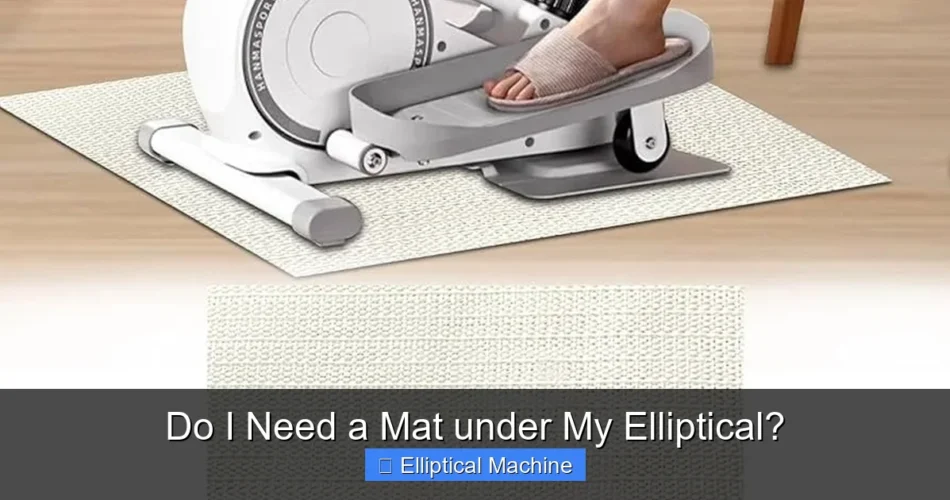
Do I Need a Mat under My Elliptical? The straightforward answer is yes, almost invariably, you do. While it might seem like an optional accessory, implementing this simple addition can provide significant benefits for your home, your machine, and your workout experience.
This method of protection is a small investment that yields considerable long-term advantages, safeguarding your flooring from damage, minimizing noise, and extending the lifespan of your fitness equipment.
Quick Answers to Common Questions
Why should I put a mat under my elliptical?
A mat is a fantastic idea to protect your floors from scratches and dents, especially if you have hardwood or tile. Plus, it helps reduce noise and vibrations, making your workout a bit smoother!
Do I really need a mat under my elliptical if it’s on carpet?
Even on carpet, a mat is super helpful! It prevents your elliptical from permanently flattening the carpet fibers and provides a more stable, clean surface around your machine.
Can a mat actually help my elliptical last longer?
Absolutely! By providing a stable base and absorbing some of the impact, a good mat under your elliptical can reduce wear and tear on its components, potentially extending its lifespan.
📑 Table of Contents
The Essential Role of an Elliptical Mat
Placing a mat under your elliptical machine is more than just an aesthetic choice; it serves multiple critical functions that contribute to a better ownership experience. From preserving your home’s integrity to enhancing the machine’s performance, the humble mat plays a surprisingly vital role.
Protecting Your Floors
One of the most immediate and tangible benefits of an elliptical mat is floor protection. Elliptical machines, particularly larger models, are heavy. Their weight, combined with the repetitive motion and pressure points from usage, can cause significant damage to various types of flooring.
- Hardwood Floors: Without a mat, the machine’s feet can scratch, dent, or even chip hardwood, leading to costly repairs. The mat provides a crucial barrier.
- Tile Floors: Heavy equipment can crack tiles, especially if they’re not perfectly installed or if the machine’s weight is concentrated on a small area. The mat helps distribute the weight.
- Carpeted Floors: Over time, the weight of an elliptical will compress carpet fibers, leaving permanent indentations and potentially damaging the padding underneath. A mat prevents this compression and keeps carpet fibers from getting into the machine’s moving parts.
- Concrete/Garage Floors: While seemingly robust, even concrete can be susceptible to scuffs or rubber marks from equipment feet, which a mat can prevent.
Noise Reduction Benefits
Ellipticals, though generally quieter than treadmills, still produce some level of operational noise and vibration. This can be particularly disruptive in apartments, multi-story homes, or when others are trying to work or sleep nearby. A quality mat acts as an acoustic dampener.
- Absorbs Vibrations: The material of the mat absorbs vibrations generated by the machine’s moving parts, preventing them from traveling through the floor structure.
- Muffles Impact Sounds: Footfalls and the rhythmic motion of the pedals can create subtle thudding noises. The mat provides a soft landing surface, muffling these sounds significantly.
- Enhances Workout Environment: A quieter workout space is simply more enjoyable and less distracting, allowing you to focus on your exercise.
Vibration Dampening
Beyond noise, vibrations can also affect the machine itself. An elliptical mat helps to stabilize the machine, reducing minute movements and shimmying that might occur on slick or uneven surfaces. This dampening effect is beneficial for both the machine’s longevity and your workout comfort.
Extending the Life of Your Machine
While often overlooked, the practice of using a mat under your elliptical is a proactive measure that contributes directly to the longevity and smooth operation of your fitness equipment. It creates a controlled environment that protects the machine from external elements and internal stresses.
Preventing Dust and Debris Ingress
Your elliptical has numerous moving parts, joints, and electronic components that are susceptible to damage from dust, dirt, and pet hair. When placed directly on a carpet, for instance, the machine can act like a vacuum, sucking up fibers and debris into its mechanisms.
- Barrier Against Debris: An elliptical mat provides a clean, smooth surface that acts as a barrier, preventing carpet fibers, dust bunnies, and other floor debris from being drawn into the machine’s motor, belts, and bearings.
- Easier Cleaning: It’s far easier to sweep or vacuum around and wipe down a mat than to deep clean carpet fibers from the intricate parts of an elliptical.
Enhancing Stability and Safety
Workout machines can shift or slide during vigorous use, especially on smooth surfaces like hardwood or tile. This movement not only compromises the stability of your workout but can also be a significant safety hazard. A good quality mat helps to anchor the machine firmly in place.
- Anti-Slip Surface: Most mats are designed with textured, non-slip surfaces that grip both the floor and the machine’s feet, preventing unwanted movement.
- Even Weight Distribution: A dense mat helps to distribute the machine’s weight more evenly, reducing stress on individual components and promoting overall structural integrity.
- Personal Safety: A stable machine reduces the risk of slips, falls, or other accidents during your workout, allowing you to exercise with confidence.
Corrosion and Sweat Protection
Working out means sweating, and sweat can be surprisingly corrosive. Droplets can fall onto the floor and, more critically, onto the machine’s frame, joints, or electronic components. Over time, sweat can lead to rust, corrosion, and damage to sensitive parts.
- Sweat Absorption: Many mats are designed to absorb sweat, preventing it from pooling around the machine’s base or seeping into flooring.
- Moisture Barrier: The mat acts as a protective barrier, keeping moisture away from the machine’s critical components and the floor beneath.
- Easy to Clean: Mats are typically made from water-resistant materials that can be easily wiped down after each workout, minimizing the accumulation of corrosive sweat.
Factors Influencing Your Decision
While the overall consensus points to needing a mat, the specific type and necessity can vary based on several personal and environmental factors. Considering these elements will help you make the most informed decision about your protective flooring solution.
Type of Flooring
The surface beneath your elliptical is perhaps the most critical factor in determining the urgency and type of mat you need.
- Sensitive Surfaces (Hardwood, Laminate, Tile): These floors are highly susceptible to scratches, dents, and cracks. A thick, durable mat is essential here to provide a protective layer and weight distribution.
- Carpet (Low to Medium Pile): A mat is still highly recommended to prevent permanent indentations, keep carpet fibers out of the machine, and provide stability. A denser mat will be more effective.
- Concrete (Basements, Garages): While concrete is robust, a mat can prevent scuff marks, reduce noise, and provide a more comfortable, stable surface for the machine. It also helps to absorb vibrations.
- Rubber/Gym Flooring: If you already have dedicated gym flooring, a separate mat might be less critical but can still offer an extra layer of protection, especially for sweat or specific high-wear spots.
Elliptical Machine Size and Weight
Larger, heavier ellipticals exert more pressure on the floor and tend to generate more vibration. A robust machine’s foundation is paramount for these models.
- Heavy-Duty Machines: For commercial-grade or very heavy home ellipticals, a thicker, higher-density mat is advisable to handle the increased weight and dampen more significant vibrations.
- Compact/Lighter Machines: Even smaller machines can cause floor damage over time. A standard-thickness mat will usually suffice for these, offering adequate protection and stability.
Usage Frequency
How often and how intensely you use your elliptical also impacts the need for and specifications of a mat.
- Daily/Frequent Use: If your elliptical sees daily or intense use, the wear and tear on both the floor and the machine are amplified. A durable, high-quality mat becomes an indispensable investment.
- Occasional Use: For less frequent use, a thinner mat might still be sufficient to prevent indentations and provide basic protection. However, the benefits of noise reduction and machine longevity remain.
Choosing the Right Mat for Your Elliptical
Selecting the ideal mat involves considering its material, thickness, and size to ensure it adequately meets your specific needs for protection and performance.
Material Considerations
Elliptical mats are typically made from a few common materials, each with its own advantages:
- PVC (Polyvinyl Chloride):
- Pros: Durable, water-resistant, good shock absorption, generally affordable, easy to clean.
- Cons: Can have an initial strong odor, might not be as eco-friendly as other options.
- Rubber (e.g., Recycled Rubber):
- Pros: Excellent durability and traction, superior vibration and sound dampening, very long-lasting.
- Cons: Often heavier and more expensive, can also have a distinct rubber smell.
- EVA Foam (Ethylene-Vinyl Acetate):
- Pros: Lightweight, interlocking tiles are common, good cushioning, generally inexpensive.
- Cons: Less dense than PVC or rubber, may not offer as much protection for very heavy machines, can tear more easily over time.
Thickness and Density
These two characteristics are crucial for a mat’s effectiveness:
- Thickness: Mats typically range from 4mm to 12mm (approx. 0.16 to 0.5 inches).
- Thinner Mats (4-6mm): Suitable for lighter machines or less intensive use, offering basic floor protection and some noise dampening.
- Thicker Mats (8-12mm): Ideal for heavier ellipticals, high-frequency use, or when maximum vibration dampening and floor protection are desired.
- Density: A denser mat provides better compression resistance and superior vibration absorption, regardless of thickness. Look for mats designed specifically for fitness equipment rather than general-purpose utility mats.
Size and Fit
Measure the footprint of your elliptical machine before purchasing a mat. You want the mat to extend slightly beyond the machine’s base on all sides.
- Adequate Coverage: Ensure the mat covers all points of contact with the floor, including the front and rear stabilizers.
- Room for Movement: Some ellipticals have slight forward or backward motion; ensure the mat accommodates this.
- Consider Workout Space: If you perform any stretches or floor exercises around your machine, you might opt for a larger mat to delineate your entire workout zone.
Installation and Maintenance Tips
Once you’ve made the smart decision to get an elliptical mat, proper installation and consistent maintenance will ensure it performs its job effectively and lasts for years to come.
Proper Placement
Installing your mat is straightforward, but a few considerations can optimize its performance.
- Clean Surface: Before placing the mat, ensure the floor beneath is clean, dry, and free of any debris that could compromise the mat’s grip or create an uneven surface.
- Centering: Position the mat first, then carefully move your elliptical onto it, ensuring the machine is centered and fully within the mat’s boundaries. This prevents the edges from curling or being stressed.
- Flat Layout: Allow the mat to lie flat for a few hours, or even a day, before placing the machine on it, especially if it was rolled up during shipping. This ensures an even, stable base.
Cleaning and Care for Longevity
Regular cleaning of your mat is essential for hygiene and to maintain its protective qualities.
- Wipe Down Regularly: After each workout, or at least weekly, wipe down the mat with a damp cloth to remove sweat, dust, and any spilled liquids.
- Mild Cleaner: For a deeper clean, use a mild soap and water solution. Avoid harsh chemicals, abrasive cleaners, or petroleum-based products, as these can degrade the mat’s material over time and potentially damage it.
- Air Dry: Always allow the mat to air dry completely before replacing any equipment or walking on it to prevent mildew and ensure proper grip.
- Inspect for Damage: Periodically check the mat for any tears, cracks, or excessive wear. Damage can compromise its protective abilities.
When to Replace Your Mat
Mats don’t last forever. Knowing when to replace yours is key to continuous protection.
- Visible Wear and Tear: If the mat shows significant thinning, cracking, tearing, or permanent indentations from the machine’s feet, it’s time for a replacement.
- Loss of Grip: If the mat starts to slide on the floor, or the machine moves on the mat, its anti-slip properties may have diminished.
- Persistent Odor: While some mats have an initial odor, a persistent, strong, or foul smell that doesn’t dissipate with cleaning could indicate degradation or microbial growth.
- Compromised Cushioning: If the mat no longer feels dense or resilient, it may have lost its ability to absorb impact and vibrations effectively.
Comparative Overview of Mat Materials
Understanding the properties of different mat materials can help you align your choice with your budget and specific needs.
| Feature | PVC Mat | Rubber Mat | EVA Foam Mat |
|---|---|---|---|
| Protection Level | Good (Floor, Machine) | Excellent (Floor, Machine) | Moderate (Floor, Machine) |
| Noise Dampening | Good | Superior | Moderate |
| Durability | High | Very High | Moderate |
| Cost Range | $$ | $$$ | $ |
| Odor Potential | Initial (can off-gas) | Initial (can off-gas) | Low to None |
| Cleaning Ease | Very Easy | Easy | Easy |
| Weight Suitability | Medium to Heavy Machines | All Machine Weights | Light to Medium Machines |
| Common Form | Rolls, Sheets | Rolls, Sheets, Tiles | Interlocking Tiles |
Note: Cost ranges are relative ($=Budget-friendly, $$$=Premium). Performance can vary between specific product brands and quality levels within each material type.
In conclusion, the decision to place a mat under your elliptical is an overwhelmingly positive one, offering a comprehensive suite of benefits that far outweigh the minimal cost and effort involved. This simple addition acts as a multi-functional guardian, protecting your floors from scratches and indentations, significantly reducing noise and vibration during your workouts, and shielding your valuable fitness equipment from dust, debris, and corrosive sweat. By investing in a suitable mat, you not only preserve your home environment but also ensure the longevity and optimal performance of your elliptical, leading to a more stable, quieter, and ultimately more enjoyable exercise experience. It’s a small change that makes a big difference for any home gym.
Frequently Asked Questions
Why should I consider putting a mat under my elliptical?
A mat primarily protects your floor from scratches, scuffs, and indentations caused by the elliptical’s weight and movement, especially on softer surfaces like wood or carpet. It also helps to dampen noise and vibrations, making your workout experience quieter for you and anyone else in your home.
What type of mat is best suited for an elliptical machine?
The best mat for an elliptical is typically made from high-density rubber or PVC, designed specifically for exercise equipment. It should be durable, thick enough (around 4-6mm) to absorb impact, and appropriately sized to fully cover the footprint of your elliptical without excess overhang.
Does a mat improve the stability and safety of my elliptical?
Yes, an exercise mat provides a non-slip surface that can prevent your elliptical from shifting or “walking” across the floor during your workout. This added grip and stability contribute to a safer exercise environment, reducing the risk of the machine moving unexpectedly while in use.
How often should I clean my elliptical mat, and when should it be replaced?
You should wipe down your mat regularly after workouts using a mild soap and water solution to remove sweat and dust, ensuring good hygiene and extending its life. Replace your mat if it shows significant signs of wear, such as cracking, tearing, or becoming too compressed to offer adequate protection and cushioning.
When you purchase a product through Amazon links on EllipticalKing.com, we may earn a small commission at no extra cost to you. This helps support the site and keep our content free. As an Amazon Associate, We earn from qualifying purchases