
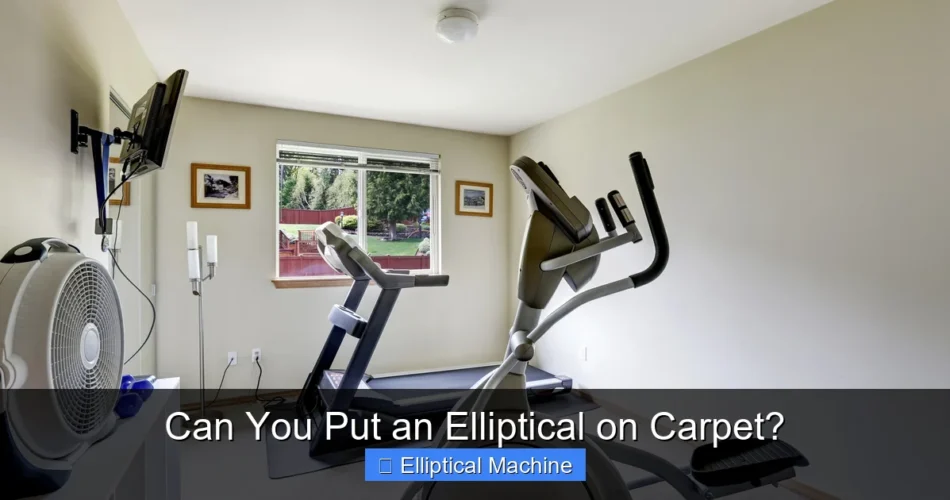
Can You Put an Elliptical on Carpet? The direct answer is yes, you absolutely can, but with several important considerations to ensure the longevity of your machine and the preservation of your flooring. This common setup requires understanding potential risks and implementing simple preventative measures to avoid damage.
Placing an elliptical trainer on a soft surface like carpet is a practical solution for many home gyms, offering convenience and potentially reducing noise. However, without proper precautions, this method can lead to issues ranging from carpet wear to machine instability. Addressing these concerns proactively will safeguard both your investment in fitness equipment and your home’s interior.
Quick Answers to Common Questions
Can I really put my elliptical machine directly on carpet?
Yes, you generally *can* place an **elliptical on carpet**, but it’s important to consider stability as the machine might wobble slightly, and the carpet will definitely indent under the weight. Your machine will still function perfectly well!
What are the main downsides of putting an elliptical on carpet?
The biggest downsides are carpet damage, like deep indentations and flattened fibers, and potential dust accumulation in the machine’s moving parts over time. Plus, an **elliptical on carpet** might feel less stable during intense workouts compared to a hard surface.
Is an equipment mat necessary for an elliptical on carpet?
While not strictly “necessary” for the machine to function, a mat is highly recommended when you put your **elliptical on carpet**. It provides a protective barrier for your flooring, offers extra stability, and helps dampen noise from your workout.
📑 Table of Contents
- Understanding the Interaction Between Ellipticals and Carpet
- Potential Risks of Placing an Elliptical on Carpet Without Protection
- Essential Solutions for Protecting Your Carpet and Machine
- Choosing the Right Mat or Pad
- Maintenance and Long-Term Care
- Alternative Flooring Solutions and Considerations
Understanding the Interaction Between Ellipticals and Carpet
When you place heavy exercise equipment, especially a dynamic machine like an elliptical, on carpet, several forces come into play. The weight of the machine combined with the user’s weight and the repetitive motion during workouts creates a complex interaction with the flooring beneath. Understanding these dynamics is the first step toward effective protection.
Weight Distribution and Compression
Elliptical machines are not lightweight; they can range from 100 to over 300 pounds, even before a user steps on. This significant weight is typically distributed over a few contact points (feet or bases). On a firm floor, this weight is easily supported. However, on carpet, especially plush or thick pile carpet, the machine’s feet will compress the fibers and padding underneath. Over time, this constant pressure can lead to:
- Permanent indentations: These are unsightly and can be difficult, if not impossible, to remove.
- Crushed carpet fibers: The pile loses its loft and becomes matted, creating worn-looking spots.
- Damage to padding and subfloor: In extreme cases, especially with very heavy machines or prolonged placement, the pressure can affect the carpet padding and even the subfloor beneath.
Movement, Friction, and Stability
An elliptical machine, by its nature, involves significant movement. While designed to be stable, the rocking and gliding motion during a workout can introduce friction against the carpet. This friction, combined with the machine’s weight, can cause:
- Carpet abrasion: The machine’s feet might rub against the carpet fibers, leading to wear, fraying, or even tearing in high-friction areas.
- Machine instability: A soft, uneven surface like carpet can make it harder for the elliptical to remain perfectly level. This can lead to wobbling, which not only feels unsafe but can also strain the machine’s frame and moving parts, potentially shortening its lifespan.
- Noise amplification: While carpet generally dampens sound, an unstable machine on a soft surface might produce creaks or squeaks as its components are put under uneven stress.
Potential Risks of Placing an Elliptical on Carpet Without Protection
Ignoring the interaction between your fitness equipment and your carpet can lead to a host of problems. These risks extend beyond mere cosmetic damage to your flooring and can impact the performance and longevity of your elliptical itself.
Damage to Flooring
The most immediate and visible risk is damage to your carpet. Deep indentations and matted spots are common. Over time, the repeated compression and friction can cause the carpet fibers to break down, leading to bald spots or areas of significant wear that can be costly to repair or replace. If the carpet is part of a larger room, this isolated damage can necessitate replacing the entire room’s flooring.
Impact on Elliptical Performance and Lifespan
A less obvious but equally significant risk involves the elliptical machine itself. An uneven or unstable surface places undue stress on the machine’s frame, bearings, and other moving parts. This can manifest as:
- Increased wear and tear: Components may wear out faster than intended.
- Misalignment: The internal mechanisms might become misaligned, leading to friction, noise, and inefficient operation.
- Reduced stability: A wobbly machine is not only uncomfortable but also potentially dangerous, increasing the risk of falls during intense workouts.
- Voided warranty: Some manufacturers’ warranties might have clauses about proper installation surfaces, and damage caused by improper placement could void your coverage.
Safety Concerns
Personal safety is paramount. An elliptical that rocks or wobbles excessively on an unstable surface increases the risk of the user losing balance and falling. While modern machines are generally very stable, a soft carpet can compromise this stability, especially during vigorous exercise. Furthermore, if the machine shifts even slightly, it could create trip hazards or pinch points.
Essential Solutions for Protecting Your Carpet and Machine
Fortunately, mitigating these risks is straightforward and involves a few key protective measures. The right solution will create a stable, protected barrier between your exercise equipment and your floor.
Utilizing an Equipment Mat
The most common and effective solution is to place a dedicated equipment mat under the elliptical. These mats are specifically designed for exercise equipment and offer several benefits:
- Floor protection: They act as a barrier, preventing direct contact between the machine’s feet and the carpet, distributing the weight more evenly, and absorbing impact.
- Stability: The firm surface of a good mat provides a stable base for the elliptical, reducing wobble and improving overall machine performance.
- Noise reduction: Mats can help dampen vibrations and sounds produced during workouts, making your home gym quieter.
- Sweat and spill protection: They catch sweat, water, or lubricants, preventing them from soaking into your carpet and causing stains or odors.
- Dust and debris collection: Mats can make cleaning easier by containing dust and debris that accumulates around the machine.
Alternative Barrier Materials
While dedicated mats are ideal, other materials can serve as protective barriers, especially for lighter machines or temporary setups:
- Plywood or MDF boards: A sturdy piece of plywood or MDF can offer excellent weight distribution and a firm surface. Ensure the edges are smooth to prevent snags on the carpet. You might still want a thin mat or rubber pads between the wood and the machine to absorb shock and prevent slipping.
- Heavy-duty rubber tiles: Interlocking rubber tiles commonly used in home gyms can also provide a durable and protective surface. These are typically thicker and offer superior shock absorption.
Choosing the Right Mat or Pad
Selecting the appropriate mat is crucial for effective protection. Mats come in various materials, thicknesses, and sizes, each with unique properties.
Material Considerations
- PVC (Polyvinyl Chloride): Common, affordable, and good for basic protection against scratches and minor indentations. Not always the best for heavy machines or very plush carpets.
- Rubber: Excellent durability, superior grip, and effective shock absorption. Ideal for heavier ellipticals and high-intensity use. Can have a strong rubber odor initially.
- EVA Foam (Ethylene-Vinyl Acetate): Lighter, softer, and often comes in interlocking tiles. Good for noise reduction and lighter machines, but may not offer enough firmness for very heavy ellipticals on deep pile carpet.
Thickness and Size
The thickness of the mat directly relates to its protective capabilities. For a heavy elliptical on carpet, aim for a thicker mat (at least 1/4 inch or more) to provide adequate cushioning and stability. Ensure the mat is large enough to fully accommodate the elliptical’s footprint, including any moving parts that extend during operation. Measure your machine’s dimensions before purchasing.
Mat Comparison Table
| Mat Type | Pros | Cons | Ideal Use Case |
|---|---|---|---|
| PVC Mat | Affordable, easy to clean, basic protection. | Less durable, can indent on heavy machines, may not prevent all carpet compression. | Lighter ellipticals, low pile carpet, budget-conscious. |
| Rubber Mat | Excellent durability, superior grip, high shock absorption, great stability. | Can be expensive, heavy, may have strong initial odor. | Heavy ellipticals, high-intensity use, plush carpet, maximum protection. |
| EVA Foam Tiles | Lightweight, good noise reduction, customizable size with interlocking pieces. | Less firm for very heavy machines, can show indentations over time, prone to tearing. | Lighter ellipticals, moderate use, versatile home gym setup. |
Maintenance and Long-Term Care
Even with the right mat, ongoing maintenance is essential for preserving both your elliptical and your carpet. A proactive approach will ensure years of trouble-free use.
Regular Cleaning
Keep both the elliptical and the mat clean. Dust and debris can accumulate under the machine, potentially causing friction or wear. Wipe down your elliptical regularly and clean the mat according to its material’s recommendations. Periodically, lift the mat and vacuum the carpet underneath to remove trapped dirt and check for any early signs of wear or moisture.
Checking for Indentations and Wear
Even with a mat, it’s wise to occasionally lift the elliptical and the mat to inspect the carpet underneath. Look for any new or deepening indentations, signs of friction wear, or changes in carpet texture. Early detection allows for intervention before permanent damage occurs. Rotating the mat or the machine’s position slightly (if feasible) can help distribute pressure.
Machine Leveling and Stability
Always ensure your elliptical is perfectly level. Most machines come with adjustable feet or stabilizers. Check these periodically, especially after moving the machine or if you notice any wobbling. A level machine performs better, lasts longer, and is safer to use on any surface, including carpet with a protective mat.
Alternative Flooring Solutions and Considerations
While placing an elliptical on carpet is feasible with precautions, sometimes alternative solutions are preferable or necessary, especially in dedicated home gym spaces.
Hard Flooring Options
If you’re setting up a permanent gym space, considering hard flooring beneath your elliptical can be advantageous. Options include:
- Vinyl or Laminate: Durable, easy to clean, and provides a firm, stable base. Still benefits from a mat for shock absorption and extra protection.
- Rubber Flooring: Professional-grade rubber rolls or tiles offer superior impact absorption, noise reduction, and excellent stability. This is often the ideal choice for heavy fitness equipment.
- Concrete: A very firm and stable base, but requires a thick mat to absorb impact and prevent machine wear and tear from vibrations.
Even on hard floors, a mat is highly recommended to protect against scratches, absorb vibrations, and contain sweat.
Dedicated Home Gym Space
For those serious about their home fitness, designing a dedicated gym space can eliminate many of the concerns associated with carpet. This allows for specialized flooring, proper ventilation, and easy access for maintenance, ensuring the longevity of your equipment and the comfort of your workouts.
In conclusion, while placing an elliptical machine on carpet is certainly possible, it requires thoughtful preparation and ongoing care. By investing in a high-quality equipment mat, regularly monitoring your machine’s stability, and performing routine maintenance, you can protect both your valuable flooring and your exercise equipment, ensuring a safe and effective workout environment for years to come.
Frequently Asked Questions
Can I place an elliptical directly on my carpet?
Generally, yes, you can put an elliptical directly on carpet. However, directly placing it without any protective layer might lead to issues like deep indentations, wear and tear on the carpet fibers, or even minor instability over time.
Will an elliptical machine damage my carpet?
Yes, an elliptical machine can potentially damage your carpet. The concentrated weight of the machine, combined with the user’s movement, can compress the carpet pile, create permanent indentations, and accelerate wear on the fibers, especially on softer or thicker carpets.
Does placing an elliptical on carpet affect its stability or performance?
While most ellipticals have adjustable feet to help level them, placing one on very thick or plush carpet might slightly reduce its overall stability. The soft, uneven surface can make it harder to achieve a perfectly rigid setup, potentially leading to minor wobbling during strenuous use.
What should I put under an elliptical on carpet to protect it?
To best protect your carpet, it is highly recommended to use an equipment mat specifically designed for fitness machines. These mats, typically made of durable rubber or PVC, will distribute the elliptical’s weight, absorb vibrations, and prevent unsightly indentations and wear on your carpet.
How can I prevent my carpet from indentations caused by an elliptical?
The most effective way to prevent indentations is by placing a sturdy, high-density fitness mat under your elliptical. This mat acts as a barrier, distributing the machine’s weight evenly across a larger surface area and preventing the legs or frame from directly compressing the carpet fibers.
Does the type of carpet matter when putting an elliptical on it?
Yes, the type of carpet can significantly matter. Thicker, softer, or shag carpets are more susceptible to deep indentations and accelerated wear from an elliptical’s weight compared to low-pile, dense, or commercial-grade carpets. Harder, flatter carpets also tend to offer better overall stability for the machine.
When you purchase a product through Amazon links on EllipticalKing.com, we may earn a small commission at no extra cost to you. This helps support the site and keep our content free. As an Amazon Associate, We earn from qualifying purchases