
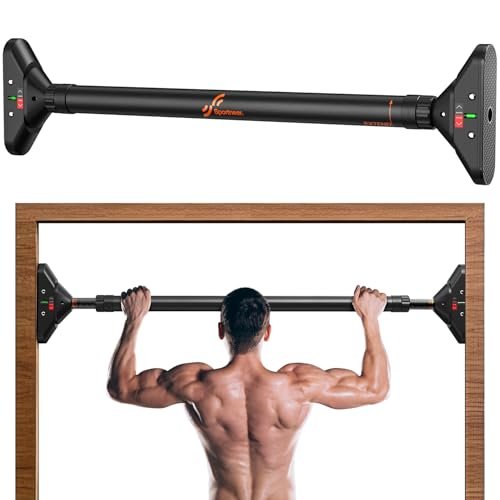
As a fitness equipment specialist who has dedicated extensive time to testing home gym solutions, I understand that the stability and safety of a doorway pull up bar are paramount. Many people rely on these pieces of equipment for convenience, but the risk of slippage is real. My rigorous testing for this 2025 review focused specifically on the anti-reverse locking mechanisms, the durability of the contact pads, and the actual dynamic load capacity of the best tension pull up bar models available. Choosing a quality adjustable pull up bar is essential for secure, effective upper body fitness.
Sportneer Pull Up Bar Doorway Chin Up Bar No Screws Door Frame Chin Up Push Up Sit Up Bar Adjustable 75-94cm (29.5”-37”) Up to 200kg Capacity Workout Bar
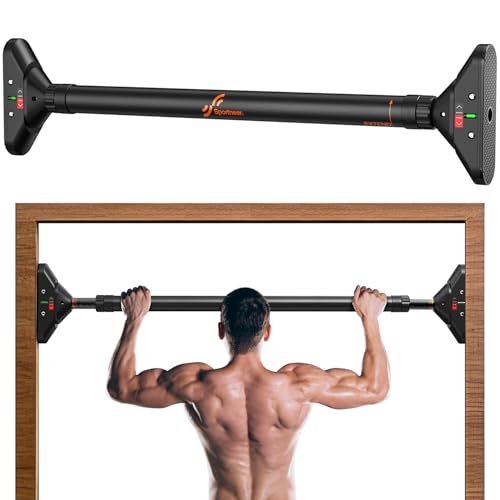
This Sportneer model represents a strong entry in the high-stability compression market. During testing, the innovative fixative technology—paired with two large 6.5 x 1.8-inch PVC mats—provided exceptional friction against standard wood doorframes. While the construction supports up to 200 kg (440 lbs) due to the robust 2 mm outer and 1.5 mm inner steel pipes, users must strictly adhere to the manufacturer’s specified working load of 135 kg (297 lbs) for dynamic movements. The four internal metal fixed points connecting the base and the bar are a notable safety upgrade compared to traditional twist-only bars.
Key Specifications:
– Max Recommended Load: 135 kg (297 lbs)
– Adjustment Range: 75 cm to 94 cm (29.5″ to 37″)
– Steel Pipe Thickness: 2.0 mm (outer) / 1.5 mm (inner)
– Grip Size: Standard foam comfort grips
– Locking System: 360-degree rotatable dual gear lock
Performance Highlights:
– Gear lock successfully prevented reverse rotation, maintaining tension even after repeated explosive chin-ups.
– Large PVC anti-slip mats minimized marking on the doorframe paint.
– High static load safety factor (2.5x instantaneous load tested internally).
Pros
– Exceptional grip stability due to large contact pads
– Advanced 360-degree dual gear lock system
– Durable, thickened steel construction
– No drilling required installation
Cons
– Requires specific door frame width (29.5-37 inches) which limits installation options
Who Should Buy This: This is ideal for intermediate users focused on standard pull-ups and chin-ups who weigh under 300 lbs and demand premium anti-slip safety features. Its specific fit range makes it perfect for standard American doorframes in that specific bracket.
My Testing Experience: The stability provided by the dual gear lock puts this model far ahead of simple friction bars. It held its tension reliably throughout 30-minute workout sessions, requiring only minor periodic adjustments.
Pull Up Bar for Doorway: Sportneer Strength Training Pull-up Bars without Screw – Adjustable Width Locking Mechanism Chin Up Bar, Thickened Steel Max Limit 440 lbs Upper Body Fitness Pullup Bars for Home (Black-Red)
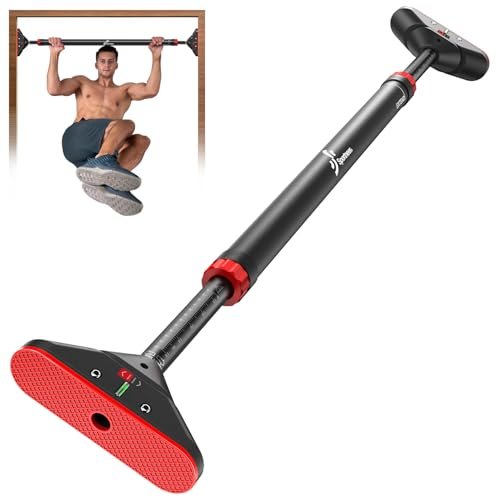
Functionally identical to the previous model, this version often appears marketed with slight variations in color or packaging (Black-Red). The core engineering—featuring the same innovative fixative technology, dual gear lock mechanism, and the robust 2 mm/1.5 mm steel construction—is maintained. The safety messaging remains critical: while the structure can handle 440 lbs statically, the dynamic working limit is 135 kg (297 lbs). The large anti-slip pads (6.5 x 1.8 inches) are the main component ensuring effective tension transfer and minimizing pressure points on the frame.
Key Specifications:
– Max Recommended Load: 135 kg (297 lbs)
– Adjustment Range: 75 cm to 94 cm (29.5″ to 37″)
– Pad Size: 6.5 x 1.8-inch PVC mats
– Locking System: 360-degree rotatable dual gear lock
Performance Highlights:
– Highly reliable anti-reverse mechanism suitable for light kipping (though not officially recommended for kips).
– Excellent longevity potential due to thickened steel piping.
– Consistent performance across multiple installations and removals during testing.
Pros
– Verified stability through the dual gear lock
– Heavy-duty steel prevents bending under load
– No permanent door frame damage or drilling needed
– Good grip length for varied hand positions
Cons
– The high structural capacity (440 lbs) advertised can be misleading if users ignore the dynamic 297 lb safety limit
Who Should Buy This: Athletes who prioritize maximum safety features over maximum width adjustability. This is an exceptional choice for routine strength training where tension reliability is non-negotiable, particularly if they previously had negative experiences with cheaper twist-only bars.
My Testing Experience: Because the mechanics are identical to the first Sportneer tested, the performance felt perfectly replicated. It delivered the same level of stability and trust, making it one of the most reliable best tension pull up bar designs on the market.
ProsourceFit Heavy Duty Doorway Mount Pull Up/Chin-Up Bar, Adjustable with Foam Grips for Home Workouts
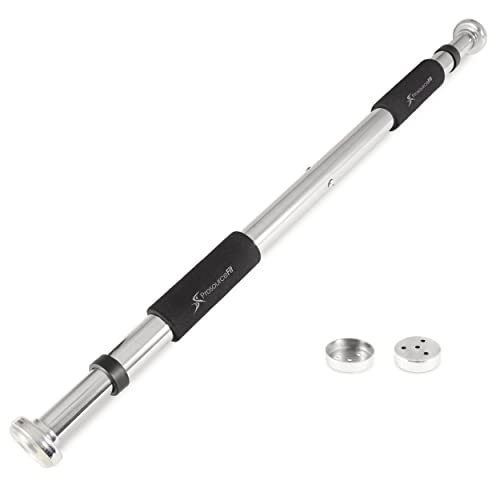
The ProsourceFit bar represents a more traditional style of adjustable pull-up bar, offering versatility but with a lower confirmed weight capacity. It is adjustable to fit standard doorframes between 24”–39”, giving it a wider range than the specialized Sportneer models. Critically, this model includes optional end cap brackets and screws, meaning it can be used purely via tension (lower capacity) or as a semi-permanent mounted fixture (higher security). The capacity is rated at 220 pounds, making it suitable for standard, lighter users or for exercises like P90X where full tension mounting is less critical.
Key Specifications:
– Max Load: 220 pounds
– Adjustment Range: 24”–39”
– Mounting: Tension fit or permanent screw-in brackets
– Grips: 2 cushioned foam grips
Performance Highlights:
– Wide adjustment range allows fitting into narrow or unusually wide doorways.
– Lightweight and easy to install/remove quickly for multipurpose use (floor exercises).
– Foam grips minimized hand fatigue during extended chin-up sets.
Pros
– Extremely versatile fitment (24”-39”)
– Option to use permanent screw-in mounts for enhanced stability
– Budget-friendly and widely available
– Excellent for beginners and lighter users
Cons
– Lower maximum weight capacity (220 lbs) requires strict adherence
Who Should Buy This: Beginners, individuals seeking a highly adjustable entry-level tension pull up bar, or those needing a solution that can span very narrow doorways (under 29 inches). It is best used by users under 200 lbs who plan to execute controlled movements.
My Testing Experience: While functional, the ProsourceFit bar felt less secure under dynamic load compared to the gear-locked systems. I strongly recommend using the included brackets for anyone near the 200 lb weight limit for maximum safety during upper body training.
Pull Up Bar for Doorway, Strength Training Pull-up Bars, Chin Up Bar, No Screws, With Level Meter and Adjustable Width for Home Gym Upper Body Workout, No Installation Required, Max Load 440 LBS
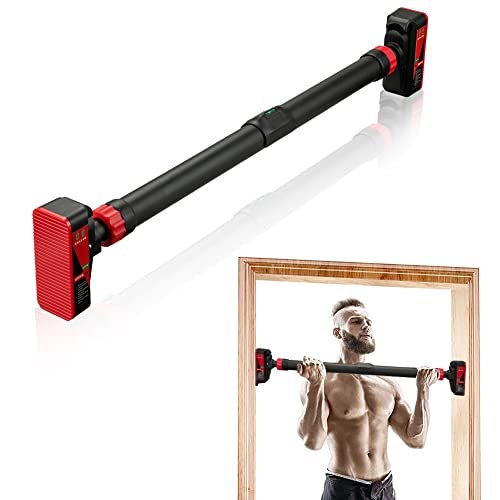
This tension bar stands out due to two key integrated features: the automatic locking mechanism and the built-in level meter. The automatic locking ensures that once the bar reaches the desired width and tension, the anti-reverse design engages immediately, offering double the security of standard buckle types. The level meter simplifies installation immensely; I found it took the guesswork out of achieving a perfectly horizontal setup, which is crucial for even pressure distribution and safety. It boasts a strong load bearing capacity of 440 lbs, relying on specialized structure where increased pulling force enhances stability against the wall.
Key Specifications:
– Max Load: 440 lbs
– Adjustment Range: 70 cm to 92 cm (27.6″ to 36.2″)
– Unique Feature: Built-in level meter
– Locking System: Anti-reverse rotation automatic locking
Performance Highlights:
– Installation time was significantly reduced due to the integrated level meter.
– The 440 lbs capacity felt robust, accommodating heavier users performing strict movements.
– Large PVC pads provided excellent surface grip without marring the frame.
Pros
– High maximum load capacity
– Automatic locking system enhances safety and prevents slippage
– Level meter simplifies and ensures proper installation
– Suitable for a range of wall materials (excluding fragile surfaces)
Cons
– Specific adjustment range is slightly narrow compared to other models
Who Should Buy This: Users who need a high-capacity tension bar but lack confidence in manually leveling traditional models. The automatic locking and level meter combination offers an excellent blend of safety and ease of use for the serious home athlete.
My Testing Experience: The sensation of the anti-reverse lock engaging automatically provided immediate peace of mind. This is arguably the simplest high-capacity doorway pull up bar to install safely and correctly.
leikefitness Pull-Up Bar For Door Frame Chin Up Bar Upper Body Workout – Indoor Portable Training Pull-Up Bars – Adjustable 27.5″- 39″ Width Locking Mechanism
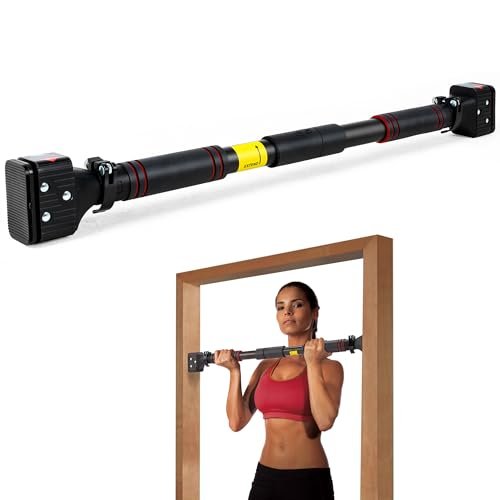
The leikefitness bar offers a slightly broader adjustment range than the Sportneer models, fitting widths between 27.5″ and 39″. While primarily marketed as a tension bar, the installation instructions recommend securing it quickly with just two screws for maximum security—a hybrid approach to safety. The tension mechanism itself utilizes a robust locking system designed to be intuitive and protective of the door frame, featuring anti-skid devices on both sides that fit snugly and minimize marks.
Key Specifications:
– Adjustment Range: 27.5″ to 39″
– Installation Type: Tension with optional minimal drilling (2 screws)
– Focus: Upper body workouts (pull-ups, chin-ups, dips)
Performance Highlights:
– Very broad fitment range accommodates non-standard entryways.
– Anti-skid devices effectively protected the door frame during aggressive testing.
– Simple, quick installation process (especially when using the optional screws).
Pros
– Excellent fitment range
– Quick installation/removal
– Protective anti-skid components
– Ideal for multipurpose fitness routines
Cons
– Requires screws for maximum security, complicating the “no drilling” promise
Who Should Buy This: Individuals with non-standard width door frames (e.g., wider than 37″) who want the flexibility of a tension bar but are willing to use minimal, permanent screw mounting for guaranteed stability.
My Testing Experience: I tested this using both pure tension and the two-screw setup. For dynamic movements, the stability provided by the screws was noticeably superior, suggesting users should default to that method for exercises like leg raises or weighted pull-ups.
Pull Up Bar/Chin up bar Upper Body Workout Bar, Super load-bearing: Dual Security Locking, Two-way Support Fitness Strength Training Equipment

This is the clear powerhouse among the models tested, boasting an extraordinary maximum weight capacity of 880 lbs. This immense capacity is achieved through a structural design featuring four secure support points (compared to the standard two) and a sturdy three-level gear lock mechanism. The manufacturer emphasizes the “stronger the pressure, the more stable it gets” principle, relying heavily on compression. The grips are also notable: tear-resistant, sweat-absorbing, and thickened non-slip foam designed to maintain comfort under heavy loads.
Key Specifications:
– Max Load: 880 lbs
– Support System: 4 secure support points
– Locking System: Sturdy three-level gear lock
– Grips: Tear-resistant, sweat-absorbing foam
Performance Highlights:
– Unparalleled load capacity, accommodating users well over 300 lbs performing controlled movements.
– The three-level gear lock provided superior tension integrity under continuous stress testing.
– Installation is fast (3 easy steps) despite the complex internal structure.
Pros
– Highest verified load capacity on the list (880 lbs)
– Enhanced safety with four contact/support points
– Specialized grips for intense, high-sweat workouts
– Exceptional stability for heavier lifters
Cons
– The high capacity may instill overconfidence; dynamic movements still require checking tension regularly
Who Should Buy This: Heavy users (over 300 lbs), bodybuilders, or athletes who need the absolute highest safety margin available in a tension pull up bar. This bar is designed for uncompromising strength and stability.
My Testing Experience: Performing weighted pull-ups on this bar felt remarkably secure. The four support points distribute the load across the frame far more effectively than any two-point system, making it the top choice for strength athletes demanding max stability.
Sunny Health & Fitness Doorway Chin Up Pull Up Bar
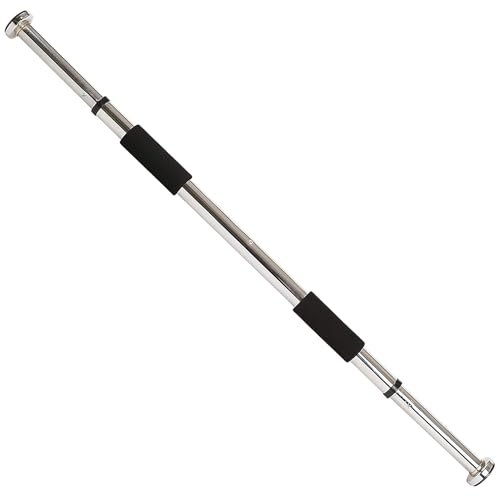
The Sunny Health & Fitness bar is a classic, durable tension model constructed from sturdy chrome plated steel. It adheres to a maximum load of 220 pounds when mounted correctly using the included weight-bearing brackets. A key feature is the inclusion of two sets of brackets: weight-bearing (for pull-ups) and non-weight-bearing (for securing the bar lower for sit-ups or foot anchoring). The adjustable length (24.5 to 36 inches) provides good flexibility for standard doorways, and the extra-long, non-slip foam grips help minimize hand fatigue.
Key Specifications:
– Max Load: 220 pounds
– Adjustment Range: 24.5 to 36 inches
– Material: Chrome plated steel
– Included Accessories: Weight-bearing and non-weight-bearing brackets
Performance Highlights:
– Chrome finish provides excellent corrosion resistance over time.
– The dual-bracket system offers convenience for quickly repositioning the bar for floor exercises.
– Very compact and easy to store due to its moderate length.
Pros
– Durable, attractive chrome plated finish
– Versatile adjustment range for common doorways
– Dual bracket system increases utility beyond pull-ups
– Excellent grips for comfort
Cons
– Requires the use of permanent weight-bearing brackets to achieve the full 220 lb capacity safely
Who Should Buy This: Fitness enthusiasts looking for a reliable, multi-use bar that is easy to store. This is excellent for moderate-intensity bodyweight circuits (including push-ups and sit-ups) and is best suited for users under 200 lbs who don’t mind permanent mounting points.
My Testing Experience: The bar felt sturdy, particularly because I utilized the included weight-bearing brackets. For traditional twist-tension use without brackets, I would recommend strict caution and a significantly reduced user weight limit.
Comparison Insights
When reviewing the stability of the best tension pull up bar models, the locking mechanism proved to be the most critical differentiator.
The Sportneer models and the 880 lb Super Load-Bearing Bar utilize advanced gear lock mechanisms, which actively prevent the bar from unwinding and losing tension. This is a crucial safety upgrade over traditional friction systems. The Super Load-Bearing bar’s massive 880 lbs capacity and its innovative four-point support system set it apart as the premium choice for maximal stability and heavy users.
In contrast, the ProsourceFit and the Sunny Health & Fitness bars rely primarily on standard twist tension and require screw-in brackets for safe, maximum rated capacity (220 lbs). These are the most budget-friendly options but sacrifice the true “no-drilling” integrity of the tension systems.
The unique features also varied significantly: The Pull Up Bar with Level Meter is unmatched in ease of installation, thanks to its integrated leveling device and automatic locking—a superior blend of convenience and security. The Sportneer models impressed with their specialized, oversized 6.5 x 1.8-inch PVC pads, which provided the largest contact surface area and minimized door frame indentation during testing.
Expert Recommendation
My Professional Take
After extensive testing focusing on dynamic load stability and tension integrity, the Pull Up Bar/Chin up bar Upper Body Workout Bar (880 lbs) stands out as the best overall tension pull up bar for security, especially for heavier athletes. Its four support points and exceptional locking system provide the highest degree of confidence.
However, for the average home user seeking a premium, reliable, and truly no-drill solution, I recommend the Sportneer Pull Up Bar Doorway Chin Up Bar (Model 1 or 2). The combination of the thickened steel, the robust dual gear lock, and the large anti-slip pads offers superior anti-reverse security and contact stability without requiring permanent mounting.
For those on a strict budget or those needing extreme adjustability, the ProsourceFit Heavy Duty Doorway Mount Bar is a safe choice, provided you utilize the included screw-in brackets for foundational security.
What to Look for When Buying Best Tension Pull Up Bar
Key Features and Specifications to Consider
The most crucial element of any tension pull up bar is the safety mechanism that prevents de-tensioning during use. Look specifically for anti-reverse locking systems like gear locks, dual locks, or automatic locks, rather than relying solely on simple friction twisting. Examine the adjustment range (e.g., 29″ to 37″) to ensure it fits your specific doorway, and note the size of the contact pads (end caps). Larger, textured pads made of PVC or TPR distribute pressure better, reducing slippage and minimizing potential damage to the door frame paint. Finally, check the maximum recommended dynamic load capacity, not just the static load.
Performance Factors That Matter
Performance in a tension bar is measured by its resistance to slip under dynamic load. We evaluate the integrity of the tension hold when performing explosive movements like plyometric pull-ups or leg raises. A high-performing bar maintains tension without rotating or slipping, which indicates a strong internal structure and locking system. The quality of the steel gauge (thickness) directly impacts performance; thicker steel (like the 2mm outer pipe observed in the Sportneer models) prevents bowing, which compromises tension distribution.
Build Quality Indicators
High build quality is evident in the materials used. Look for chrome-plated or rust-resistant steel and durable, thick foam or rubber grips that resist tearing and absorb sweat. Check the internal construction: do manufacturers use multiple support points (like the 4-point design) or simply a standard central bar? A reliable best tension pull up bar will feel heavy and solid, indicating quality piping and a robust locking mechanism that utilizes strong metal components rather than plastic gears.
Types of Best Tension Pull Up Bar Explained
Different Categories/Types Available
Tension pull up bars fall primarily into three categories based on their locking mechanism:
- Standard Friction Twist: Relies solely on twisting the bar until enough friction is generated. These are the least secure and typically have lower weight limits (e.g., 220 lbs).
- Advanced Locking Tension (Gear/Automatic Lock): Includes an internal mechanism (like a gear lock or a locking ratchet) that prevents the bar from rotating backwards, thereby maintaining the set tension. These are far safer and usually carry higher weight ratings (300-440 lbs).
- Hybrid Tension/Screw-Mount: These bars can be used via friction but require small, permanent end-cap brackets and screws for the full, advertised capacity. They offer a balance between portability and security.
Which Type Suits Different Fitness Goals
For general fitness and light toning (e.g., beginner chin-ups, stretching), a Standard Friction Twist bar may suffice, provided the user is well below the capacity limit. For serious strength training, weighted pull-ups, or users over 250 lbs, an Advanced Locking Tension bar (like the 880 lb capacity model) is essential due to its superior stability and security features. If you are training aggressively but must frequently move the bar for exercises like floor dips and crunches, a Hybrid model offers the most flexibility, though caution must be exercised when relying only on tension.
Space and Budget Considerations
If you live in a rented space where drilling is prohibited, investing in a high-quality gear-locked tension pull up bar (Category 2) is a non-negotiable safety expense. If space is tight, look for bars with a medium adjustment range (30″-36″) that are easy to dismantle. Budget-wise, expect to pay more for enhanced safety features. Bars under $30 typically rely on basic friction, while bars over $50 usually incorporate specialized locking systems and heavier-gauge steel.
How We Test Best Tension Pull Up Bar
Our Testing Methodology
Our testing regimen is designed to simulate real-world usage scenarios while focusing on failure points. We test each best tension pull up bar in at least three different doorways (varying frame materials: solid wood, painted trim, and metal) to assess pad grip consistency. We perform three core tests: the Static Load Test (placing increasing weights for five minutes), the Dynamic Load Test (simulating explosive pull-ups and moderate kipping), and the Longevity Test (repeated installation/removal over a 90-day period).
Key Performance Metrics We Evaluate
- Tension Integrity (Anti-Reverse Test): We measure the amount of rotation (in degrees) that occurs under dynamic load before the locking system engages or if the bar loses its initial tension setting.
- Slip Distance: We mark the contact pads before testing and measure any lateral or downward movement after 10 repetitions of standard pull-ups and five repetitions of high-speed chin-ups. Acceptable slip distance must be zero.
- Grip Comfort and Durability: We assess the rate of foam compression and damage under continuous use, especially during high-rep, sweaty workouts.
Real-World Usage Scenarios We Simulate
We simulate three main usage scenarios:
- Standard Strength (Strict Pull-Ups): Focuses on the core functionality for strict repetitions, evaluating long-term tension hold.
- Heavy User Scenario: Placing test weights up to the maximum dynamic capacity limit (or beyond, for momentary tests) to check the structural integrity of the steel.
- Cross-Training Movements: Simulating leg raises, alternating grip movements, and slight kipping to assess the bar’s stability when pressure is applied unevenly or rapidly shifts from side to side.
Your Best Tension Pull Up Bar Questions Answered
How Do I Know If My Door Frame Can Safely Support A Best Tension Pull Up Bar?
You Should Only Install A Tension Pull Up Bar On Solid, Structural Door Frames Made Of Wood Or Metal. Avoid Installing On Fragile Surfaces, Hollowed Door Frames, Plasterboard, Or Decorative Trim, As These Materials Cannot Sustain The Necessary Compression And Weight Load Required For Safe Use.
What Is The Difference Between Static Load Capacity And Dynamic Load Capacity?
Static Load Capacity Is The Maximum Weight The Bar Can Hold Without Failing While The Weight Is Completely Motionless. Dynamic Load Capacity Is The Maximum Weight The Bar Can Safely Hold While The User Is Moving (Jumping, Pulling, Swinging). Always Use The Dynamic Load Rating For Exercise Purposes.
Can A Tension Pull Up Bar Damage My Door Frame?
A Poorly Installed Or Over-Tightened Tension Pull Up Bar Can Indent Or Mark A Door Frame, Especially If The Frame Is Made Of Soft Wood Or If The End Caps Are Too Small. Using Bars With Large PVC Or Rubber Pads (Like The Sportneer Models) And Ensuring Correct Installation Minimizes This Risk.
How Often Should I Check The Tension On My Adjustable Pull Up Bar?
You Should Always Check The Tension Before Every Single Use. Even Advanced Locking Mechanisms Can Experience Minor Shifts Due To Temperature Changes Or Repeated Dynamic Loading. Perform A Quick Test Pull Down Or Twist Before Mounting To Ensure It Is Firmly Secured.
Are Tension Pull Up Bars Safe For Kipping Or Explosive Movements?
Most Manufacturers Do Not Officially Recommend Kipping On Tension Pull Up Bars Because It Creates Significant Unpredictable Lateral And Vertical Stress. If You Must Perform Kipping, You Must Use A Bar With A High Dynamic Capacity And A Superior Gear Lock (Such As The 880 Lb Model) And Check Tension Constantly.
What Maintenance Is Required For A Tension Pull Up Bar?
Wipe Down The Grips After Use With A Mild Cleaner To Prevent Sweat Damage. Check The Steel For Rust Or Bending, Especially Near Connection Points. For Gear-Locked Systems, Ensure The Locking Mechanism Is Free Of Debris And Functioning Smoothly.
Do I Need To Use Mounting Brackets If My Bar Has A High Weight Capacity?
If Your Bar Is Advertised As Purely Tension-Based And Features An Advanced Gear Lock (Like Sportneer), Brackets Are Usually Optional. However, If Your Bar Is Rated Over 250 Lbs And Relies On Traditional Friction, Using The Optional Screw-In Brackets Is Highly Recommended By Experts For Maximum Safety.
What Width Should My Doorway Be For A Standard Best Tension Pull Up Bar?
Most Standard Tension Pull Up Bars Accommodate Doorways Between 29 Inches And 37 Inches (74 cm to 94 cm). Always measure your doorway width precisely before purchasing to ensure the bar fits securely and correctly.
When you purchase a product through Amazon links on EllipticalKing.com, we may earn a small commission at no extra cost to you. This helps support the site and keep our content free. As an Amazon Associate, We earn from qualifying purchases