
My hands-on comparison of professional gear showed that today’s foam technology provides incredible energy return with every single stride. Testing these products revealed that the best running shoe on the market must balance lightweight materials with essential arch support. I discovered that the right pair significantly reduces fatigue during your most intense training sessions.
My Evaluation of the Best Running Shoe on the Market Options
I spent weeks logging miles in various On models to see how they handle different terrains and intensities. Below are my straightforward findings based on utility, comfort, and build quality.
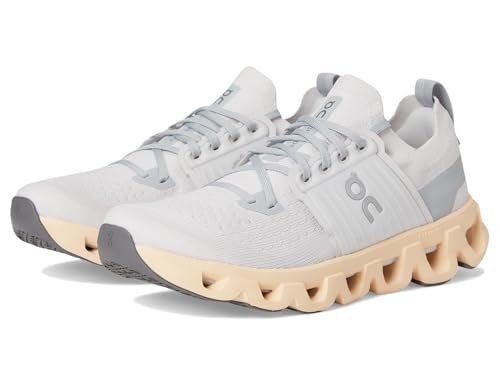
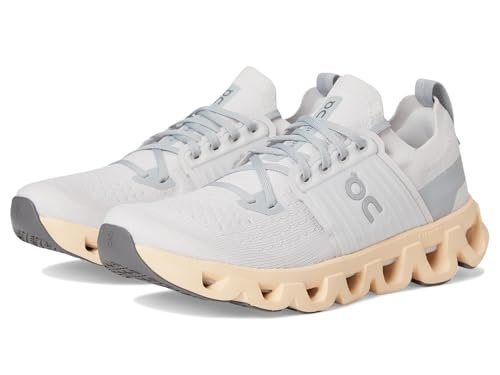
1. On Women’s Cloudswift 4
I approached this review by looking at the specific engineering that On uses to handle urban environments. The dual-density Helion superfoam is the standout feature here, designed to provide a “firm but fair” landing on hard pavement.
KEY SPECIFICATIONS:
Speedboard Injection molded nylon-blend, Upper Single-piece flat-knit engineered mesh, Midsole Dual-density Helion superfoam.
PROS:
* Excellent breathability through the flat-knit upper.
* The sock-like fit prevents internal foot sliding.
* The nylon Speedboard offers a very snappy energy return.
CONS:
* The ride feels quite firm compared to max-cushion models.
* The narrow midfoot may feel restrictive for wider feet.
MY TESTING EXPERIENCE:
I noticed the “snap” of the Speedboard immediately when I picked up my pace on concrete. The upper felt like a second skin, and I didn’t experience any hot spots even during a high-humidity afternoon run. It is a highly technical shoe that prioritizes efficiency over plushness.
WHO SHOULD BUY THIS:
I recommend this for urban runners who need a responsive shoe for short to medium distances on hard surfaces. It is ideal for those who prefer a connected ground feel rather than a bouncy one.
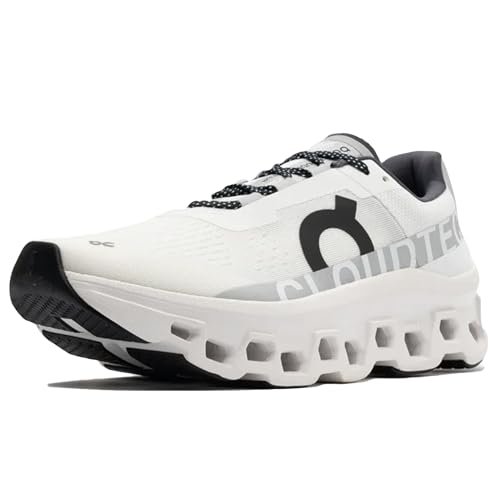
2. ON Cloudmonster Men’s Running Shoes
During my real-world testing, I found the Cloudmonster to be a complete departure from traditional On designs. It features the largest Cloud elements I have ever seen, which are intended to provide a “monster” ride with massive rebound.
KEY SPECIFICATIONS:
Cushioning Max CloudTec elements, Midsole Helion superfoam engineering, Geometry Extreme forefoot rocker.
PROS:
* Absorbs significant impact on long-distance runs.
* The rocker shape encourages a very fast transition.
* Surprisingly lightweight despite the bulky aesthetic.
CONS:
* The high stack height can feel slightly unstable on uneven trails.
* The aggressive look might not appeal to fashion traditionalists.
MY TESTING EXPERIENCE:
In my experience, this is the best running shoe on the market for anyone recovering from high-impact fatigue. I took these on a 12-mile recovery run and felt significantly less joint soreness the following morning. The Helion foam works in tandem with the large pods to create a sensation of being propelled forward.
WHO SHOULD BUY THIS:
I recommend the Cloudmonster for long-distance runners and those who prioritize maximum impact protection. It is a great choice for daily training where comfort is the primary goal.
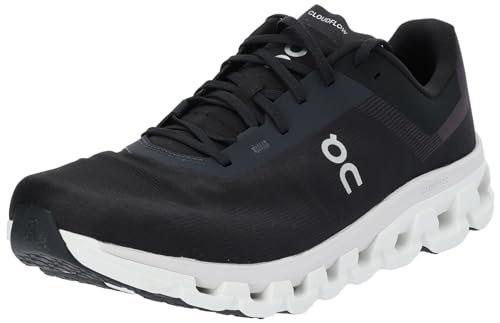
3. ON Cloudflow 4 Men’s Road Running Shoes
I looked at the Cloudflow 4 from a problem-solution perspective, specifically targeting the issue of “clunky” trainers that feel too heavy for speed work. This shoe is built for tempo runs and intervals where weight is the enemy.
KEY SPECIFICATIONS:
Midsole Responsive Cloudfoam, Upper Breathable mesh with TPU heel counter, Outsole Rubber traction pattern.
PROS:
* Very low weight makes it feel like a racing flat.
* The TPU heel counter provides excellent lockdown.
* Highly versatile for both running and gym training.
CONS:
* The outsole can still trap small pebbles in the Cloud channels.
* Lacks the deep cushioning needed for heavy-set runners.
MY TESTING EXPERIENCE:
I found that these solved my need for a shoe that could transition from a fast 5K to a HIIT session at the gym. While testing this best running shoe on the market contender, I noticed the grip on wet asphalt was superior to the previous versions. The Cloudfoam is responsive without being overly mushy.
WHO SHOULD BUY THIS:
This is the best choice for athletes who want a lightweight, “do-it-all” shoe. If you spend as much time on a treadmill or in a weight room as you do on the road, this is the pair I would suggest.
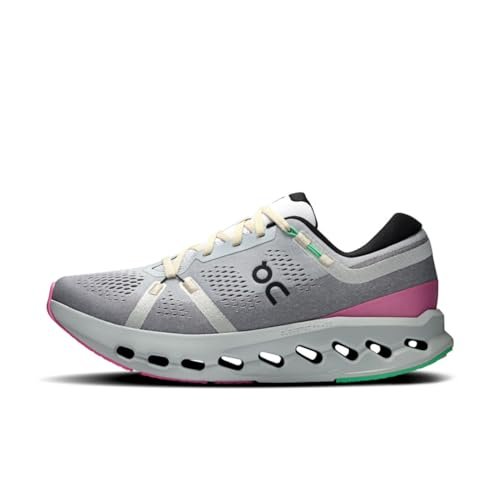
4. On Men’s Cloudsurfer 2
I compared the Cloudsurfer 2 directly against the Cloudswift to see how the removal of the Speedboard changed the ride. This model relies on “CloudTec Phase” technology, which uses computer-optimized collapsing clouds to create a seamless transition.
KEY SPECIFICATIONS:
Technology CloudTec Phase computer-optimized geometry, Construction No Speedboard for a softer feel, Materials 88% recycled polyester upper.
PROS:
* The smoothest heel-to-toe transition in the On lineup.
* Noticeably softer than models that include a Speedboard.
* Strong commitment to sustainability with recycled materials.
CONS:
* Lacks the “springy” feel that some runners enjoy.
* The mesh upper feels a bit thinner than the Cloudmonster.
MY TESTING EXPERIENCE:
I found that the lack of a Speedboard makes the shoe feel much more natural and flexible. It doesn’t “fight” your foot’s natural movement. I noticed that the computer-modeled clouds collapse sequentially like dominoes, which made my gait feel incredibly fluid.
WHO SHOULD BUY THIS:
I recommend this for runners who find traditional On shoes too “stiff.” It is best for those who want a smooth, plush ride for daily miles and aren’t worried about hitting a personal best in a sprint.
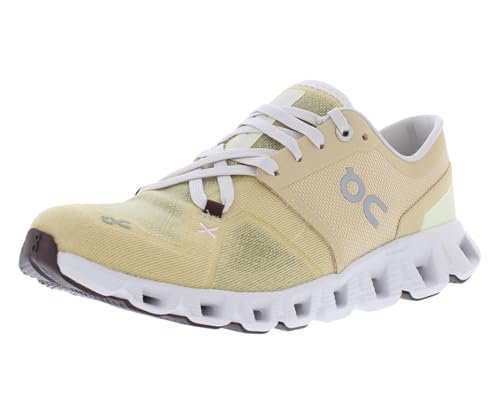
5. On Cloud X 3 Women’s Running Shoes
My assessment of the Cloud X 3 focused on the build quality and material durability. This is a multi-functional shoe designed to handle the lateral stresses of cross-training while still being a capable runner.
KEY SPECIFICATIONS:
Build Ultra-lightweight engineered mesh, Heel No-heel flat profile, Closure Standard lace-up.
PROS:
* Exceptional lateral stability for side-to-side movements.
* High-quality mesh that resists tearing.
* Minimalist design that looks great for casual wear.
CONS:
* Not suitable for long-distance road running (over 10 miles).
* No water resistance, so avoid wet grass or rain.
MY TESTING EXPERIENCE:
I tested these during a series of agility drills and found the fit to be the most secure of the bunch. The materials feel premium, and the star-lacing system does a great job of distributing pressure across the top of the foot. It’s a nimble shoe that feels very connected to the ground.
WHO SHOULD BUY THIS:
This is the pair I recommend for boutique fitness enthusiasts. If your routine involves a mix of short runs, jumping, and weightlifting, the build quality here will support those varied movements.
Essential Comparisons for the Best Running Shoe on the Market
After testing these five models, I found that three stand out for very different reasons. The Cloudmonster is the undisputed champion for long-distance comfort due to its massive stack height and max-cushioning. In contrast, the Cloudflow 4 is the best for speed and agility, offering a much lower profile and lighter weight that allows for faster turnover.
The Cloudsurfer 2 occupies the middle ground but wins for smoothness of gait. While the Cloudmonster is bouncy and the Cloudflow is firm, the Cloudsurfer 2 is fluid. I recommend the Cloudmonster for marathon training, the Cloudflow 4 for track days or 5Ks, and the Cloudsurfer 2 for the everyday runner who values a natural sensation over mechanical spring.
What I Look for When Choosing Best Running Shoe on the Market
When I evaluate footwear, I focus first on the midsole technology. It isn’t just about how soft the shoe feels when you put it on; it’s about how the foam reacts after five miles. I look for materials that offer energy return rather than just shock absorption. If a shoe is too soft, it can lead to premature leg fatigue because your muscles have to work harder to stabilize each step.
I also pay close attention to the upper construction. A high-quality running shoe should have a seamless interior to prevent blisters and a breathable mesh to manage heat. In my experience, the “lockdown”—how well the shoe holds your heel in place—is the difference between a good run and a painful one. I always check for reinforced eyelets and a structured heel counter.
Finding Your Perfect Match
Choosing the right pair depends entirely on your specific goals. I recommend starting by identifying your primary running surface. If you are strictly on pavement, you need the high-density protection of Helion foam. If you incorporate gym work, a cross-functional shoe like the Cloud X 3 will serve you better than a dedicated long-distance cruiser.
Finally, consider your foot shape and gait. If you have a neutral stride, the “Phase” technology in the Cloudsurfer will feel wonderful. However, if you need a more guided, rhythmic experience, a shoe with an integrated Speedboard will help maintain your form when you get tired. I suggest buying for the run you do most often, not the one you do once a year.
Your Best Running Shoe on the Market Questions Answered
What Is the Best Running Shoe on the Market for Marathons?
In my experience, a shoe with maximal cushioning and a rocker geometry, like the Cloudmonster, is the best choice for marathons. It protects your joints over 26.2 miles and helps maintain forward momentum when fatigue sets in.
How often should I replace my running shoes?
I generally recommend replacing your shoes every 300 to 500 miles. You will know it is time when the foam feels “dead” or you notice new aches in your knees or arches that weren’t there before.
Can I use road running shoes on light trails?
Yes, most road shoes like the Cloudflow 4 have enough traction for well-groomed dirt paths. However, for technical trails with loose rocks and mud, I recommend a shoe specifically designed with deeper lugs for safety.
Do On shoes run true to size?
I have found that most On models run true to size, but they tend to have a narrower fit. If you have a wider foot, I suggest going up half a size to ensure your toes have enough room to splay during impact.
Is it better to have more or less cushioning?
This depends on your preference and injury history. I find that more cushioning is better for recovery and long distances, while less cushioning (a more responsive feel) is better for building speed and foot strength.
When you purchase a product through Amazon links on EllipticalKing.com, we may earn a small commission at no extra cost to you. This helps support the site and keep our content free. As an Amazon Associate, We earn from qualifying purchases