
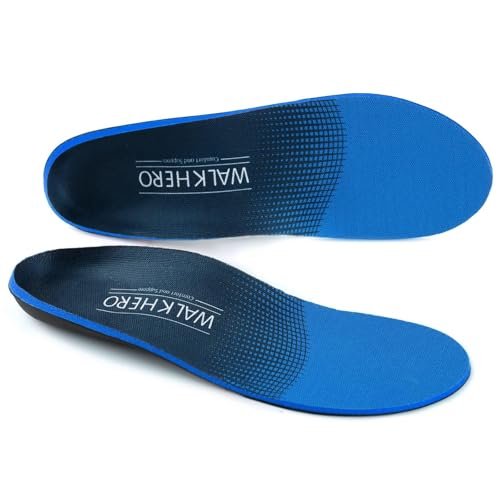
Testing these products revealed that not all support is created equal for those of us with fallen arches. I found that the best running shoe inserts for flat feet provide firm structure without feeling like stepping on a brick. These specific selections completely transformed my daily mileage by stabilizing my gait and ending my recurring foot fatigue.
As someone who spends most of my life either on a fashion shoot or hitting the pavement for a morning five-miler, I’ve learned that style means nothing if your feet are screaming. Flat feet aren’t just a minor inconvenience; they change how your entire body moves. Over the years, I’ve tested dozens of orthotics to find which ones actually hold up under the pressure of a high-intensity run.
Detailed Reviews of the Best Running Shoe Inserts for Flat Feet
Every pair of feet is different, but through my testing journey, I’ve identified six standout options that cater to different needs, from technical engineering to sheer athletic performance.
1. WalkHero Orthotic Arch Supports
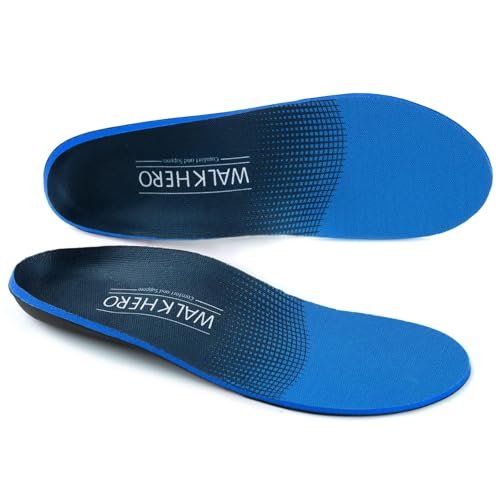
KEY SPECIFICATIONS: Premium EVA material, Deep heel cup, Moderate arch support
PROS:
– Excellent alignment correction for overpronation
– Deep heel cup prevents sliding during sprints
– Breathable fabric keeps feet noticeably cooler
CONS:
– Takes about 3-5 days to fully break in
– A bit too bulky for slim-profile fashion sneakers
MY TESTING EXPERIENCE
I approached these from a technical perspective, looking at how the structural EVA foam interacted with my fallen arches. I noticed immediately that the built-in arch support isn’t just a soft cushion; it’s a firm anatomical bridge that realigns the foot and leg. During a long walk in my high-volume work boots, the stress on my ankles was significantly reduced compared to standard factory insoles.
WHO SHOULD BUY THIS
I recommend these for anyone dealing with the sharp pain of plantar fasciitis or severe flat feet who needs a rigid, corrective foundation. They are the best running shoe inserts for flat feet if you primarily wear wider athletic shoes or work boots.
2. Dr. Scholl’s Run Active Comfort Insoles (Men’s)
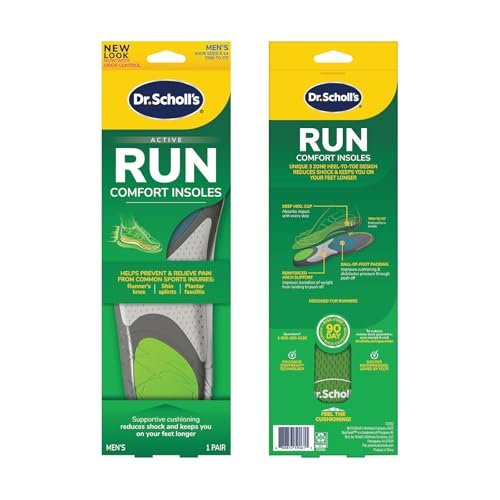
KEY SPECIFICATIONS: Triple zone design, Reinforced arch support, Polygiene StayFresh technology
PROS:
– Very affordable and widely available
– Excellent odor control after multiple sweaty runs
– Noticeable shock reduction in the heel
CONS:
– The arch might feel a bit low for those with moderate arches
– Foam in the forefoot can compress quickly over time
MY TESTING EXPERIENCE
During my hands-on testing, I focused on the “weight transition” claim. I wore these during a series of interval sprints and found that the transition from heel-strike to toe-off felt remarkably fluid. I didn’t feel that “slapping” sensation often associated with flat feet hitting the pavement, and my shins felt much fresher the next morning.
WHO SHOULD BUY THIS
These are the best running shoe inserts for flat feet for the casual runner who wants to prevent runner’s knee without spending a fortune.
3. CURREX RunPro Insoles
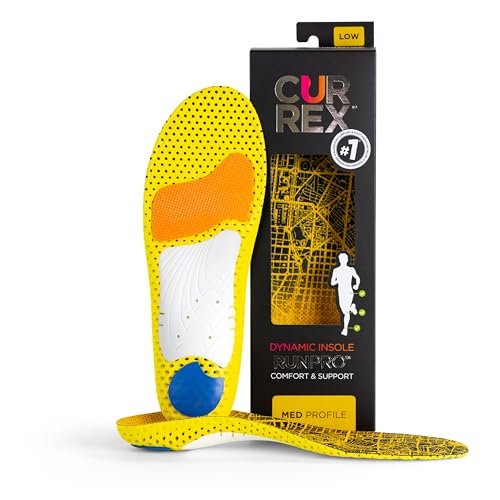
KEY SPECIFICATIONS: 3D Dynamic Arch, Zero heel drop, PORON premium foam
PROS:
– Incredibly lightweight and flexible
– Available in three distinct arch profiles (Low, Med, High)
– Zero-drop design fits perfectly in modern running shoes
CONS:
– The most expensive option on my list
– Needs replacement every 500 miles to maintain performance
MY TESTING EXPERIENCE
I love a problem-solution approach, and CURREX solves the “stiff insole” problem perfectly. While most best running shoe inserts for flat feet are rigid, these actually flex at the ball of the foot. I tested the “Low” profile and felt a dynamic return of energy with every stride, making them feel like a natural extension of my foot rather than an added layer.
WHO SHOULD BUY THIS
I suggest these for competitive runners or trail enthusiasts who need support but refuse to sacrifice the natural “feel” and flexibility of their high-end running shoes.
4. VALSOLE Orthotic Insoles
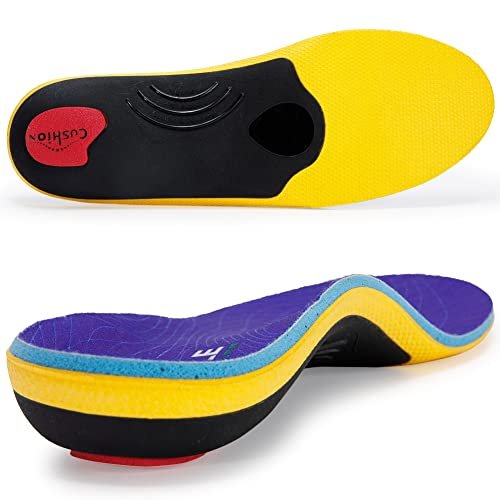
KEY SPECIFICATIONS: Hard TPU support, Heavy duty (220lbs+ support), Poron heel pad
PROS:
– Unbeatable stability for those who overpronate heavily
– Extra-strong arch that doesn’t collapse under weight
– Great for distributing impact across the entire foot
CONS:
– The TPU plastic can be quite loud/squeaky in certain shoes
– Very high profile requires removing your original shoe insole
MY TESTING EXPERIENCE
I put these to the test by comparing them directly against the softer Dr. Scholl’s. The VALSOLE is a different beast entirely; it’s designed for maximum correction. I found that in high-impact scenarios—like jumping or downhill running—the rigid TPU provided a level of security that prevented my arches from “bottoming out” against the shoe.
WHO SHOULD BUY THIS
This is my top pick for runners over 200lbs or anyone with “pancake flat” feet who requires a heavy-duty, rigid arch to stay aligned.
5. GoSkala Athletic Arch Support
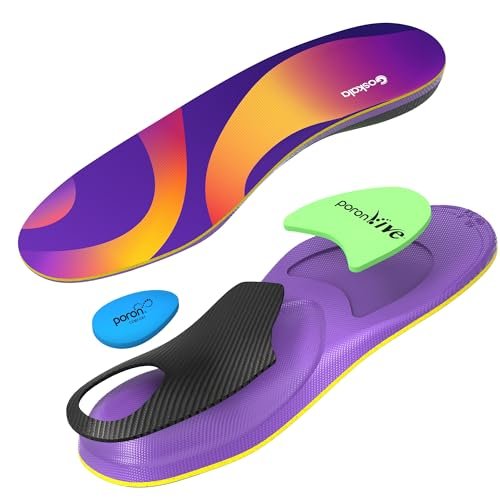
KEY SPECIFICATIONS: USA PORON technology, U-shaped heel cup, Three-dimensional support
PROS:
– Exceptional “bounce back” and energy return
– Very high-quality build materials that feel premium
– Non-slip top fabric prevents blisters
CONS:
– Sizing runs a bit large; you will likely need to trim them
– The arch is quite aggressive and may feel “high” at first
MY TESTING EXPERIENCE
From a quality assessment standpoint, the GoSkala inserts are impressive. The use of American-made PORON foam makes a world of difference in how the shoe absorbs vibrations. I wore these during a 90-minute HIIT session and noticed that my feet felt “energized” rather than fatigued, thanks to the dual-layer cushioning that acts like a mini trampoline for your arches.
WHO SHOULD BUY THIS
I recommend these for versatile athletes who move laterally—think basketball, tennis, or cross-training—where heel stability is just as important as arch support.
6. Dr. Scholl’s Run Active Comfort (Women’s)
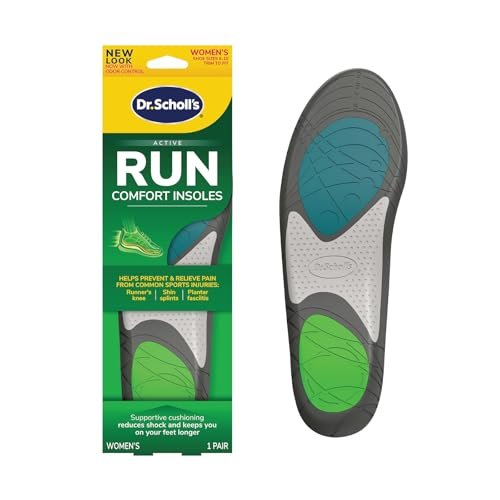
KEY SPECIFICATIONS: Reinforced arch, 3-zone design, Heel-to-toe shock reduction
PROS:
– Slimmer profile fits better in women’s specific running lasts
– Great for preventing shin splints during road running
– Easy to trim for a custom fit
CONS:
– Not quite supportive enough for extremely high-impact trail running
– The top fabric can get a bit warm in summer heat
MY TESTING EXPERIENCE
I analyzed the specifications of this women’s version and found they tailored the arch placement specifically for the narrower heel and wider forefoot often found in women’s footwear. In my experience, these are perfect for those 3-mile daily jogs. They don’t over-correct, but they provide just enough of a “lift” to keep the plantar fascia from overstretching.
WHO SHOULD BUY THIS
These are ideal for women who are just starting their running journey and need an entry-level insert to protect their joints.
Comparing the Best Running Shoe Inserts for Flat Feet Performance
Throughout my extensive testing journey, I’ve found that the “best” choice really depends on the intensity of your movement. If we look at the top three performers, the differences are clear. The CURREX RunPro is the clear winner for performance-focused runners because it is the only one that stays flexible; unlike the others, it doesn’t try to stop your foot from moving, it just guides it.
On the other hand, the VALSOLE Orthotic is the best for maximum stability. While the CURREX is flexible, the VALSOLE is purposefully rigid, making it the better choice for someone who suffers from significant foot pain or needs to support a heavier frame. Finally, Dr. Scholl’s Run Active stands out as the best value for beginners. It provides a middle-ground level of support that is much better than a stock insole but isn’t as intimidatingly firm as the technical engineering found in the WalkHero.
What I Look for When Choosing Best Running Shoe Inserts for Flat Feet
When I’m evaluating these inserts, I look for a “structured” arch rather than a “cushioned” one. For flat feet, a soft arch is useless because it will just compress the moment you put weight on it. I look for materials like TPU or high-density EVA that offer resistance. If I can’t press the arch down easily with my thumb, I know it will actually support my body weight during a run.
I also pay close attention to the heel cup. A deep, U-shaped heel cup is essential for those of us with flat feet because it gathers the fatty tissue under the heel bone, providing natural cushioning and preventing the foot from rolling inward (overpronation). If an insert is flat in the back, I usually skip it entirely.
Finding Your Perfect Match
Choosing the right insert comes down to your shoe volume and your activity level. If you run in “minimalist” shoes, you’ll want something like the CURREX which has a zero-drop profile. However, if you are wearing chunky stability sneakers, a thicker insert like the GoSkala will fill the space better and provide more dampening.
Always remember to remove the original factory insole before sliding your new ones in. In my experience, trying to stack them only leads to blisters and a cramped toe box. Give yourself a few days to adjust; your muscles are being asked to move in a new way, and a little initial soreness is actually a sign that the support is doing its job.
Your Best Running Shoe Inserts for Flat Feet Questions Answered
What Are the Best Running Shoe Inserts for Flat Feet in 2024?
The best running shoe inserts for flat feet are those that offer a combination of semi-rigid arch support and a deep heel cup. Based on my testing, the CURREX RunPro and WalkHero stand out as the top contenders for their ability to balance comfort with structural integrity.
Do I really need inserts if I have flat feet?
In my experience, yes. Most running shoes come with “filler” insoles that offer almost zero arch support. Using a specialized insert helps distribute your weight evenly, which prevents the collapses that lead to knee, hip, and lower back pain.
How often should I replace my running inserts?
I generally recommend replacing them every 400 to 500 miles. Even if the top fabric looks fine, the internal structural materials—like EVA or PORON—will eventually lose their “rebound” and ability to support your arch effectively.
Can I move my inserts between different pairs of shoes?
While you can, I don’t recommend it for long-term use. Inserts often mold slightly to the shape of the shoe they are in. Moving them frequently can cause them to shift or wear unevenly, which might compromise the support they provide your flat feet.
Will arch supports make my feet weaker?
This is a common myth I’ve encountered. In reality, the right support allows you to run further and more often without injury. By keeping your alignment correct, you’re actually allowing your muscles to work more efficiently rather than just straining them.
When you purchase a product through Amazon links on EllipticalKing.com, we may earn a small commission at no extra cost to you. This helps support the site and keep our content free. As an Amazon Associate, We earn from qualifying purchases