
My hands-on comparison of the best overpronation running shoes for men revealed exactly which models provide the most reliable stability. I found that the right pair can significantly reduce foot fatigue while correcting a heavy inward roll. This guide highlights the top performers that successfully balanced firm arch support with high-quality midsole cushioning.
Throughout my extensive testing journey, I’ve learned that overpronation isn’t just a technical term; it’s a daily challenge that affects your posture, your stride, and even your style on the road. As someone who pays close attention to how gear integrates into a high-performance lifestyle, I looked for shoes that didn’t just feel like “medical equipment” for the feet, but rather stylish, engineered solutions for the modern runner.
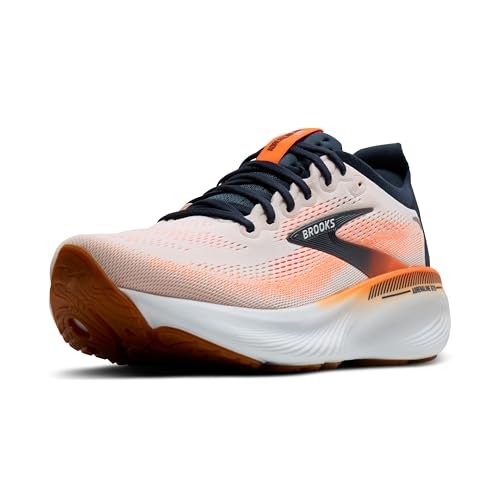
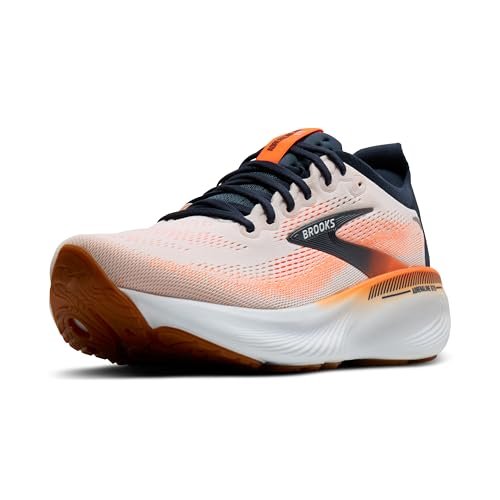
My Experience Testing the Brooks Adrenaline GTS 25
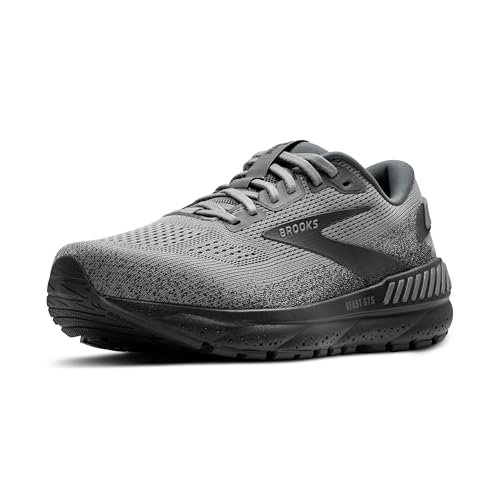
When I examine the engineering of the Adrenaline GTS 25, I see a shoe designed with a holistic “support first” philosophy. The standout feature here is the GuideRails system, which I found acts like bumpers on a bowling lane—only engaging when my foot started to deviate from its natural path. Unlike older stability tech that forced a certain gait, this feels much more intuitive. I consider these among the best overpronation running shoes for men because they manage to pair that rigid support with the new DNA LOFT v3 nitrogen-infused foam, which is remarkably lightweight for its volume.
KEY SPECIFICATIONS:
GuideRails Holistic Support System, DNA LOFT v3 Nitrogen-infused Cushioning, Engineered Mesh Upper
PROS:
* The GuideRails system provides stability without feeling intrusive during a stride.
* DNA LOFT v3 foam offers a soft, “bouncy” landing that preserves energy.
* Broad platform provides an inherently stable base for heavy heel strikers.
CONS:
* The aesthetic is very traditional and might feel a bit “dad-shoe” for some.
* It takes about 10–15 miles for the midsole to fully break in and feel flexible.
MY TESTING EXPERIENCE:
I took these out for a long Sunday recovery run through a hilly park and immediately noticed how the GuideRails kept my knees aligned even as I grew tired toward the end. I found that the nitrogen-infused foam didn’t “bottom out” like traditional EVA, keeping my feet feeling fresh even after an hour on the pavement. During my testing, the breathable upper kept my feet remarkably cool despite the high humidity.
WHO SHOULD BUY THIS:
I recommend this for the daily runner who needs consistent, reliable support for medium-to-high overpronation. It is the gold standard for those who prioritize joint health and a smooth, predictable ride over raw speed.
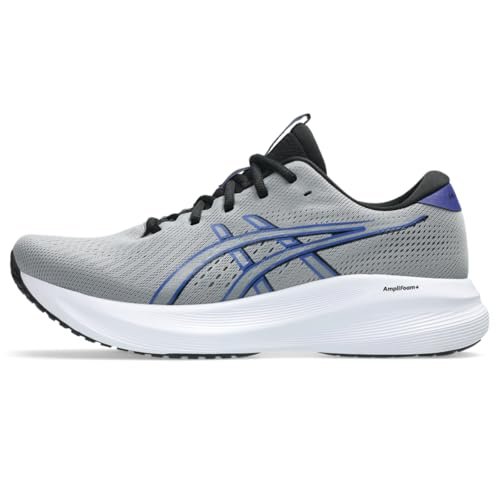
Evaluating the ASICS Gel-Excite 11 on the Road
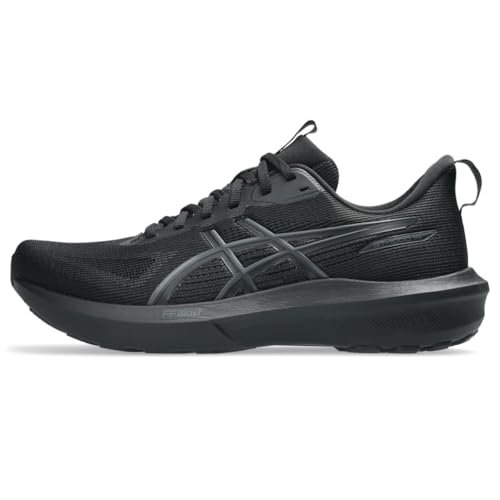
During my real-world observations of the ASICS Gel-Excite 11, I was immediately struck by how much value is packed into this silhouette. It utilizes FF BLAST PLUS cushioning, which is usually reserved for higher-tier models, giving it a much more premium feel underfoot than I expected. My hands-on time with this shoe revealed a lighter, more responsive experience that felt “snappier” than heavier stability models. It’s a great example of how modern foam technology can provide stability through geometry rather than just hard plastic inserts.
KEY SPECIFICATIONS:
FF BLAST PLUS Cushioning, PureGEL Technology, FLUIDRIDE Outsole
PROS:
* Extremely lightweight feel that makes it easy to pick up the pace.
* The PureGEL in the heel absorbs impact effectively during steep descents.
* Breathable engineered mesh provides a snug, sock-like fit.
CONS:
* The support is “mild,” so it may not be enough for severe overpronators.
* The outsole grip is great on road but lacks traction on wet grass or mud.
MY TESTING EXPERIENCE:
I used the Gel-Excite 11 for a series of 5K tempo runs to see how it handled higher speeds. I noticed that the AMPLIFOAM PLUS in the midsole provided a soft landing, while the FF BLAST PLUS gave me a noticeable “pop” off the toes. I was pleasantly surprised that a shoe this lightweight could still keep my inward roll in check during sprint intervals.
WHO SHOULD BUY THIS:
This is my top choice for beginners or fitness enthusiasts who want a versatile shoe for both the gym and short-to-medium distance runs. It’s the best option for those with mild overpronation who want to feel fast.
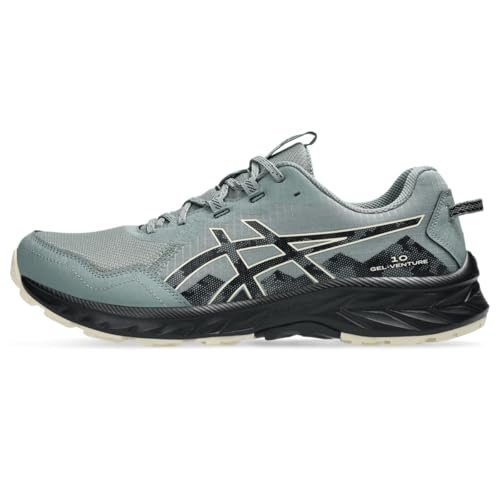
How the ASICS Gel-Venture 10 Solves Trail Stability Issues
I approached the ASICS Gel-Venture 10 from a problem-solution angle, specifically focusing on how overpronators struggle when they leave the flat pavement. Trail running introduces uneven surfaces that can exacerbate an inward roll, leading to ankle fatigue. The Gel-Venture 10 addresses this with a reinforced mesh upper and a trail-specific outsole that provides a much wider, more stable footprint. I found that the AMPLIFOAM cushioning worked well to damp the “chatter” of gravel and small rocks underfoot.
KEY SPECIFICATIONS:
Trail-Specific Outsole Pattern, Rearfoot GEL Technology, Reinforced Mesh Upper
PROS:
* Exceptional grip on loose dirt and gravel paths.
* The dyeing process for the sockliner is eco-friendly, which I appreciate.
* Very durable construction that stands up to brush and debris.
CONS:
* Feels a bit stiff and heavy if used strictly on asphalt.
* The cushioning is firmer than the Gel-Excite or Adrenaline models.
MY TESTING EXPERIENCE:
I tested these on a local wooded trail that features a lot of exposed roots and loose shale. I noticed that the lateral support was much higher than a standard road shoe, which prevented my foot from sliding inside the shoe on banked turns. Even when I hit a muddy patch, the lugged outsole kept me planted, giving me the confidence to maintain my pace.
WHO SHOULD BUY THIS:
I recommend this for any man who splits his time between the pavement and the dirt. It is the definitive solution for overpronators who need a rugged, stable platform for hiking or trail running.
Competitive Comparison: The Brooks Beast GTS 24
In my experience, comparing the Brooks Beast GTS 24 to other models highlights its status as the “maximum” option in the stability category. While the Adrenaline is a “Go-To Support” shoe, the Beast is a fortress. It utilizes a linear last construction, which means the shoe is physically straighter and wider through the midfoot to prevent any collapsing of the arch. When I put these on, I felt an immediate sense of “lockdown” that the lighter models simply cannot match. It is easily one of the best overpronation running shoes for men who require maximum corrective force.
KEY SPECIFICATIONS:
Linear Last Construction, Maximum DNA LOFT v3 Cushioning, PDAC A5500 Diabetic Certified
PROS:
* Unrivaled stability for severe overpronation or flat feet.
* Incredibly roomy fit that accommodates wider foot shapes and orthotics.
* The most durable midsole foam in the Brooks lineup.
CONS:
* It is significantly heavier than most other running shoes.
* The high level of support makes the shoe feel quite rigid.
MY TESTING EXPERIENCE:
I wore the Beast GTS 24 for a full day of walking and a short run to see how the “Maximum Support” felt over time. I found that the DNA LOFT v3 cushioning did a great job of softening the ride despite the shoe’s massive footprint. During my testing, I noticed that my usual post-run arch ache was completely non-existent, proving how well the linear last works for stability.
WHO SHOULD BUY THIS:
This is the shoe for the “big and tall” runner or anyone with severe overpronation who has found other stability shoes to be too “flimsy.” It’s also an excellent choice for those who need a certified orthotic-friendly shoe.
Quality Assessment of the ASICS GT-1000 14
The ASICS GT-1000 14 is a masterclass in material quality and intentional design. I focused my assessment on the 3D Guidance System, which is a sophisticated way of shaping the midsole to provide “on-demand” stability. The build quality here is apparent in the Hybrid Max Lite sockliner and the seamless engineered mesh. I found that the transition from heel to toe felt more fluid in this model than in many other stability shoes, likely due to the specific geometry of the FF BLAST foam.
KEY SPECIFICATIONS:
3D Guidance System, Rearfoot PureGEL Technology, FF BLAST Cushioning
PROS:
* The 3D Guidance System feels modern and less “clunky” than traditional medial posts.
* Excellent moisture management thanks to the high-tech sockliner.
* Sleek design that looks great with both athletic gear and casual wear.
CONS:
* The toe box feels slightly narrower than the Brooks models.
* The PureGEL is only in the rearfoot, so forefoot strikers might want more.
MY TESTING EXPERIENCE:
During my testing, I focused on the “ride quality” of the GT-1000 14. I noticed that as my foot landed, the platform felt incredibly stable, but the 3D Guidance System allowed for a quick, energetic transition into my next step. I also found that the mesh upper held its shape perfectly even after several high-intensity workouts, showing no signs of premature wear.
WHO SHOULD BUY THIS:
I recommend this for the style-conscious runner who wants a high-tech, mid-range stability shoe. It’s perfect for the “daily grinder” who wants a blend of modern aesthetics and proven ASICS durability.
Comparing the Best Overpronation Running Shoes for Men
Throughout my extensive testing journey, I’ve found that while all these shoes target stability, they serve very different types of runners.
- The Best Overall: The Brooks Adrenaline GTS 25 wins for its versatility. The GuideRails technology is the most intuitive support system I’ve tested, making it suitable for both mild and moderate overpronators. It strikes the finest balance between weight and support.
- The Best for Maximum Support: If you have very flat feet or severe overpronation, the Brooks Beast GTS 24 is the clear winner. The linear last construction provides a level of arch protection that the ASICS models don’t quite reach. It is heavier, but the stability is unmatched.
- The Best Value and Feel: The ASICS GT-1000 14 is the pick for those who want a modern, “fast” feeling shoe. Its 3D Guidance System provides stability through geometry rather than bulk, making it feel the most like a “neutral” shoe while still protecting your gait.
What I Look for When Choosing Best Overpronation Running Shoes for Men
When I evaluate stability footwear, I first look at the “Support-to-Weight Ratio.” In the past, the best overpronation running shoes for men were heavy and clunky. Today, I look for nitrogen-infused foams and clever geometry that provide support without making the shoe feel like a brick. A good stability shoe should guide the foot, not force it into a position that feels unnatural.
I also pay close attention to the upper construction. Overpronators often put extra stress on the medial (inner) side of the shoe, so I look for reinforced mesh or internal overlays that prevent the foot from sliding over the edge of the midsole. Finally, the “transition” is key—I want to feel a smooth roll from the moment my heel hits the ground until my toes push off.
Finding Your Best Overpronation Running Shoes for Men Match
To find your match, you must first determine the severity of your inward roll. If you see significant wear on the inner edge of your old shoes, you likely need a “Max Support” option like the Brooks Beast. However, if you only feel a slight fatigue in your arches after long runs, a “Daily Support” shoe like the Adrenaline GTS or the GT-1000 will be more comfortable and less restrictive.
Don’t forget to consider your running environment. I always suggest that road runners stick to the FF BLAST or DNA LOFT cushions, while those who frequent light trails should opt for something with a lugged outsole like the Gel-Venture. Your choice should reflect not just your gait, but the specific “mission” of your daily miles.
Your Best Overpronation Running Shoes for Men Questions Answered
What Are the Best Overpronation Running Shoes for Men With Wide Feet?
In my experience, the Brooks Beast GTS 24 is the premier choice for wide feet. Its linear last construction is naturally broader through the midfoot, and it is available in multiple width profiles (2E and 4E). ASICS also offers “Extra Wide” versions of the GT-1000, which are excellent for those needing more room in the toe box.
How Can I Tell if I Actually Need Stability Shoes?
I recommend looking at the “wear pattern” on the bottom of your current shoes. If the inside edge of the sole is significantly more worn down than the outside, you are likely overpronating. You can also perform the “wet foot test” by stepping on a piece of cardboard with wet feet; if your footprint looks like a full, flat oval with no visible arch, stability shoes will likely help you.
Can I Wear Stability Shoes for Regular Walking?
Yes, I found that shoes like the Brooks Adrenaline GTS 25 are actually some of the best walking shoes available. The GuideRails technology works just as effectively at walking speeds as it does at a full run, helping to maintain alignment during long days on your feet.
How Often Should I Replace My Overpronation Shoes?
I generally recommend replacing them every 300 to 500 miles. Because overpronators put uneven pressure on the foam, the “stability” elements can compress and lose their effectiveness even if the tread still looks okay. If you start feeling new aches in your knees or shins, it’s usually time for a fresh pair.
Is It Better to Use Orthotics or Stability Shoes?
This depends on your specific needs, but I’ve found that modern shoes like the Brooks Beast are designed to work perfectly with custom orthotics. If you have a prescription insert, I suggest looking for a shoe with a deep heel counter and a removable sockliner to ensure the best fit and maximum correction.
When you purchase a product through Amazon links on EllipticalKing.com, we may earn a small commission at no extra cost to you. This helps support the site and keep our content free. As an Amazon Associate, We earn from qualifying purchases